
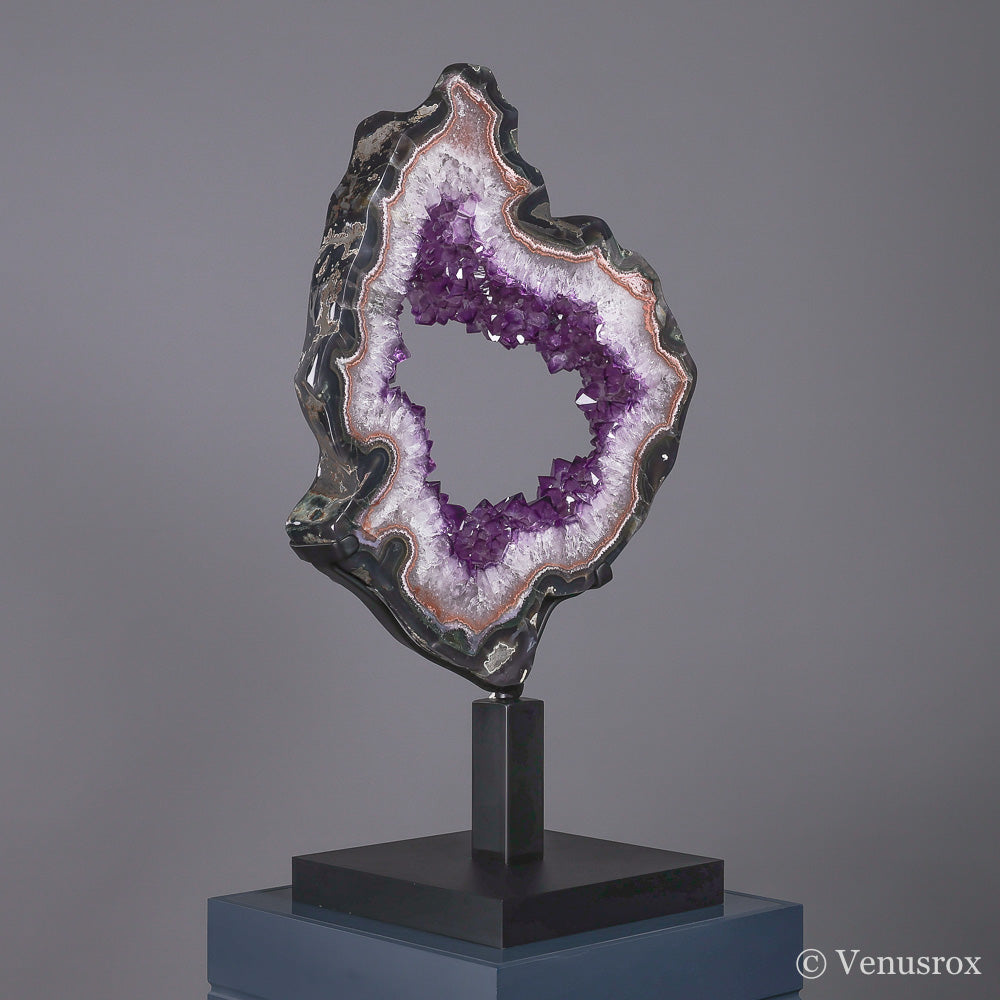
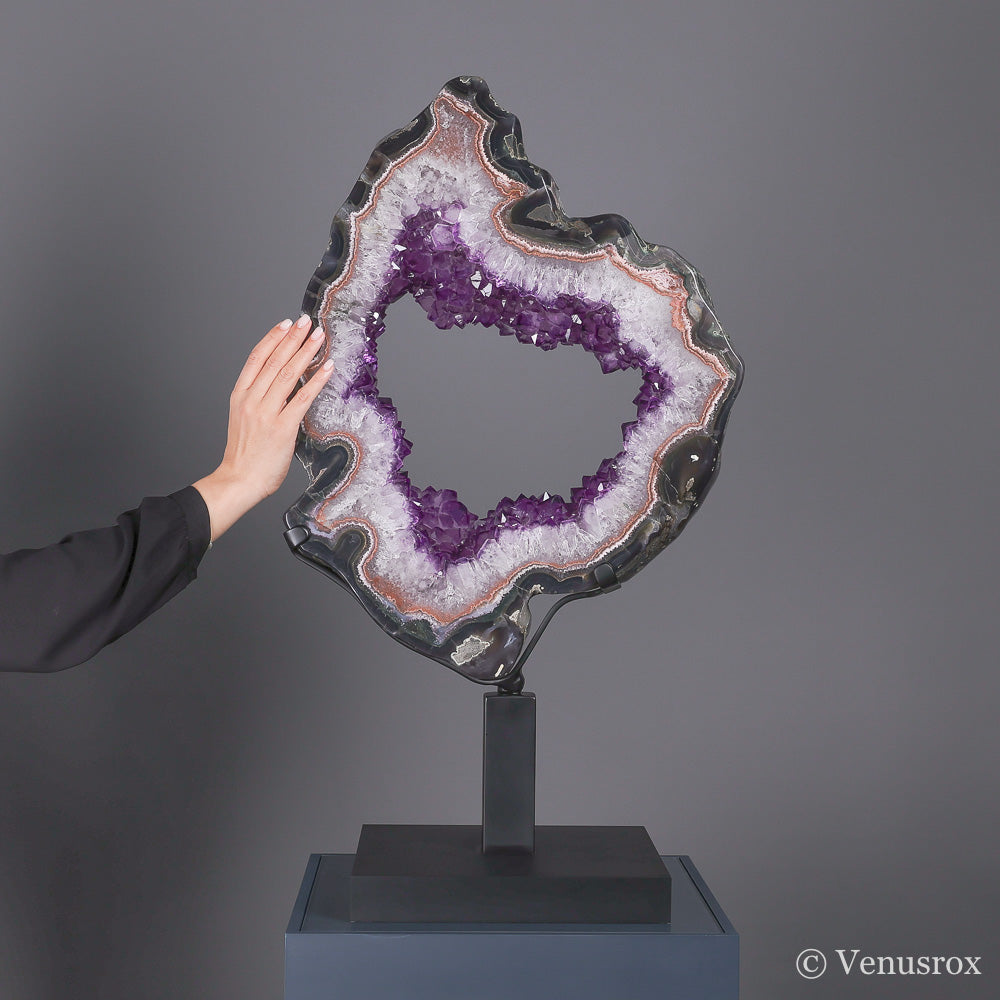
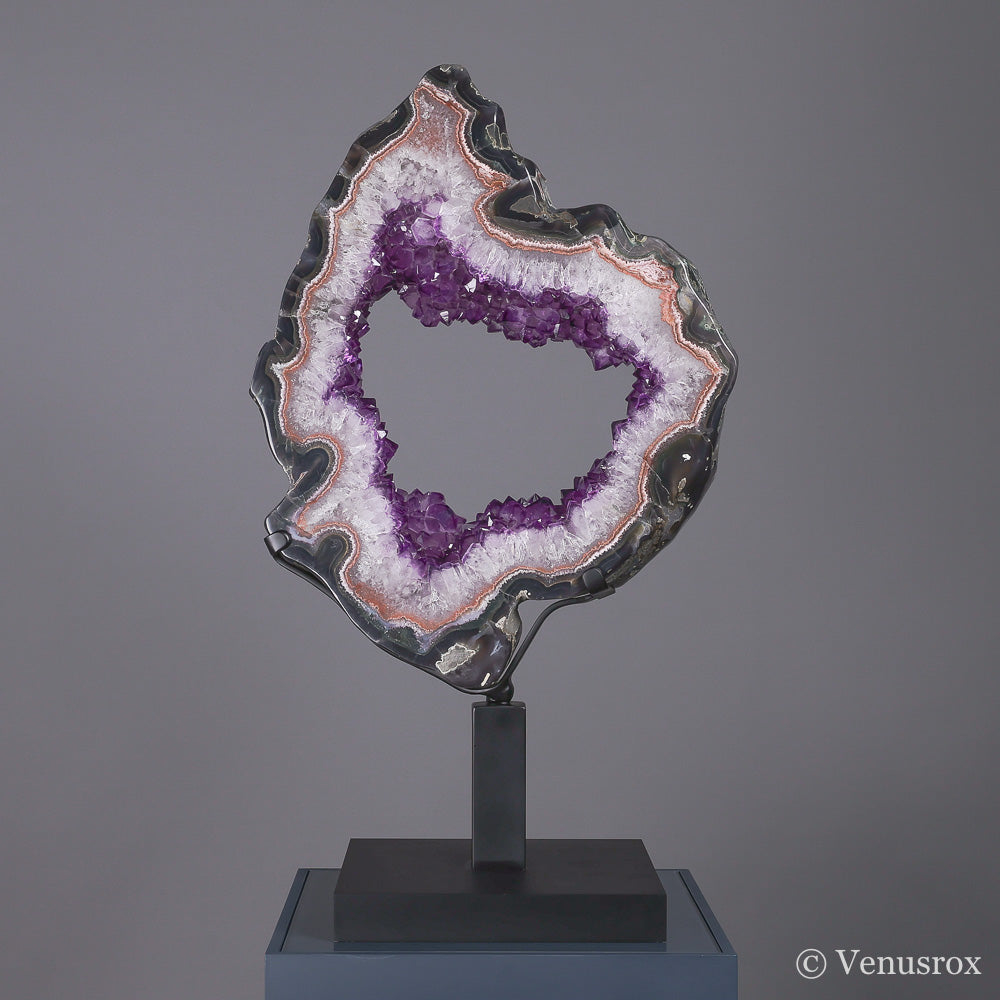
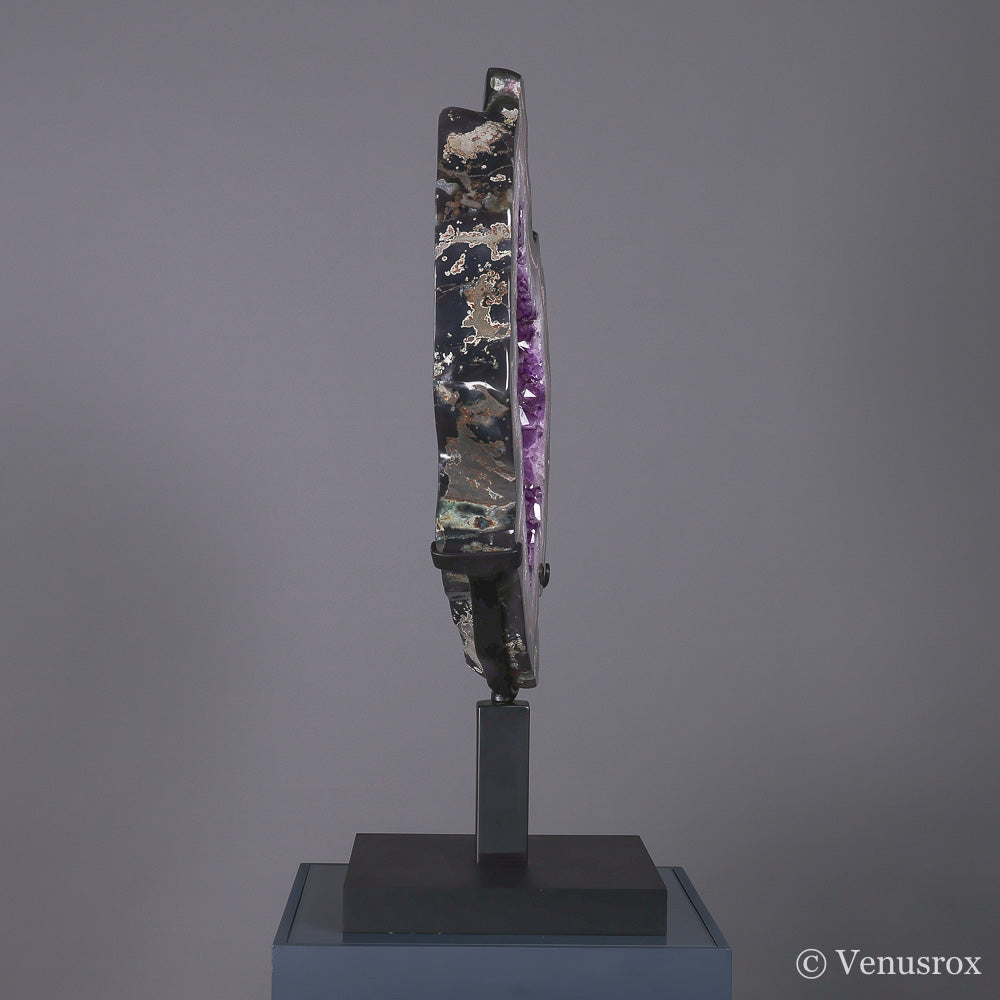
AMETHYST WITH AGATE SLICE
ORIGIN:
Product Details
- CRYSTAL/MINERAL
- AMETHYST
AGATE - location
- Brazil
- SKU
- 051001
- DIMENSIONS
- 79.5 x 45.8 x 29 cm (31.3 x 18.0 x 11.4 in) including the stand.
Slice thickness: 7cm (2.8in) - GEOLOGICAL FORMATION
- Amethyst on Agate formed through a two-stage geological process within ancient volcanic rock cavities. Initially, silica-rich groundwater slowly deposited layers of microscopic quartz crystals, creating the banded agate foundation. These waters carried dissolved silica that precipitated over thousands of years, building up the characteristic translucent layers.
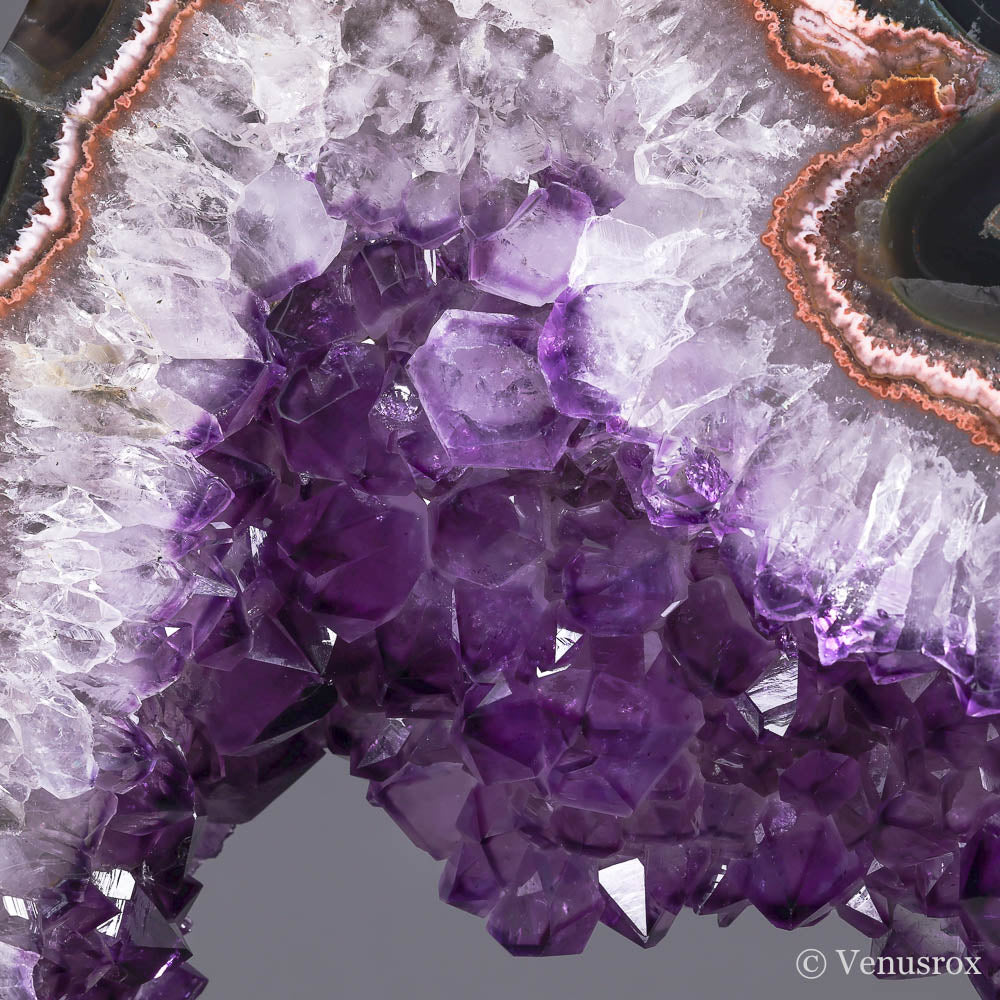
During a later mineralization event, iron-bearing hydrothermal solutions infiltrated the existing agate structure. Under specific temperature and pressure conditions, these solutions crystallized as Amethyst—purple quartz colored by trace iron and aluminum impurities that were activated by natural background radiation.
The contrasting textures reflect different formation environments: agate's smooth, cryptocrystalline structure developed through slow, steady deposition, while amethyst's well-formed crystals grew in open spaces where solutions could freely circulate and crystals had room to develop their geometric faces.
The purple coloration intensity varies depending on the concentration of iron impurities and the duration of radiation exposure during formation.
Each crystal represents a specific sequence of geological events, preserving evidence of ancient fluid chemistry and subsurface conditions that existed millions of years ago.
Price on Application
Choose options
AMETHYST WITH AGATE SLICE
Sale priceAED 80,000.00