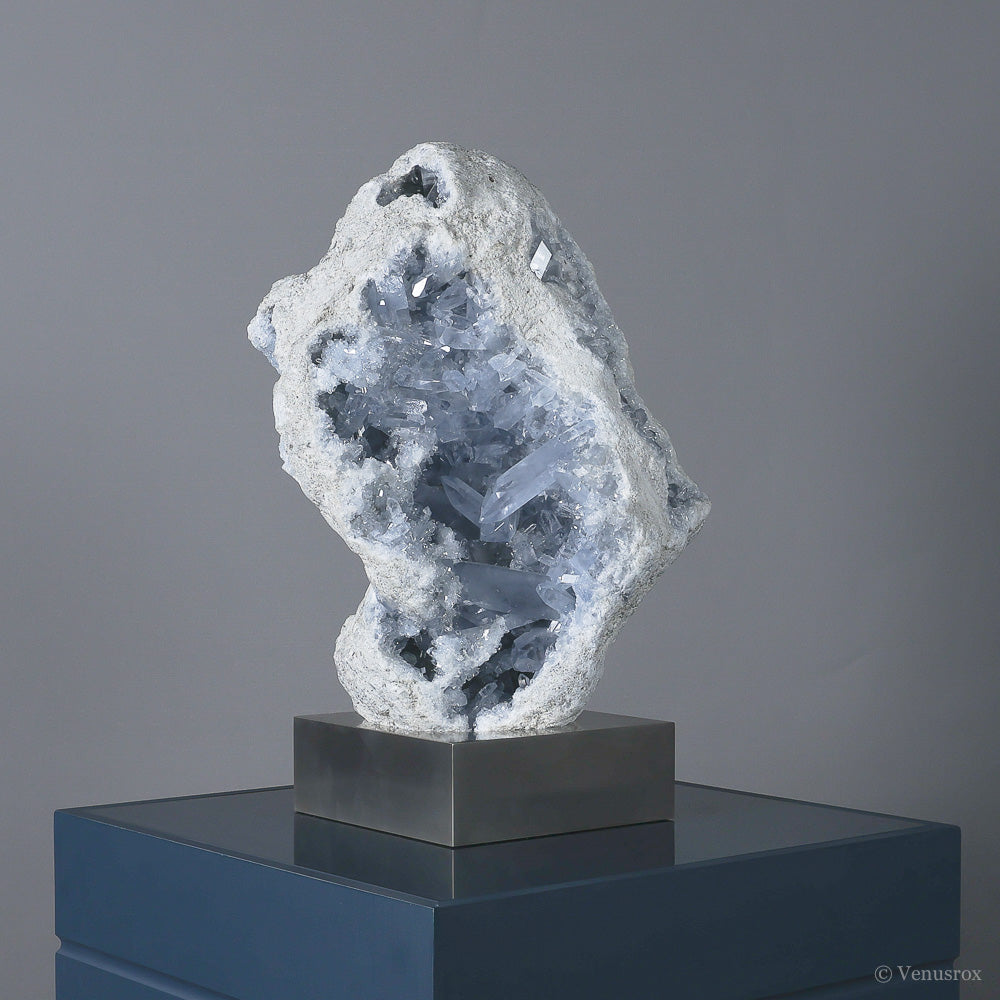
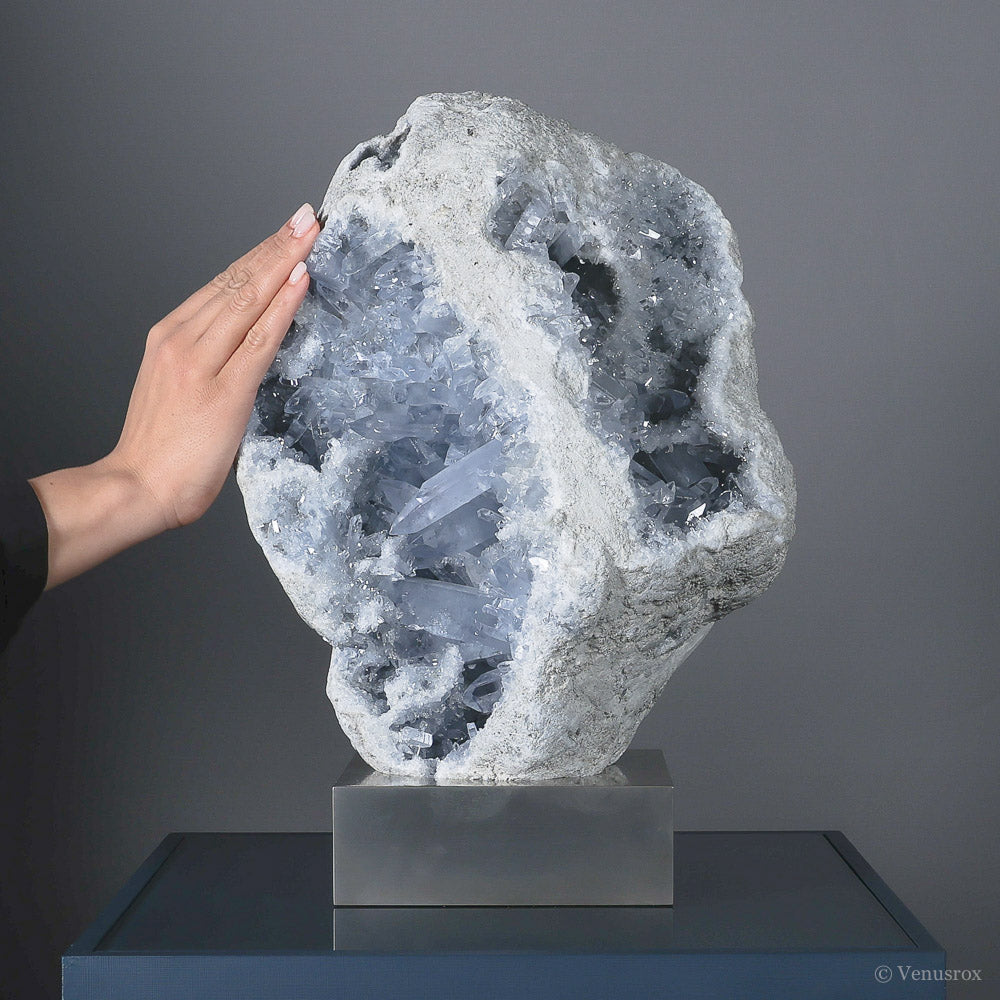
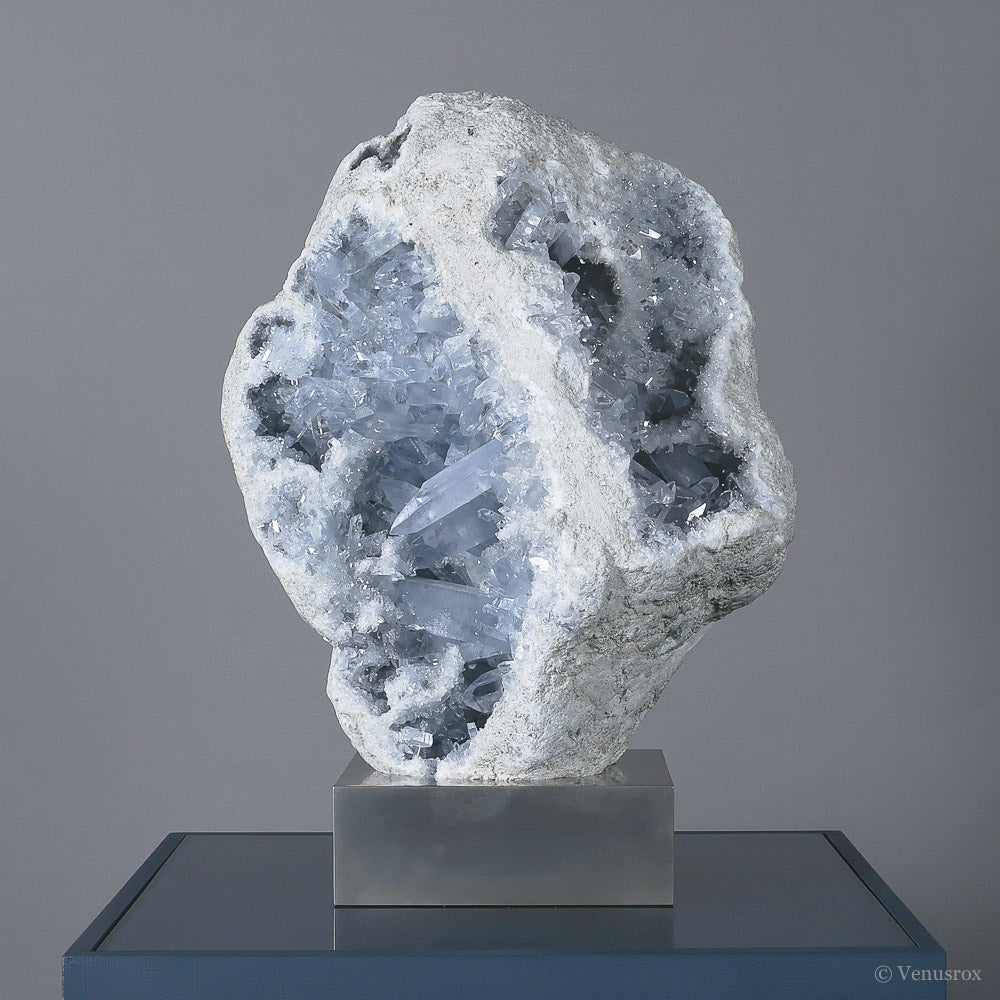
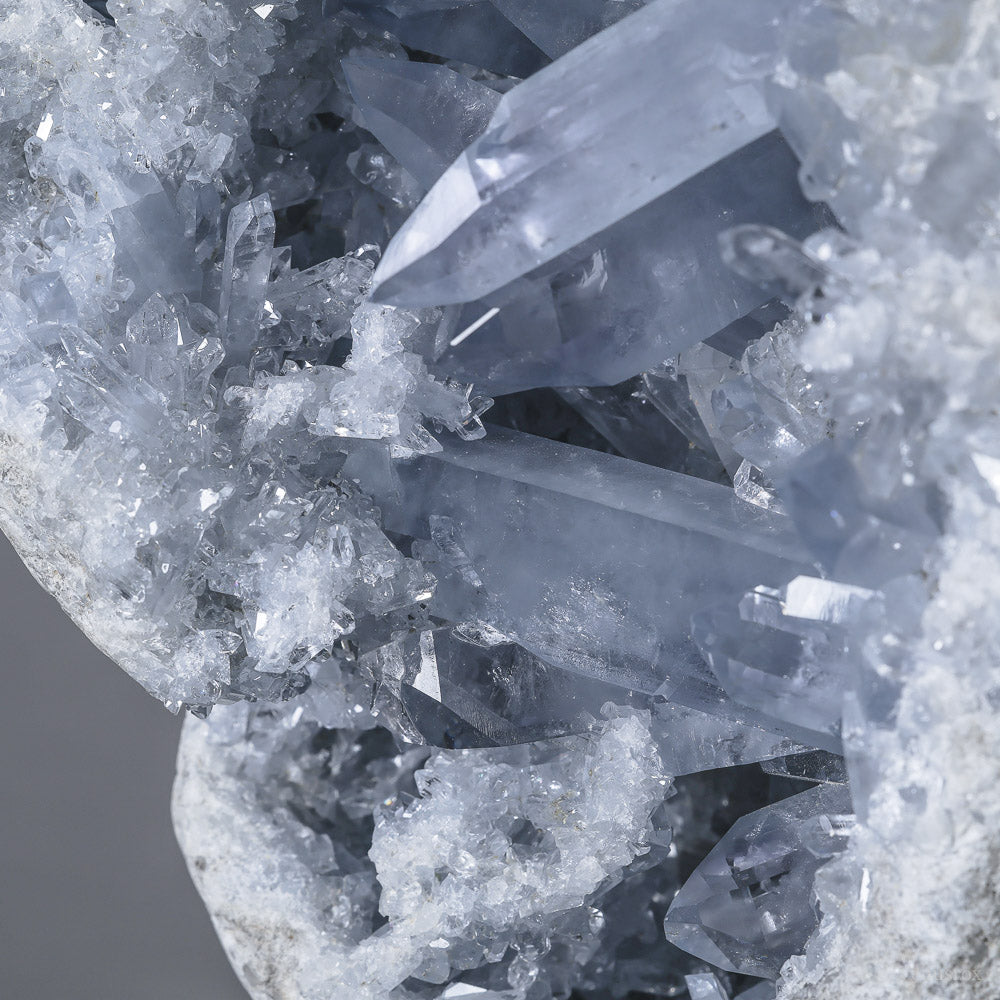
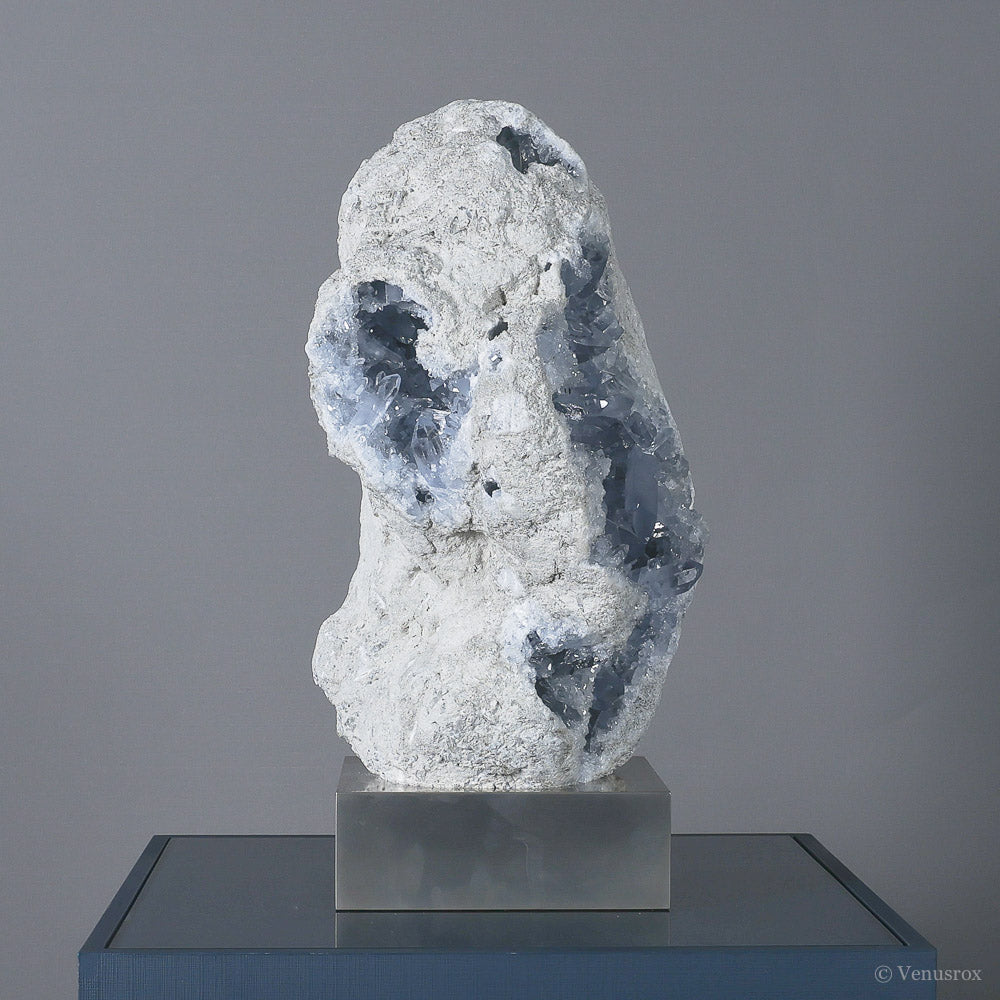
Madagascar's Sakoany deposit, located in the Mahajanga Province of the island's northwest, produces the world's most coveted Celestite specimens. The deposit formed approximately 50 million years ago within sedimentary evaporite sequences, where Strontium-rich brines percolated through Limestone cavities and slowly precipitated crystals of remarkable clarity and size. The distinctive powder-blue hue derives from trace inclusions of gold and minor irradiation effects within the crystal lattice, a chromatic signature unique to this locality.
Celestite's relatively low hardness (3–3.5 on the Mohs scale) and perfect cleavage make specimens of this scale and integrity exceptionally difficult to extract intact. The mineral serves as the primary industrial source of strontium, used in fireworks, flares, and specialised glass manufacturing, yet gem-quality display specimens remain comparatively rare, the finest examples reserved for museums and discerning private collections.
This piece features multiple interconnected cavities, each hosting its own crystalline architecture, a geological intimacy that invites extended contemplation. The rough exterior preserves the geode's natural nodular form, while the exposed interiors reveal millions of years of unhurried mineral growth, now presented upon a bespoke base befitting its quiet luminosity.