
_____
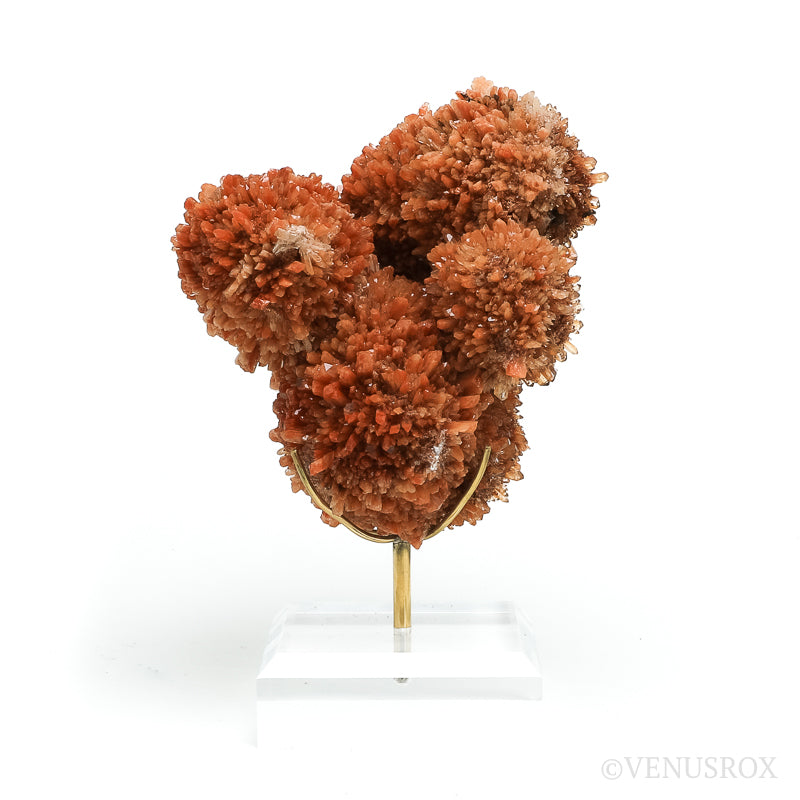
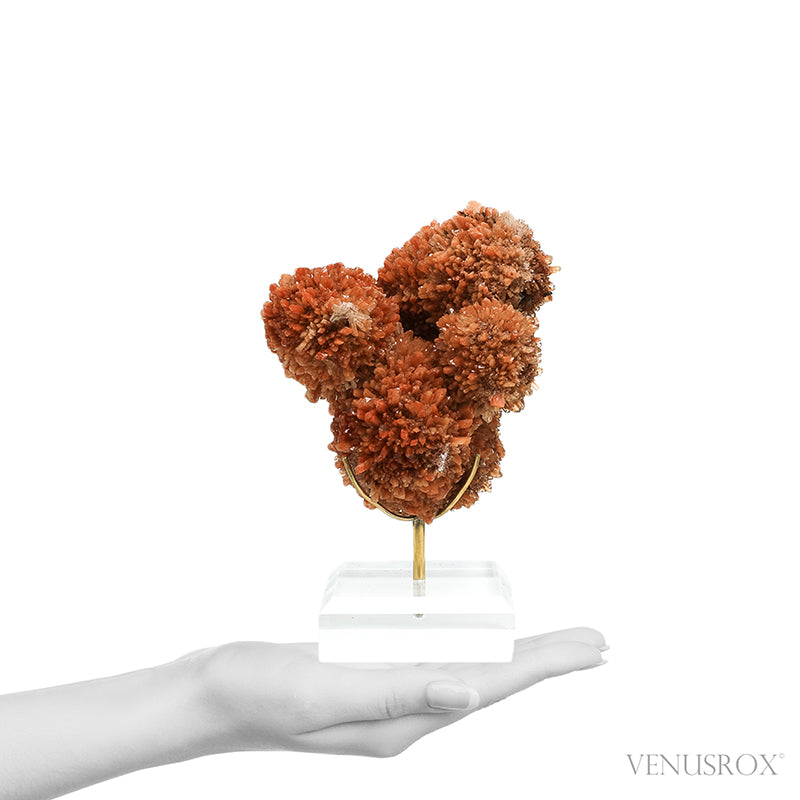
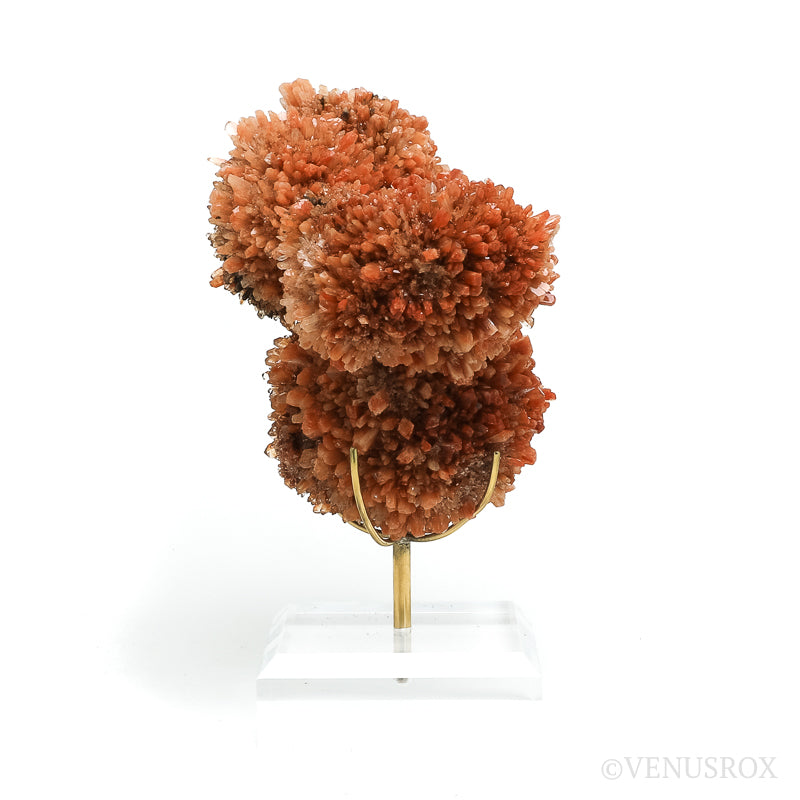
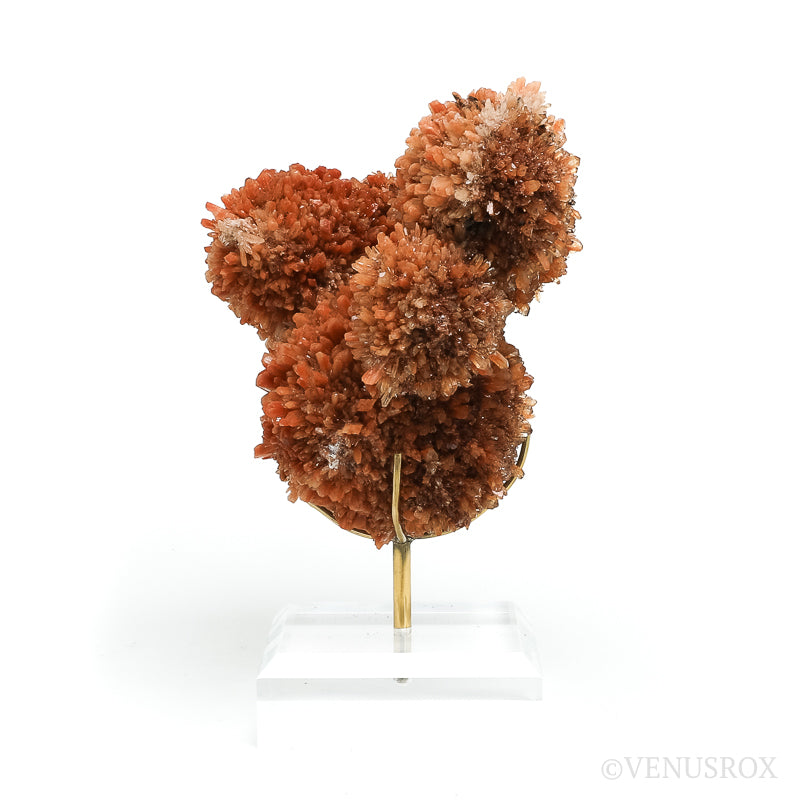
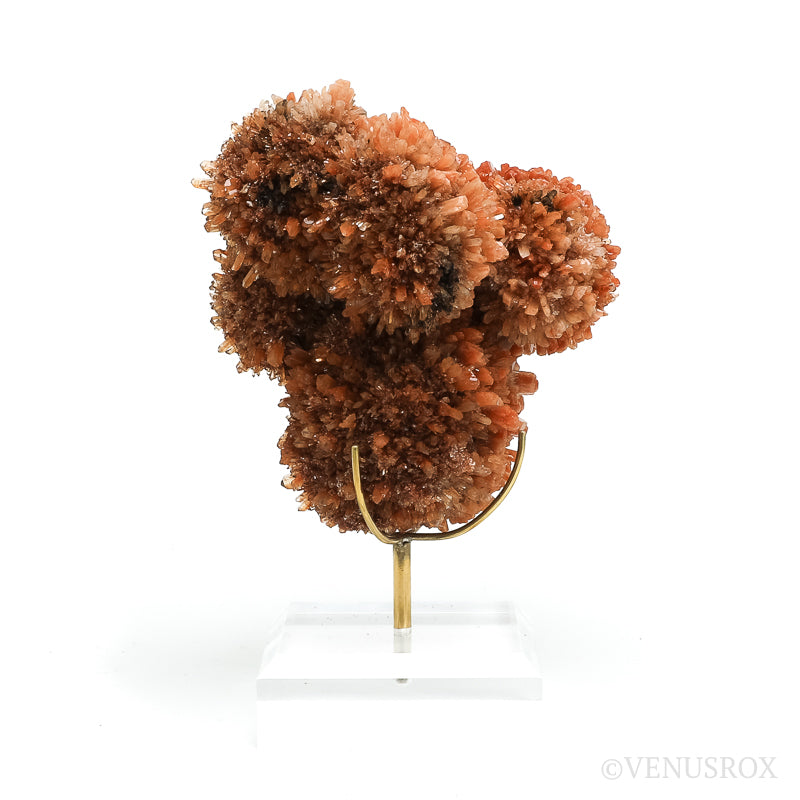
CREEDITE NATURAL CLUSTER
Mina Navidad, Abasolo, Durango, Mexico
20.5cm x 13.8cm x 12.2cm (8.1in x 5.4in x 4.8in)
Available for Private Aquisition.
Enquiries handled privately via WhatsApp or email
_____
Choose options
The saturated orange colouration displayed here represents Creedite at its most chromatic. It is the result of trace iron incorporated into the crystal structure during formation. This warm palette distinguishes Mexican Creedite from the lavender and colourless varieties found elsewhere, making Durango and Chihuahua material particularly sought after by collectors who prize both rarity and visual impact.
Creedite is a Calcium Aluminum Sulphate Fluoride Hydroxide mineral of considerable scarcity, forming only where specific geochemical conditions converge: oxidised zones of hydrothermal Fluorite deposits where Fluorine-rich fluids interact with limestone host rock.
First described from Creede, Colorado in 1916, the mineral has since been documented at only a handful of localities worldwide. Mexican deposits, discovered in the late 20th century, now yield the majority of fine specimens, though production remains limited and unpredictable.
The globular habit exhibited here represents optimal growth conditions sustained over extended periods. Each spherical formation began as a single nucleation point from which prismatic crystals radiated outward in all directions, eventually meeting neighbouring growths to create this complex architecture.
Presented upon a brass and acrylic mount.
Creedite can assist one in identifying and overcoming repetitive patterns that fail to serve one in one’s journey through life. It helps clear out all the emotional rubbish and debris, providing increased clarity and openness.
It is a powerful stone to help one and one’s surroundings shift to a higher frequency and is an excellent stone to have in one’s workspace.
Description
The saturated orange colouration displayed here represents Creedite at its most chromatic. It is the result of trace iron incorporated into the crystal structure during formation. This warm palette distinguishes Mexican Creedite from the lavender and colourless varieties found elsewhere, making Durango and Chihuahua material particularly sought after by collectors who prize both rarity and visual impact.
Creedite is a Calcium Aluminum Sulphate Fluoride Hydroxide mineral of considerable scarcity, forming only where specific geochemical conditions converge: oxidised zones of hydrothermal Fluorite deposits where Fluorine-rich fluids interact with limestone host rock.
First described from Creede, Colorado in 1916, the mineral has since been documented at only a handful of localities worldwide. Mexican deposits, discovered in the late 20th century, now yield the majority of fine specimens, though production remains limited and unpredictable.
The globular habit exhibited here represents optimal growth conditions sustained over extended periods. Each spherical formation began as a single nucleation point from which prismatic crystals radiated outward in all directions, eventually meeting neighbouring growths to create this complex architecture.
Presented upon a brass and acrylic mount.
Metaphysical
Creedite can assist one in identifying and overcoming repetitive patterns that fail to serve one in one’s journey through life. It helps clear out all the emotional rubbish and debris, providing increased clarity and openness.
It is a powerful stone to help one and one’s surroundings shift to a higher frequency and is an excellent stone to have in one’s workspace.