
_____
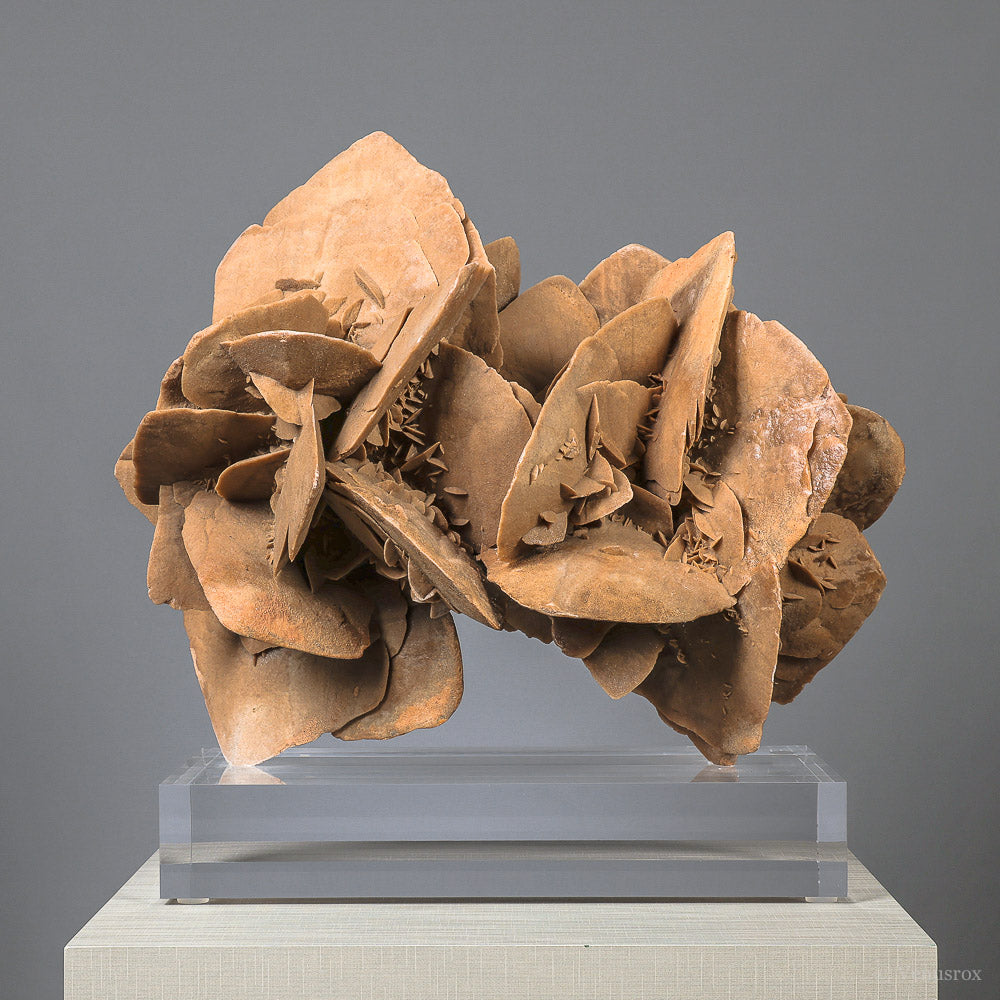
DESERT ROSE NATURAL CLUSTER
Tunisia
50.5cm x 55.0cm x 37.0cm (19.9 inches x 21.7 inches x 14.6 inches)
Available for Private Acquisition.
Enquiries handled privately via WhatsApp or email
_____
Choose options
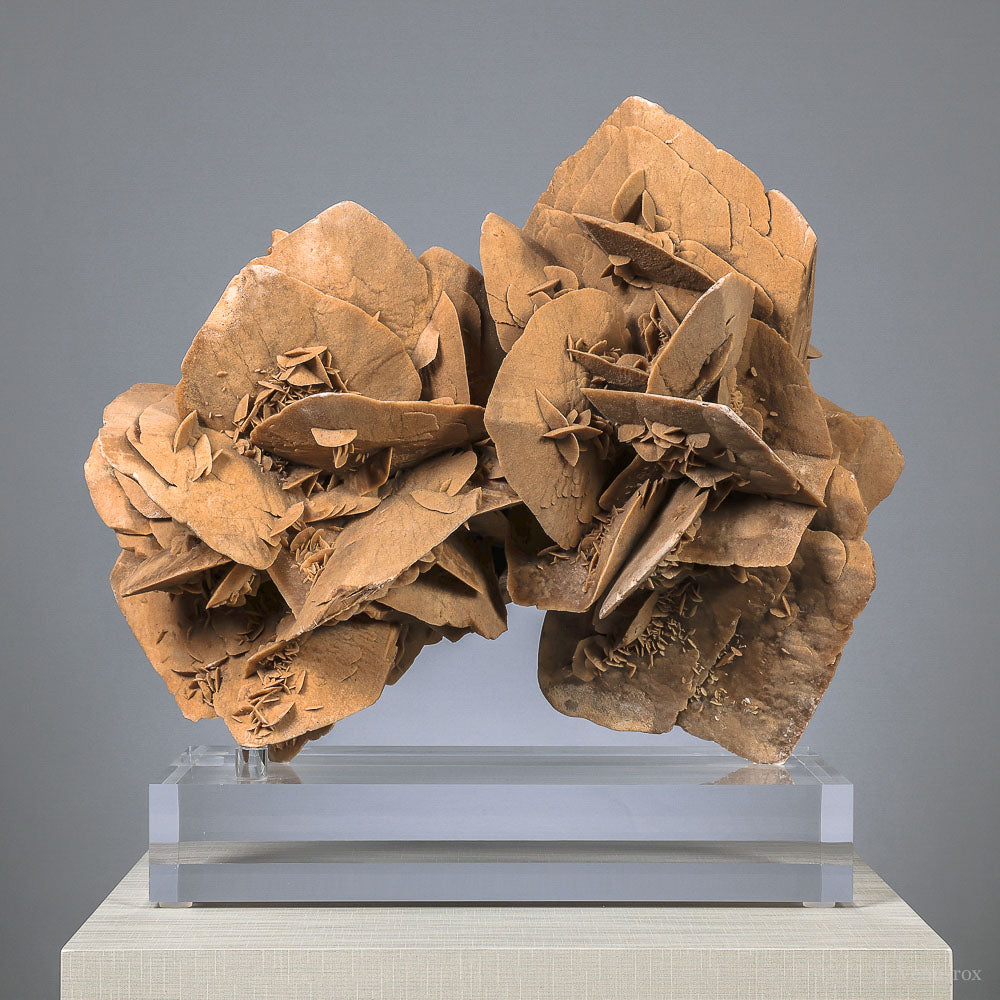
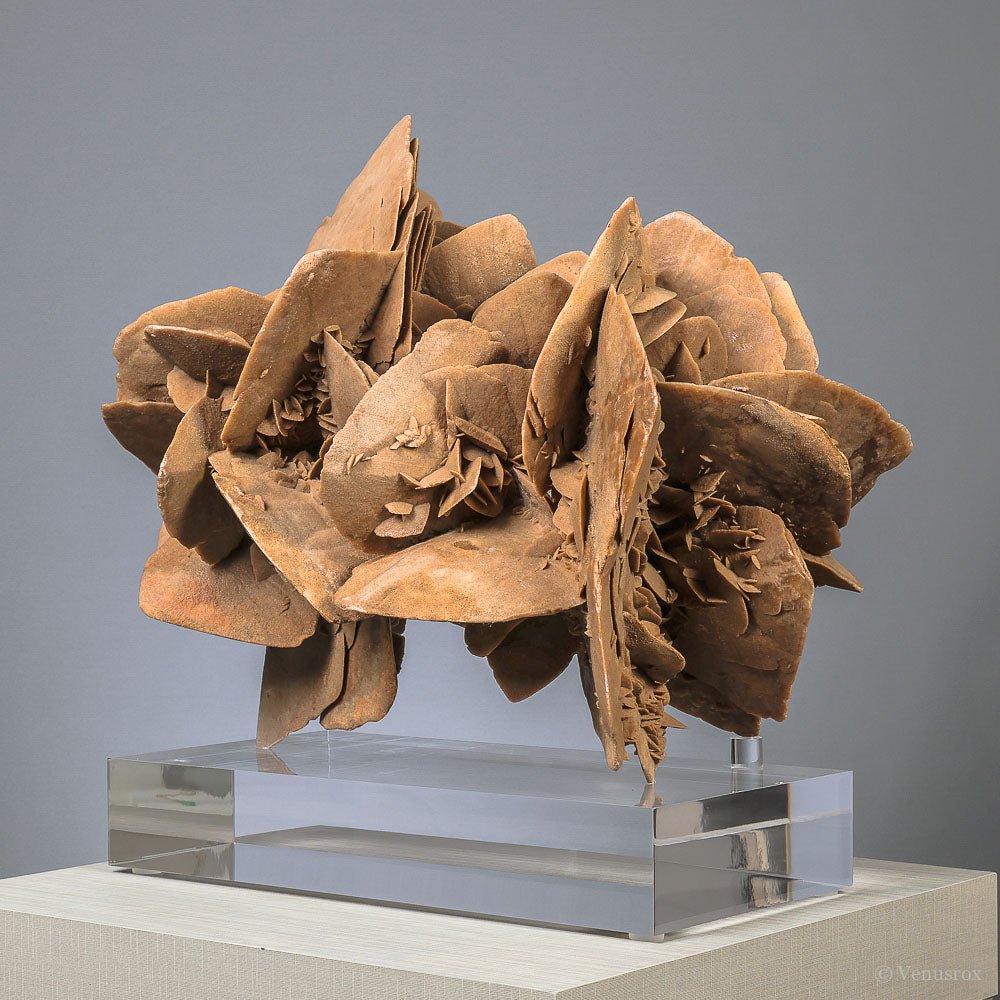
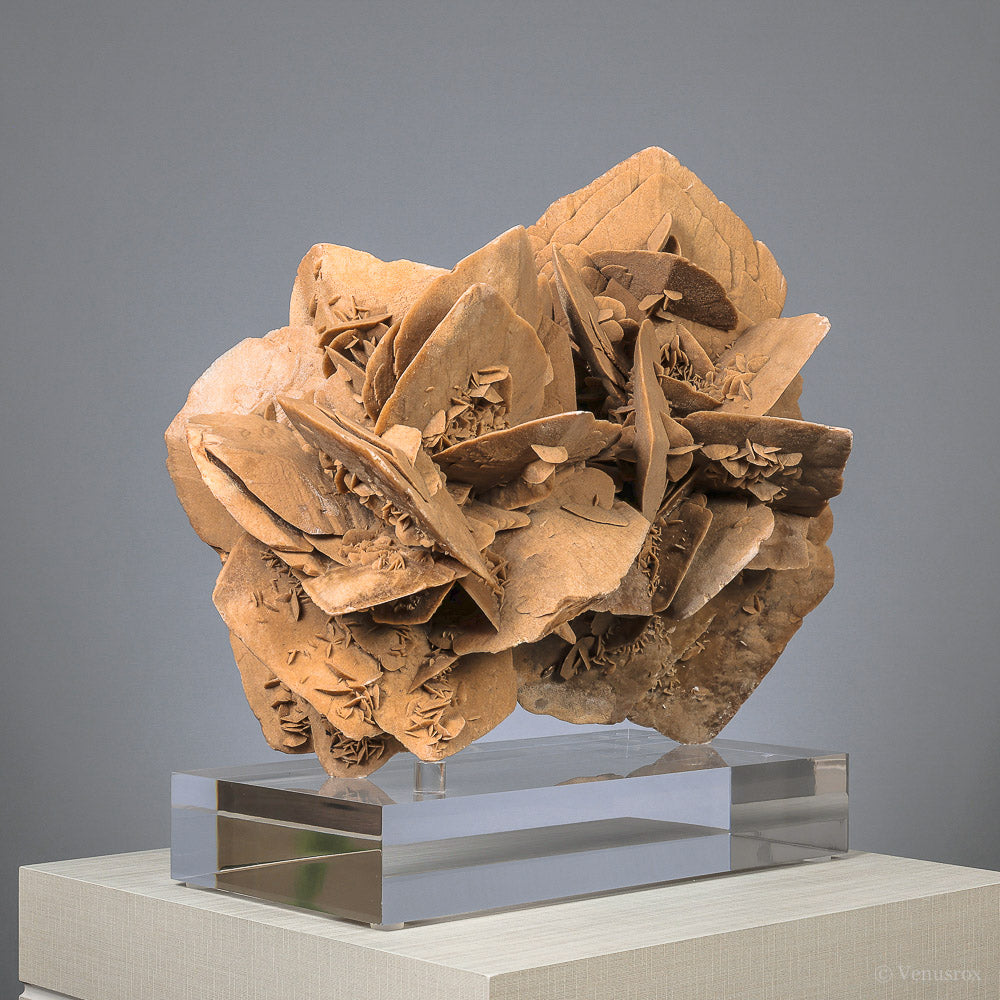
A magnificent specimen of two interlocking rosette formations composed of blade-like gypsum crystals radiating outward.
Desert Roses form in arid environments where Gypsum (Calcium Sulfate Dihydrate) crystallises within sandy soil under specific conditions of evaporation and groundwater chemistry. As mineral-laden water rises through capillary action and evaporates at the surface, Gypsum precipitates around sand grains, incorporating them into the growing crystal structure. The result is a composite material, part crystal, part sandstone, whose matte, granular texture distinguishes it from the glassy transparency of pure selenite gypsum.
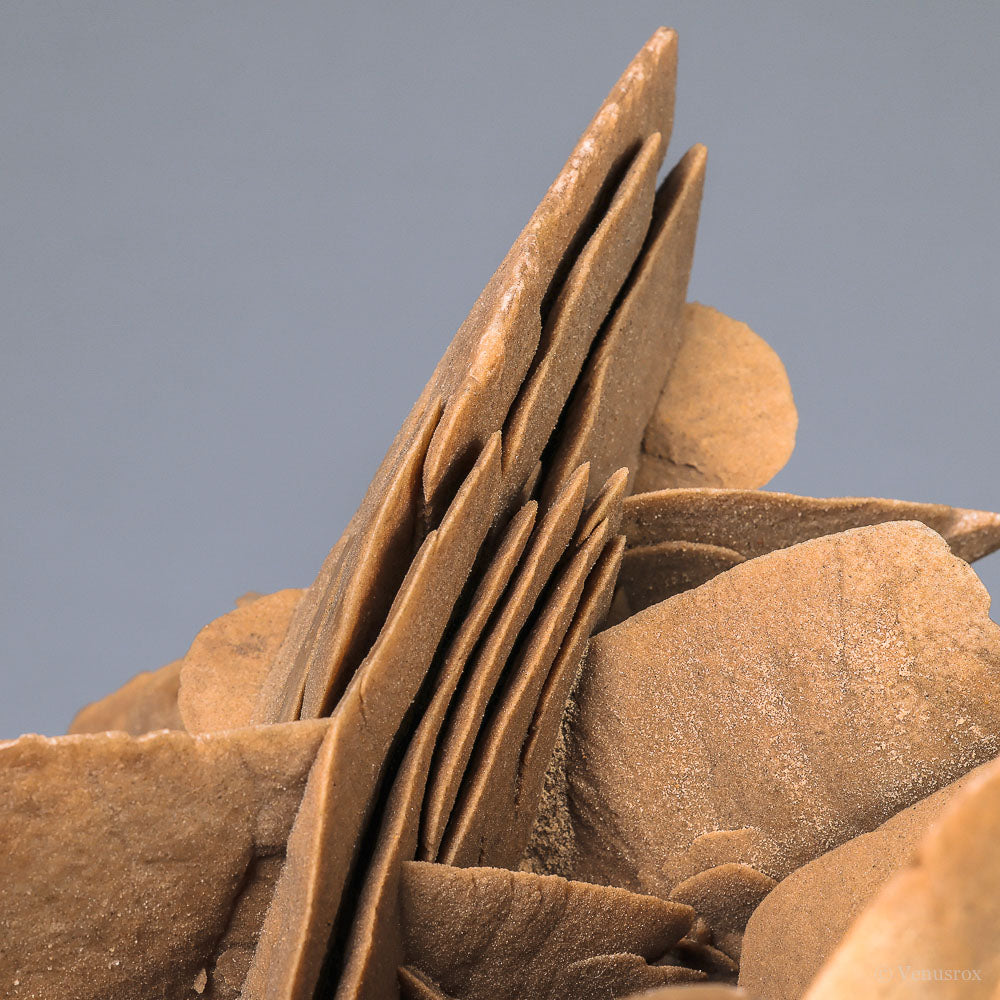
Tunisia's Saharan deposits produce Desert Roses of exceptional size and sculptural complexity, the region's specific geological conditions yielding formations that rival any in the world. The warm ochre coloration displayed here results from iron oxide within the incorporated sand, each blade recording the precise chemistry of its formation environment. Close examination reveals multiple generations of crystal growth with larger primary rosettes surrounded by secondary clusters of smaller, sharper blades that developed in later crystallisation phases.
Presented upon a bespoke stand.
Desert Rose has a gentle energy, teaching one that all life's ups and downs hold value and meaning.
Desert rose is a soft grounding stone, quieting mind chatter so that worries and fears don't interfere with clear decision-making in the present moment. It helps to release stored emotions, bringing steady self-assurance and inner peace. It supports decisive thinking and action while encouraging mental clarity and focus.
Desert rose is also thought to help attract prosperity to business endeavours, helping to create stable foundations for growth through its patient and grounding energies.
Description
A magnificent specimen of two interlocking rosette formations composed of blade-like gypsum crystals radiating outward.
Desert Roses form in arid environments where Gypsum (Calcium Sulfate Dihydrate) crystallises within sandy soil under specific conditions of evaporation and groundwater chemistry. As mineral-laden water rises through capillary action and evaporates at the surface, Gypsum precipitates around sand grains, incorporating them into the growing crystal structure. The result is a composite material, part crystal, part sandstone, whose matte, granular texture distinguishes it from the glassy transparency of pure selenite gypsum.
Tunisia's Saharan deposits produce Desert Roses of exceptional size and sculptural complexity, the region's specific geological conditions yielding formations that rival any in the world. The warm ochre coloration displayed here results from iron oxide within the incorporated sand, each blade recording the precise chemistry of its formation environment. Close examination reveals multiple generations of crystal growth with larger primary rosettes surrounded by secondary clusters of smaller, sharper blades that developed in later crystallisation phases.
Presented upon a bespoke stand.
Metaphysical
Desert Rose has a gentle energy, teaching one that all life's ups and downs hold value and meaning.
Desert rose is a soft grounding stone, quieting mind chatter so that worries and fears don't interfere with clear decision-making in the present moment. It helps to release stored emotions, bringing steady self-assurance and inner peace. It supports decisive thinking and action while encouraging mental clarity and focus.
Desert rose is also thought to help attract prosperity to business endeavours, helping to create stable foundations for growth through its patient and grounding energies.