

_____
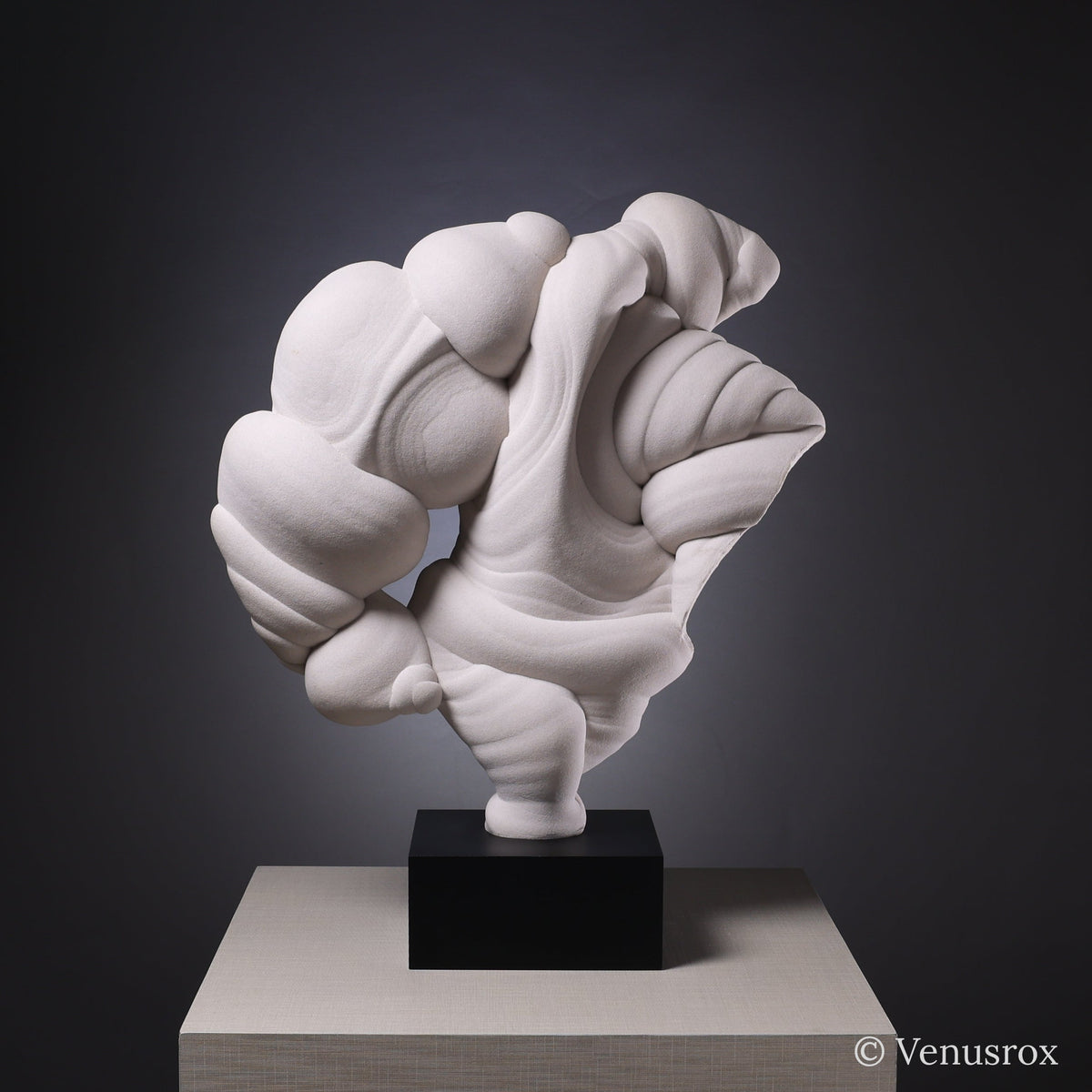
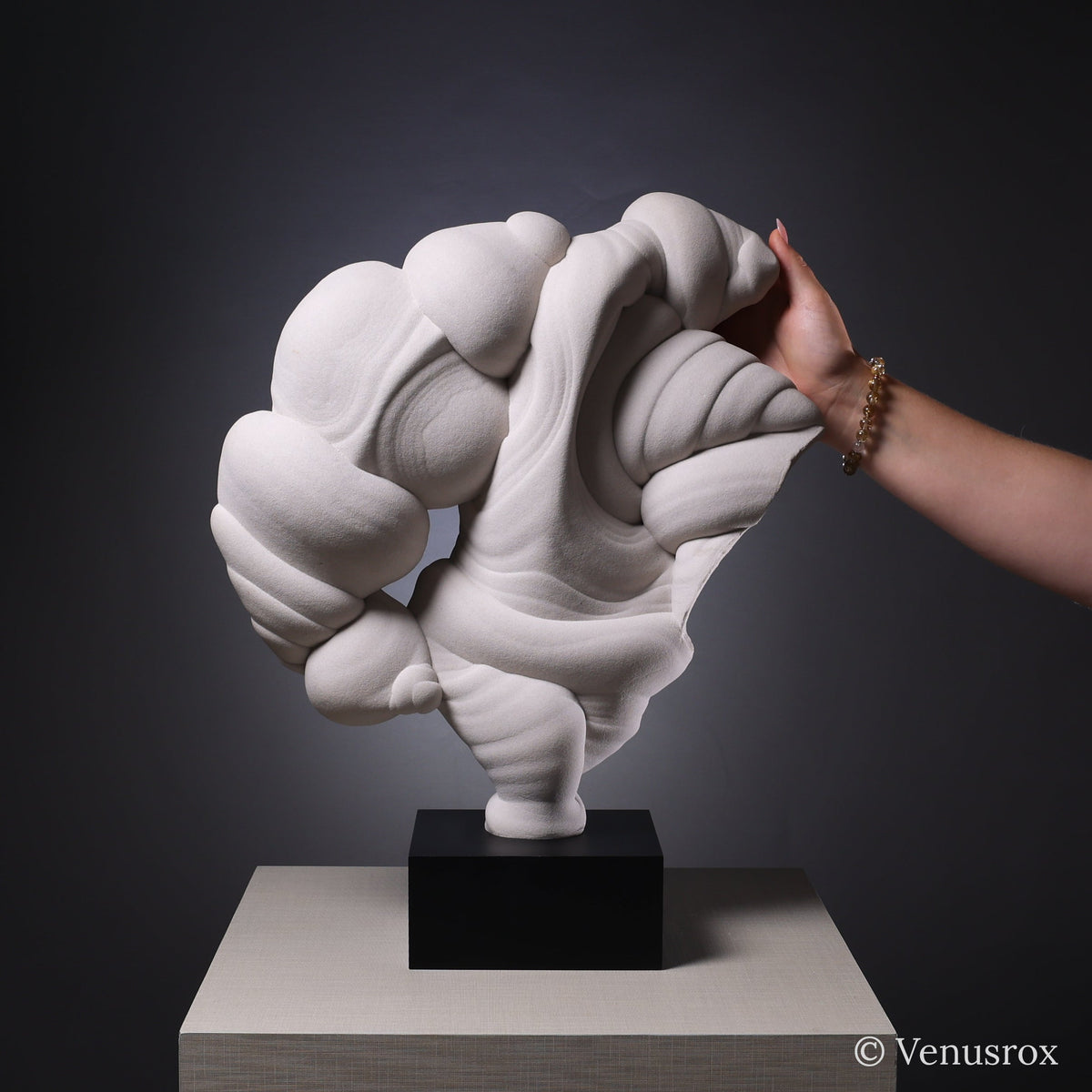
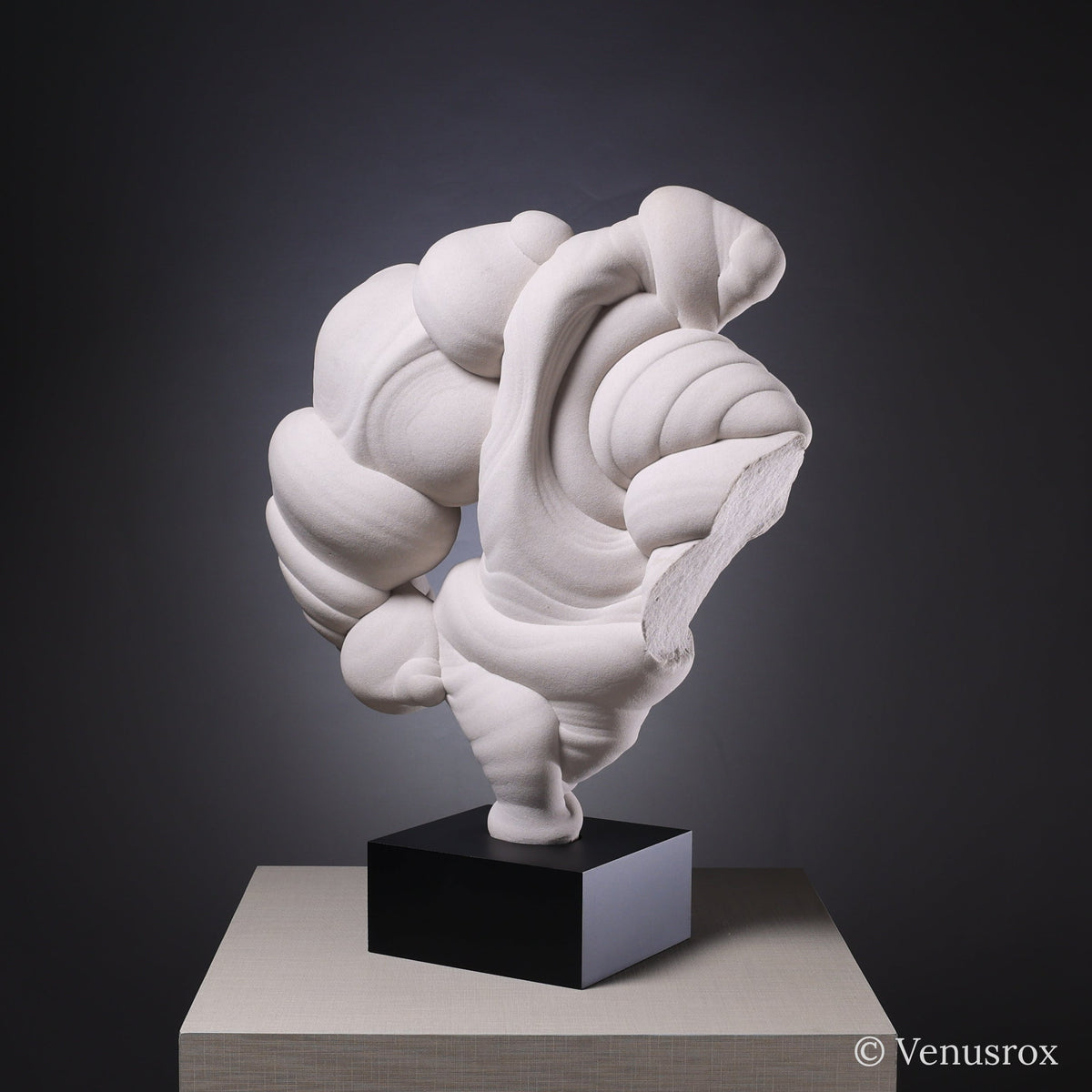
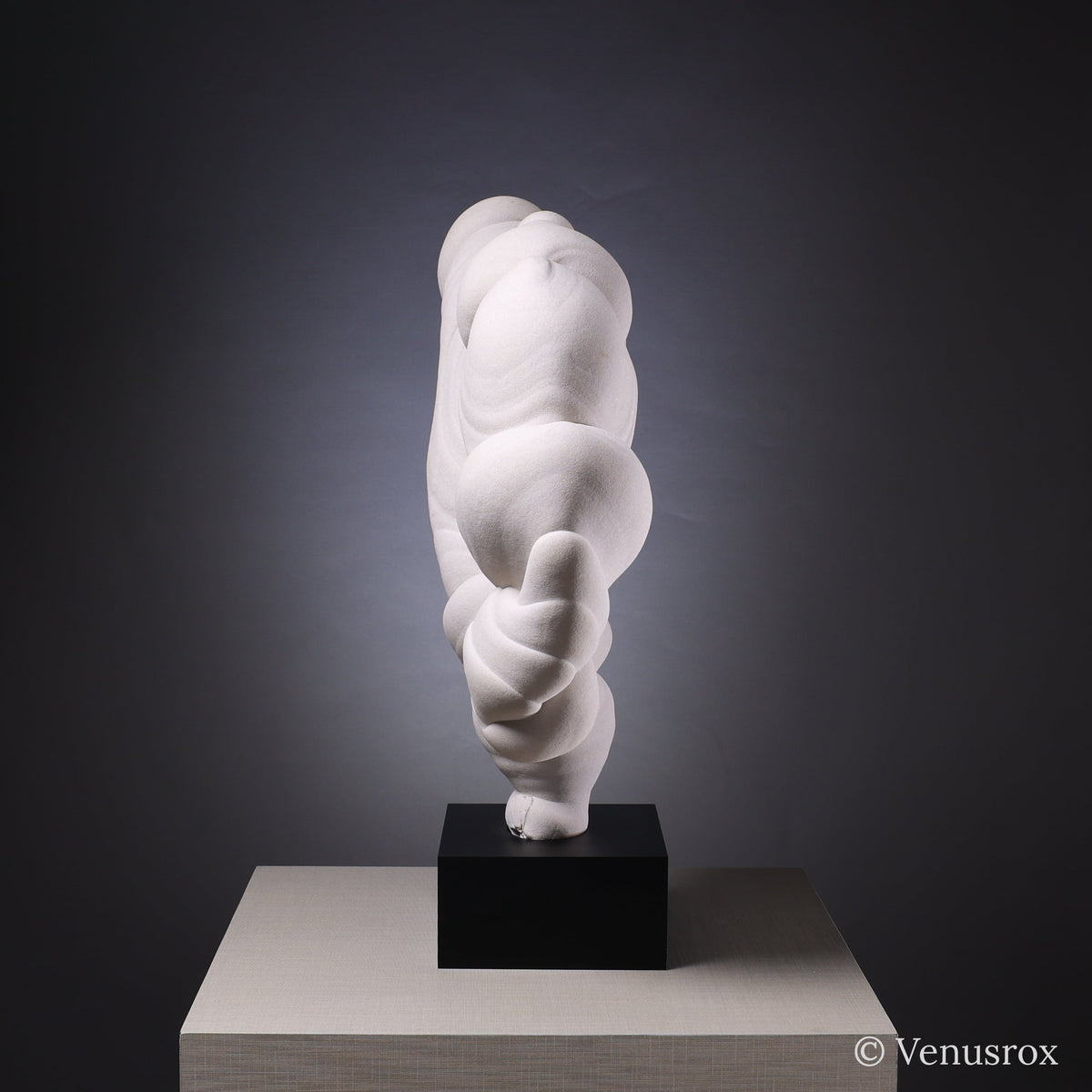
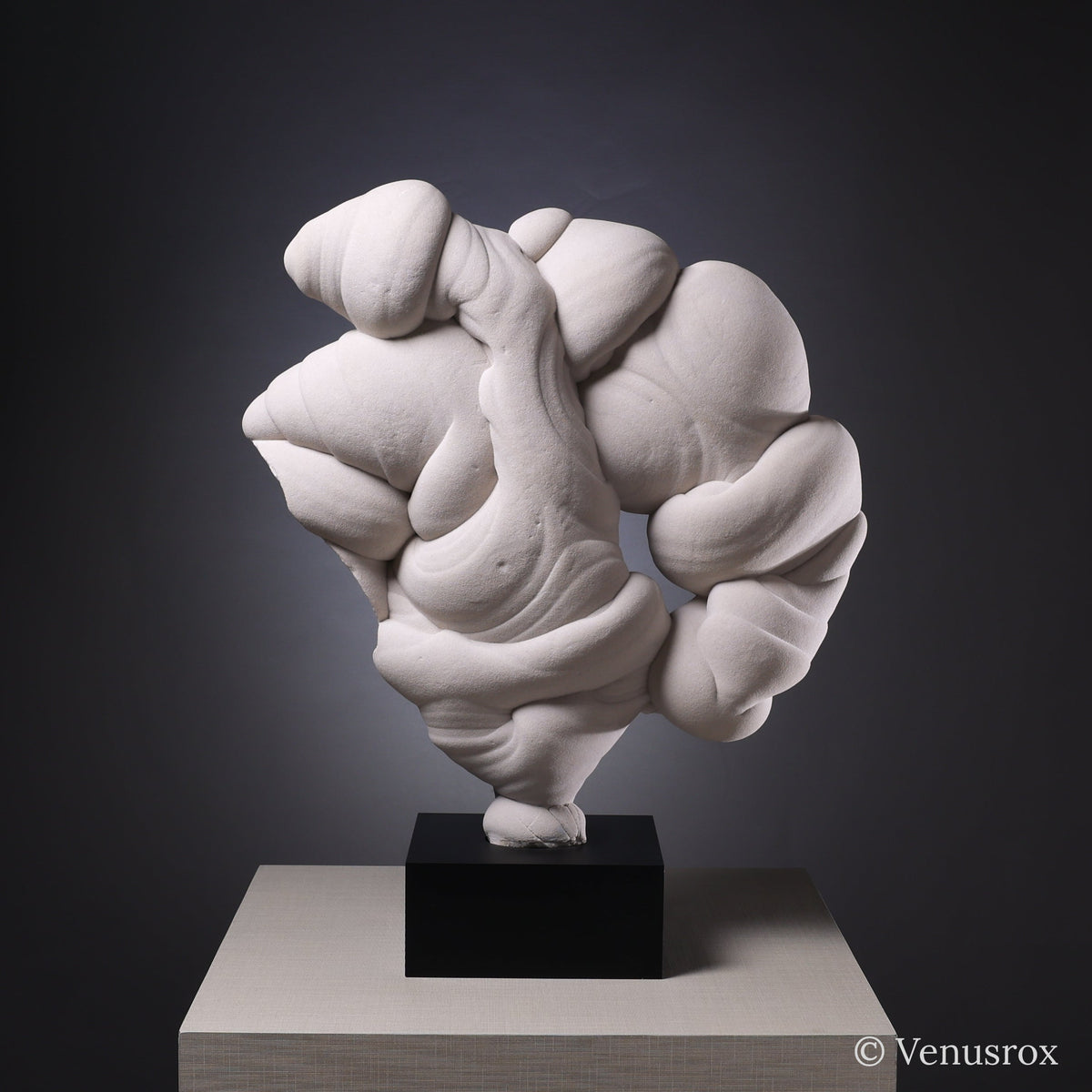
GOGOTTE NATURAL CRYSTAL
Fontainebleau, France
48cm x 41cm x 17cm (18.9in x 16.1in x 6.7in)
Available for Private Aquisition
Enquiries handled privately via WhatsApp or email
_____
Choose options
Gogottes form exclusively in the Oligocene-age sands of the Fontainebleau region south of Paris, where a precise confluence of geological conditions creates these extraordinary natural sculptures.
Silica-saturated groundwater percolates through the fine Quartz sand, depositing microscopic layers of Chalcedony cement that bind the grains together. Over millennia, this process builds structures of astonishing complexity with the flowing, organic forms emerging from differential cementation rates and subtle variations in water chemistry and sand porosity.
The resulting sandstone retains the fine, matte texture of its constituent grains while achieving remarkable structural integrity. The pure white colouration indicates exceptionally clean source sand, free from the Iron oxides that tint specimens from other localities. Each Gogotte is unique
.
First collected in the 18th century, Gogottes captivated Enlightenment naturalists and later drew the attention of Surrealist artists, who recognised in these forms a kinship with the subconscious landscapes of their own work. Today, Fontainebleau's protected status and the inherent rarity of well-formed specimens make significant examples increasingly scarce.
Presented upon a bespoke base.
Formed millions of years ago, Gogotte’s are naturally formed concretions consisting of tiny Quartz fragments bound together by Calcium Carbonate.
These exquisite pieces of natural art with their unique cloud like formations and characteristic ripples evokes the soft curves of classical sculpture. The finest specimens found in Fontainbleau, France.
Gogotte’s are a stone of creativity, helping to clear one’s mind of distractions so one can focus on the project or goal one wishes to manifest, whilst encouraging one’s imagination to run riot and have fun! They also assist one in staying strong, determined, and focused, enabling one to drive things through to completion.
They teach one to not be afraid to change direction if needed, allow energy to flow and to trust in the abundance of the Universe.
Description
Gogottes form exclusively in the Oligocene-age sands of the Fontainebleau region south of Paris, where a precise confluence of geological conditions creates these extraordinary natural sculptures.
Silica-saturated groundwater percolates through the fine Quartz sand, depositing microscopic layers of Chalcedony cement that bind the grains together. Over millennia, this process builds structures of astonishing complexity with the flowing, organic forms emerging from differential cementation rates and subtle variations in water chemistry and sand porosity.
The resulting sandstone retains the fine, matte texture of its constituent grains while achieving remarkable structural integrity. The pure white colouration indicates exceptionally clean source sand, free from the Iron oxides that tint specimens from other localities. Each Gogotte is unique
.
First collected in the 18th century, Gogottes captivated Enlightenment naturalists and later drew the attention of Surrealist artists, who recognised in these forms a kinship with the subconscious landscapes of their own work. Today, Fontainebleau's protected status and the inherent rarity of well-formed specimens make significant examples increasingly scarce.
Presented upon a bespoke base.
Metaphysical
Formed millions of years ago, Gogotte’s are naturally formed concretions consisting of tiny Quartz fragments bound together by Calcium Carbonate.
These exquisite pieces of natural art with their unique cloud like formations and characteristic ripples evokes the soft curves of classical sculpture. The finest specimens found in Fontainbleau, France.
Gogotte’s are a stone of creativity, helping to clear one’s mind of distractions so one can focus on the project or goal one wishes to manifest, whilst encouraging one’s imagination to run riot and have fun! They also assist one in staying strong, determined, and focused, enabling one to drive things through to completion.
They teach one to not be afraid to change direction if needed, allow energy to flow and to trust in the abundance of the Universe.