_____
LABRADORITE SPHERE
Madagascar
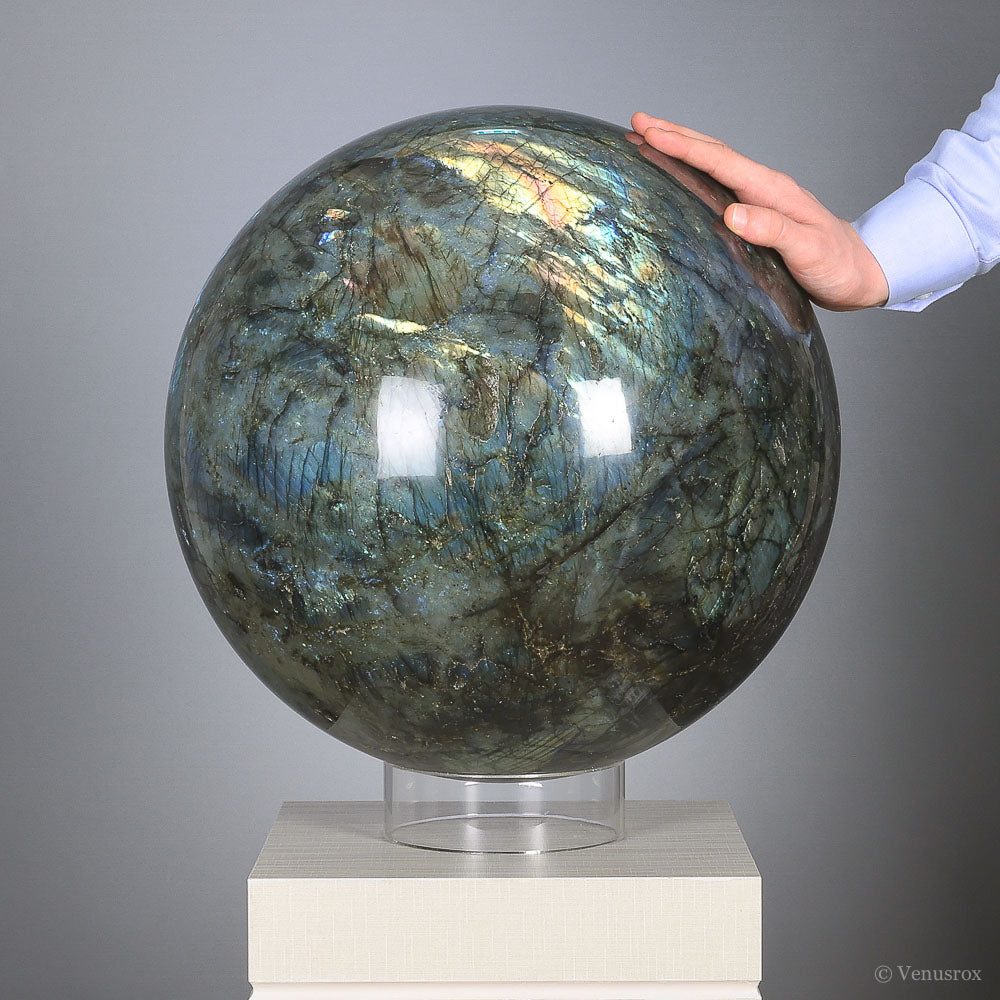
Diameter: 41cm (16.1in)
Available for Private Acquisition
Enquiries handled privately via WhatsApp or email
_____
Choose options


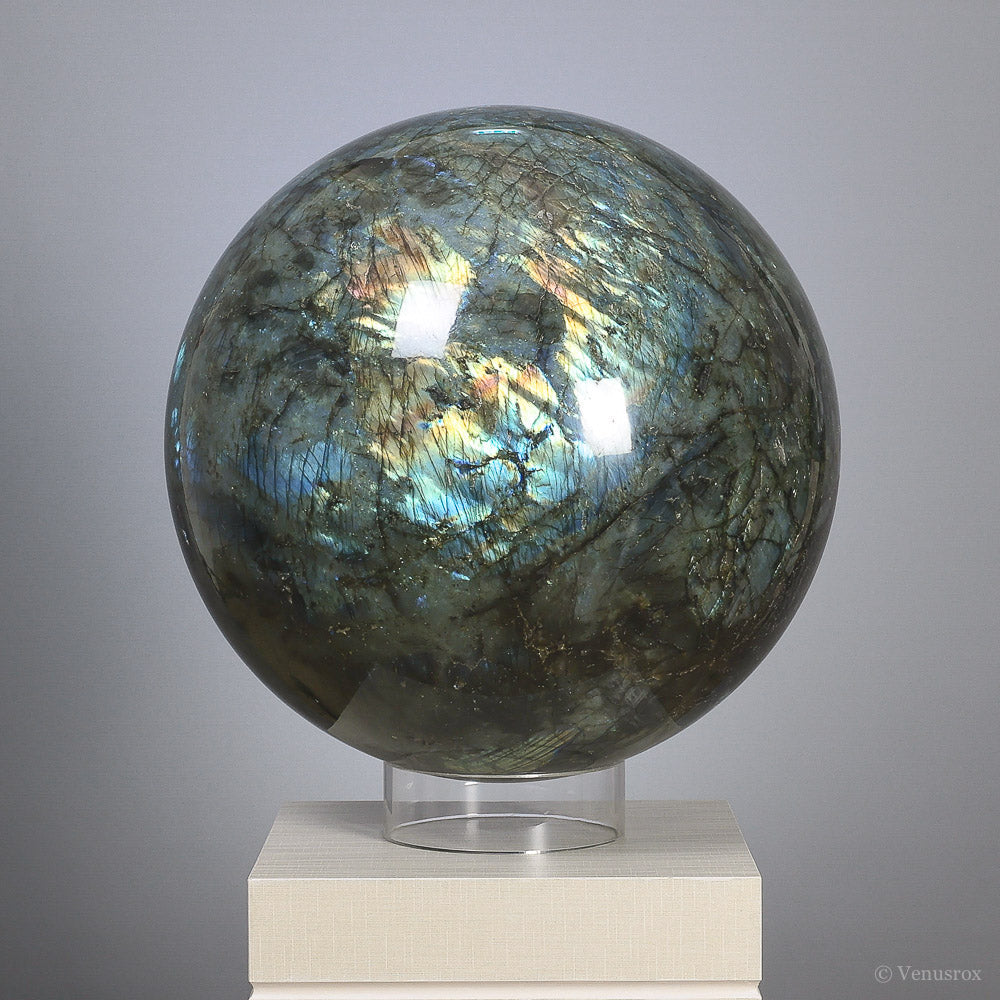
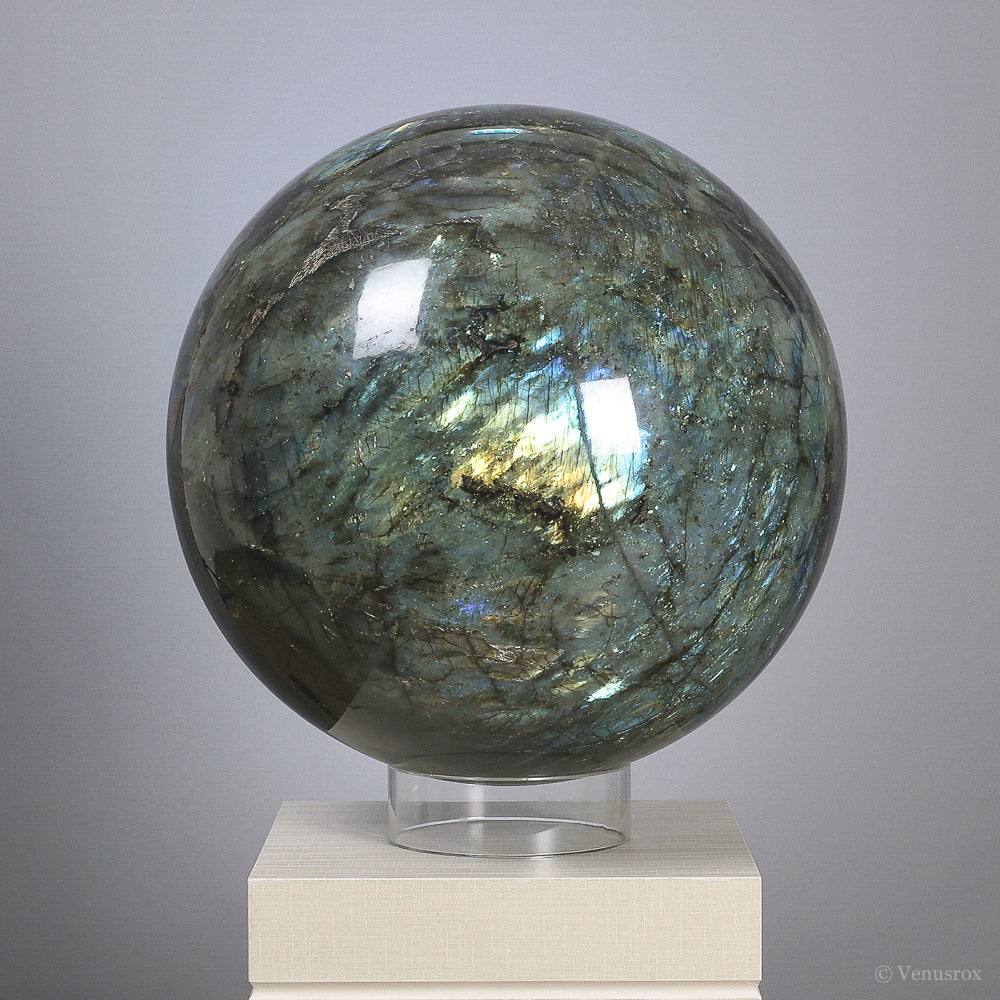
This substantial sphere captures Labradorite's legendary optical phenomenon in three-dimensional form. Broad flashes of electric blue, molten gold, and coppery orange ignite across the polished surface as light strikes the stone's internal architecture. The spherical presentation ensures Labradorescence from every angle, transforming each rotation into a shifting display of spectral colour against the stone's deep grey-green body.
Labradorescence, the iridescent optical effect unique to this plagioclase feldspar, results from light interference within the stone's lamellar microstructure. During crystallisation, Labradorite develops thin, alternating layers of different chemical composition. When light enters the stone and encounters these microscopic planes, it scatters and interferes, producing the vivid colour flashes visible on the surface. The specific colours displayed depend on lamellae thickness: thinner layers produce blues and violets, while thicker structures yield golds, oranges, and rare reds.
This specimen displays exceptional multi-chromatic flash, the coveted "full spectrum" Labradorescence that commands premium status among collectors. Dominant electric blues give way to zones of fiery copper and golden amber, the colours bleeding into one another across broad, continuous flash zones. The dark grey matrix intensifies the optical drama, providing maximum contrast for the iridescent display.
Madagascar has emerged as a primary source for high-quality labradorite, its anorthosite deposits yielding material rivalling the original Canadian type locality on Paul's Island, Labrador. Spheres of this scale require rough of considerable size and consistent flash orientation, the spherical form maximising the optical effect that makes this feldspar so prized.

Description
This substantial sphere captures Labradorite's legendary optical phenomenon in three-dimensional form. Broad flashes of electric blue, molten gold, and coppery orange ignite across the polished surface as light strikes the stone's internal architecture. The spherical presentation ensures Labradorescence from every angle, transforming each rotation into a shifting display of spectral colour against the stone's deep grey-green body.
Labradorescence, the iridescent optical effect unique to this plagioclase feldspar, results from light interference within the stone's lamellar microstructure. During crystallisation, Labradorite develops thin, alternating layers of different chemical composition. When light enters the stone and encounters these microscopic planes, it scatters and interferes, producing the vivid colour flashes visible on the surface. The specific colours displayed depend on lamellae thickness: thinner layers produce blues and violets, while thicker structures yield golds, oranges, and rare reds.
This specimen displays exceptional multi-chromatic flash, the coveted "full spectrum" Labradorescence that commands premium status among collectors. Dominant electric blues give way to zones of fiery copper and golden amber, the colours bleeding into one another across broad, continuous flash zones. The dark grey matrix intensifies the optical drama, providing maximum contrast for the iridescent display.
Madagascar has emerged as a primary source for high-quality labradorite, its anorthosite deposits yielding material rivalling the original Canadian type locality on Paul's Island, Labrador. Spheres of this scale require rough of considerable size and consistent flash orientation, the spherical form maximising the optical effect that makes this feldspar so prized.