



_____
METEORITE (ALETAI) SPHERE
Xinjiang, China
Available for Private Aquisition.
Enquiries handled privately via WhatsApp or email
_____
Choose options
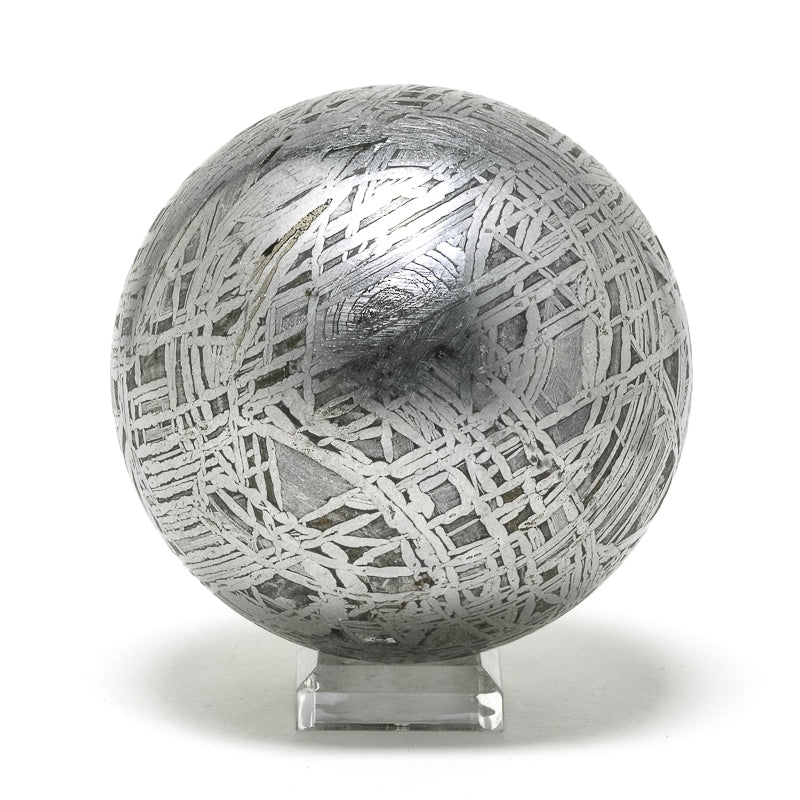
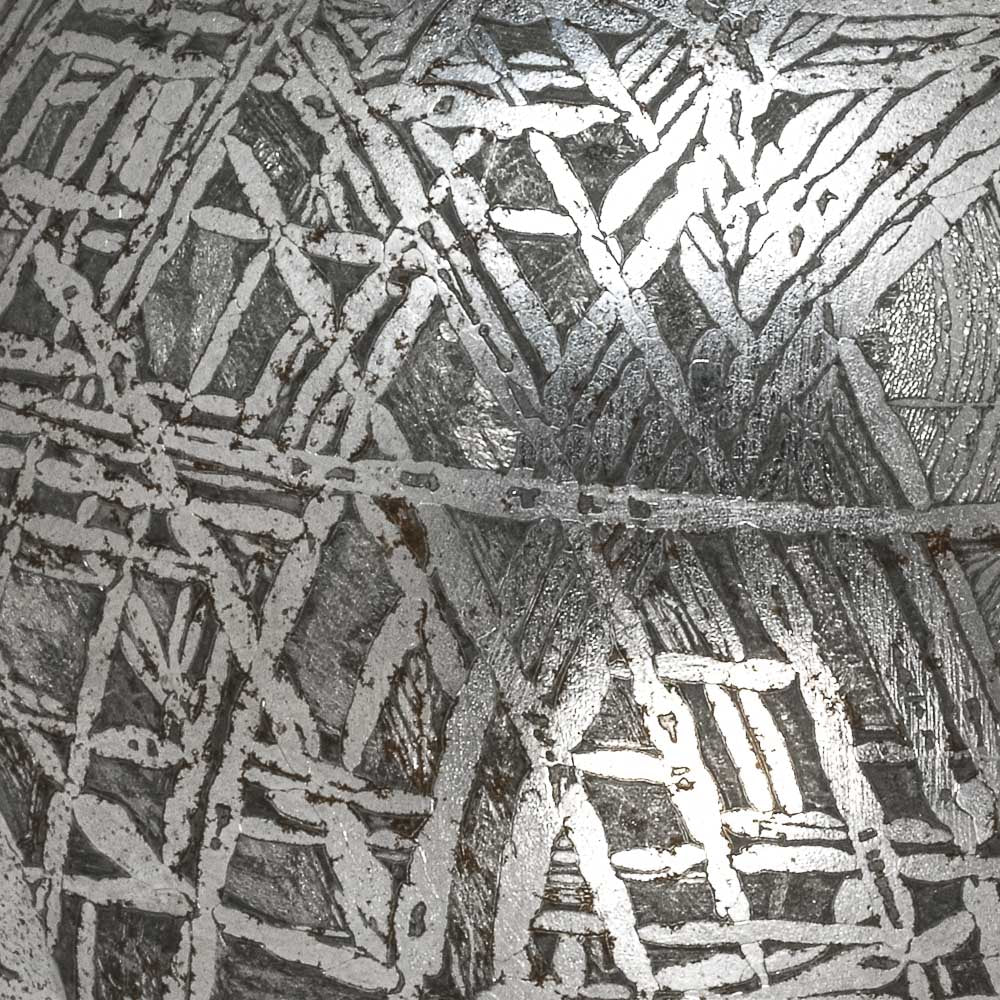
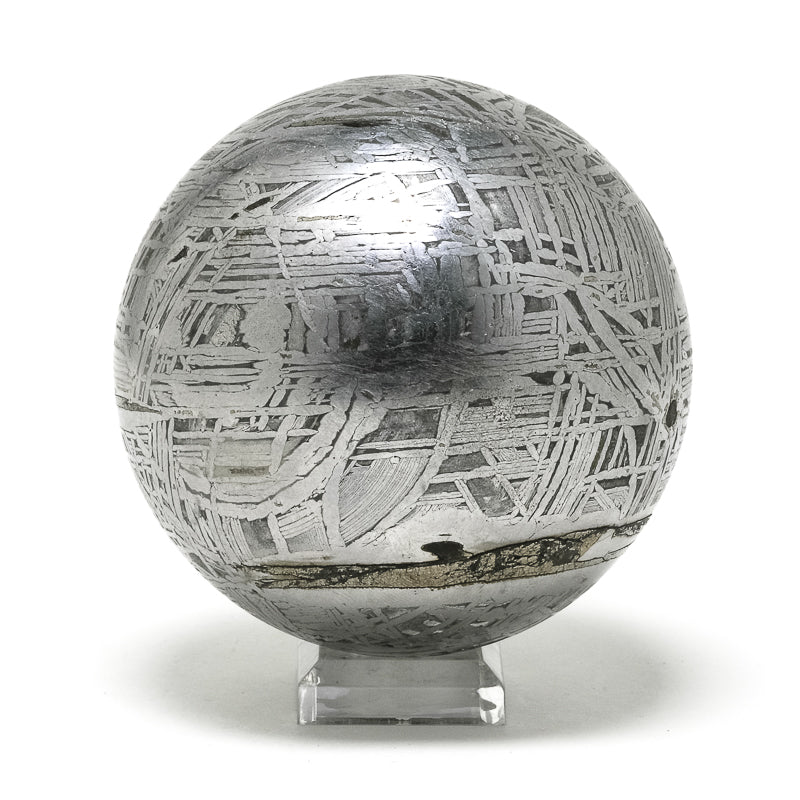
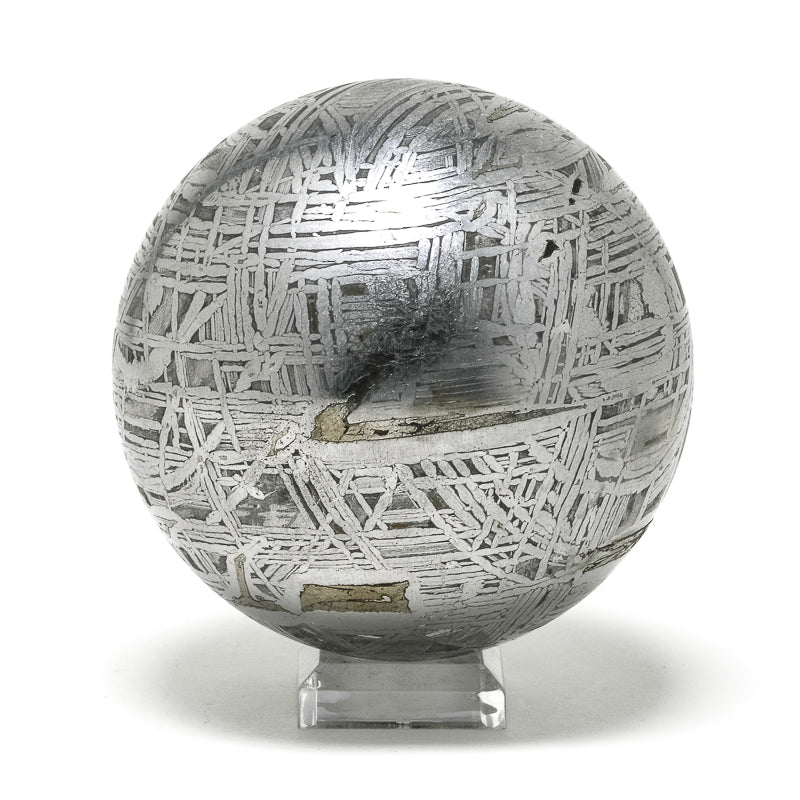
A metallic sphere polished from the core of the famous Aletai Meteorite, discovered in China's far northwestern province of Xinjiang. This sphere allows a three-dimensional view of the meteorite's interior Widmanstätten pattern, chiefly formed of the interweaving bands of two iron-nickel alloys, Taenite and Kamacite, the latter of which is unique to Meteorite specimens and found nowhere else on Earth.
Aletai is a member of one of the smallest subgroups of Iron Meteorites in the scientific literature, with only sixteen IIIE Meteorites on record. Of these sixteen, only two have anomalous chemical abundances and Aletai is one of them, as it contains the highest concentration of Gold in the IIIE group.
Aletai also contains a relatively large amount of Iridium, the second densest element known. Because the abundance of Iridium in Meteorites is much higher than that found in the Earth's crust, it was the unusually large amount of Iridium present in the 65 million-year-old Cretaceous–Paleogene boundary that gave the idea that a massive meteorite impact was responsible for the extinction of the dinosaurs 65 million years ago.
The entire mass of Aletai is close to 100 tons, and a 28-ton Aletai specimen is the 5th largest single Meteorite found on Earth. The strewn field was so vast, 430 km (267 miles) in length, that for some time different specimens from this meteorite shower had different names (Armanty, Xinjiang, and Ulasitai). As it has now been determined that each of these meteorites originated from the same event, they have all been renamed Aletai.
The spherical form transforms the Widmanstätten pattern into continuous cartography — 4.5 billion years of cosmic history, held in the palm of a hand.
The Aletai Meteorite is classed as an IIIE-AN Iron Meteorite and is also known to contain the iron-nickel alloys: kamacite & taenite, both of which can only be found on earth in meteorites.
Nickel-Iron Meteorites can bring on great awakenings and great changes can happen very quickly. One has to be ‘up to speed ‘though with their vibration frequency to feel and experience the benefits.
They are a catalyst to spiritual awakening and at the same time they are grounding and protective of the emotional body. They help develop patience and to see projects through to completion.
Description
A metallic sphere polished from the core of the famous Aletai Meteorite, discovered in China's far northwestern province of Xinjiang. This sphere allows a three-dimensional view of the meteorite's interior Widmanstätten pattern, chiefly formed of the interweaving bands of two iron-nickel alloys, Taenite and Kamacite, the latter of which is unique to Meteorite specimens and found nowhere else on Earth.
Aletai is a member of one of the smallest subgroups of Iron Meteorites in the scientific literature, with only sixteen IIIE Meteorites on record. Of these sixteen, only two have anomalous chemical abundances and Aletai is one of them, as it contains the highest concentration of Gold in the IIIE group.
Aletai also contains a relatively large amount of Iridium, the second densest element known. Because the abundance of Iridium in Meteorites is much higher than that found in the Earth's crust, it was the unusually large amount of Iridium present in the 65 million-year-old Cretaceous–Paleogene boundary that gave the idea that a massive meteorite impact was responsible for the extinction of the dinosaurs 65 million years ago.
The entire mass of Aletai is close to 100 tons, and a 28-ton Aletai specimen is the 5th largest single Meteorite found on Earth. The strewn field was so vast, 430 km (267 miles) in length, that for some time different specimens from this meteorite shower had different names (Armanty, Xinjiang, and Ulasitai). As it has now been determined that each of these meteorites originated from the same event, they have all been renamed Aletai.
The spherical form transforms the Widmanstätten pattern into continuous cartography — 4.5 billion years of cosmic history, held in the palm of a hand.
Metaphysical
The Aletai Meteorite is classed as an IIIE-AN Iron Meteorite and is also known to contain the iron-nickel alloys: kamacite & taenite, both of which can only be found on earth in meteorites.
Nickel-Iron Meteorites can bring on great awakenings and great changes can happen very quickly. One has to be ‘up to speed ‘though with their vibration frequency to feel and experience the benefits.
They are a catalyst to spiritual awakening and at the same time they are grounding and protective of the emotional body. They help develop patience and to see projects through to completion.