

_____
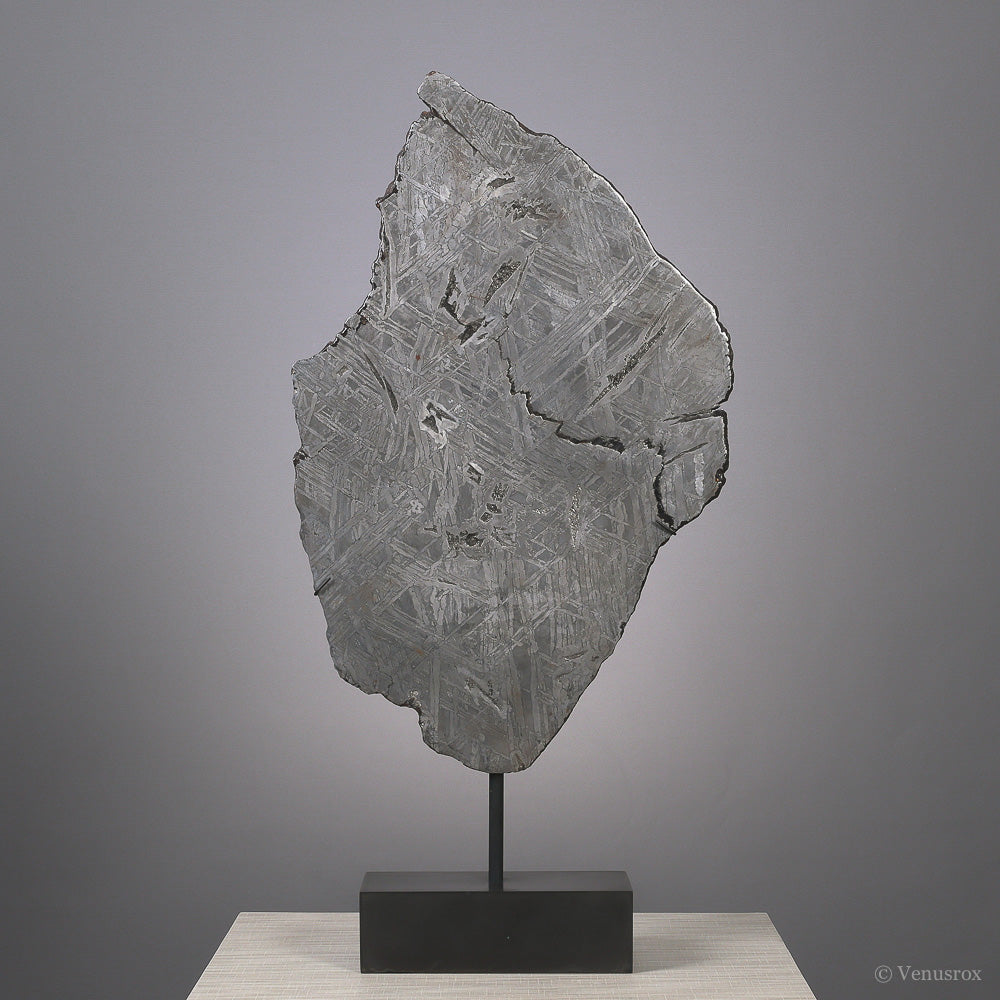
METEORITE (SEYMCHAN PALLASITE) POLISHED SLICE
Hekandue River, Jasačnaja, Magadan District, Russia
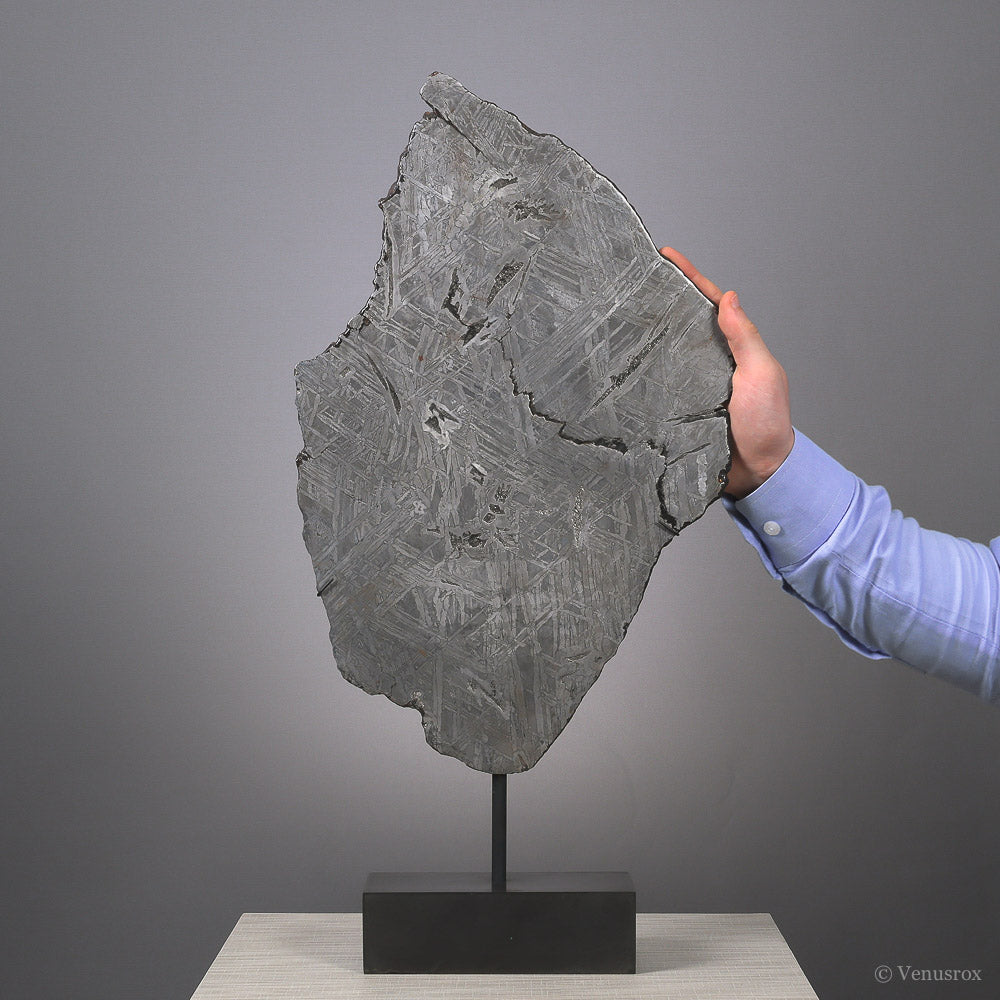
59cm x 30cm x 9cm (23.2 inches x 11.8 inches x 3.5 inches) including the stand
Available for Private Aquisition.
Enquiries handled privately via WhatsApp or email
_____
Choose options
This extraordinary slice of the Seymchan meteorite commands attention at museum scale. A substantial slice of extraterrestrial iron, cut and polished to reveal the intricate crystalline latticework that formed over millions of years in the vacuum of space.
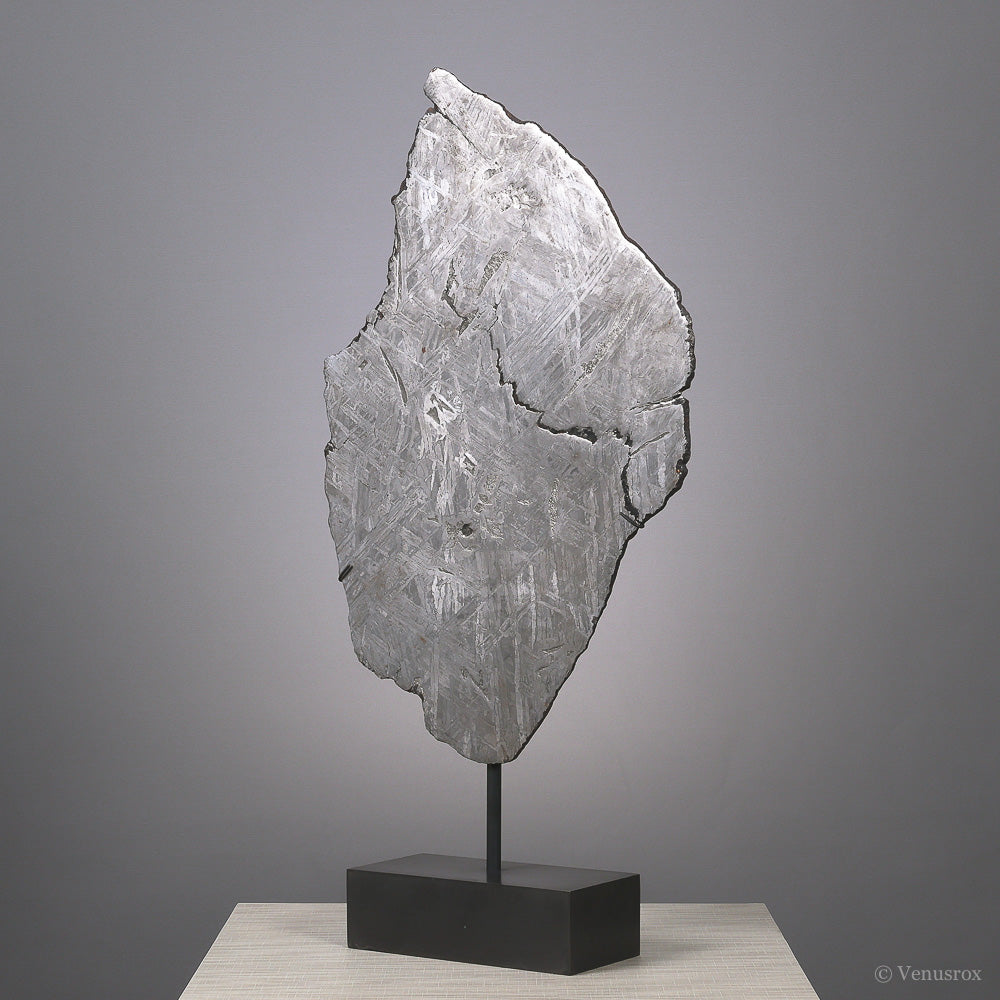
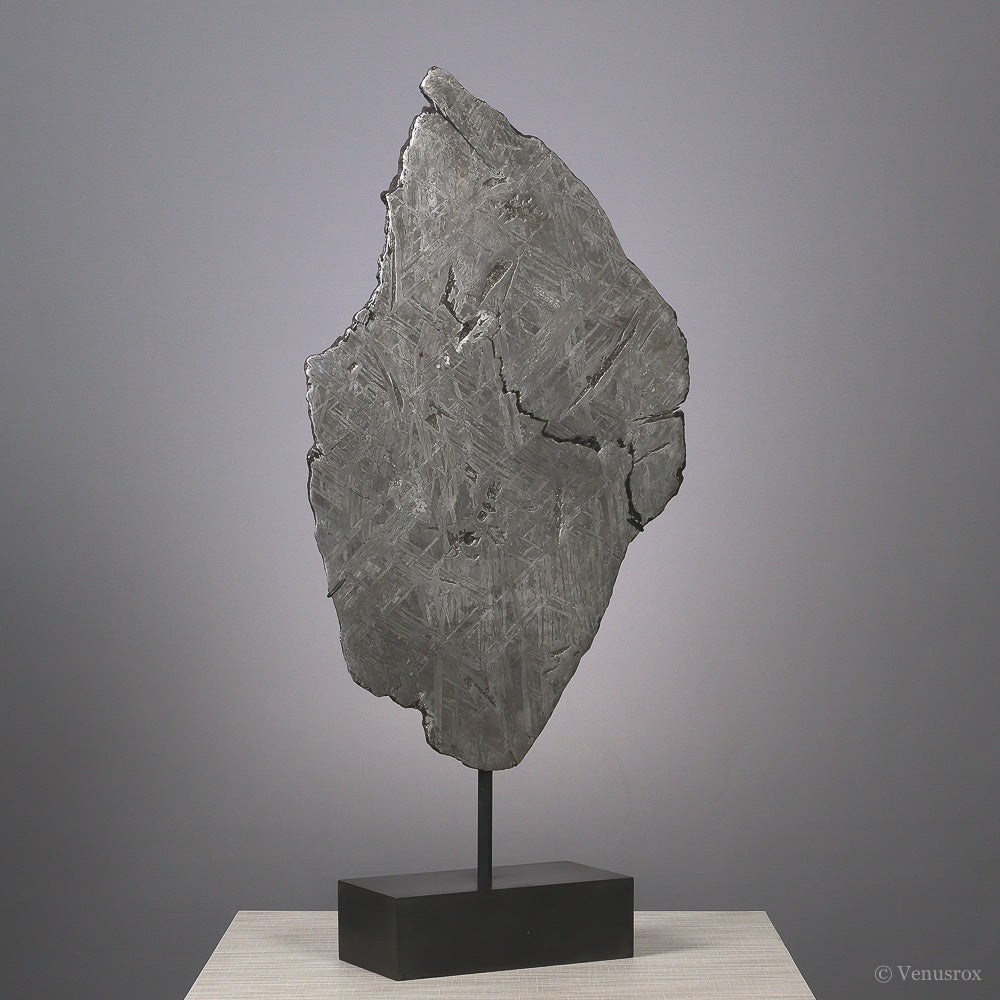
The Widmanstätten pattern displayed across this specimen represents one of nature's most exclusive phenomena, a crystalline structure found nowhere on Earth. These interlocking bands of Kamacite and Taenite (iron-nickel alloys) developed as the meteorite's parent body cooled at an almost inconceivably slow rate: approximately one degree Celsius per million years. This glacial cooling allowed iron and nickel atoms to migrate and segregate into the distinctive cross-hatched plates visible here, their orientation recording the original crystallographic axes of the parent asteroid's core.
Seymchan was discovered in 1967 in Russia's Magadan Oblast, in the remote Kolyma region of northeastern Siberia. Initially classified as a IIE iron meteorite, subsequent finds from the same strewn field revealed specimens containing olivine crystals, reclassifying portions of Seymchan as a Pallasite, one of the rarest meteorite types. This particular slice represents the iron phase, its surface etched to reveal the Widmanstätten structure in full graphic clarity. 4.5 billion years of cosmic history
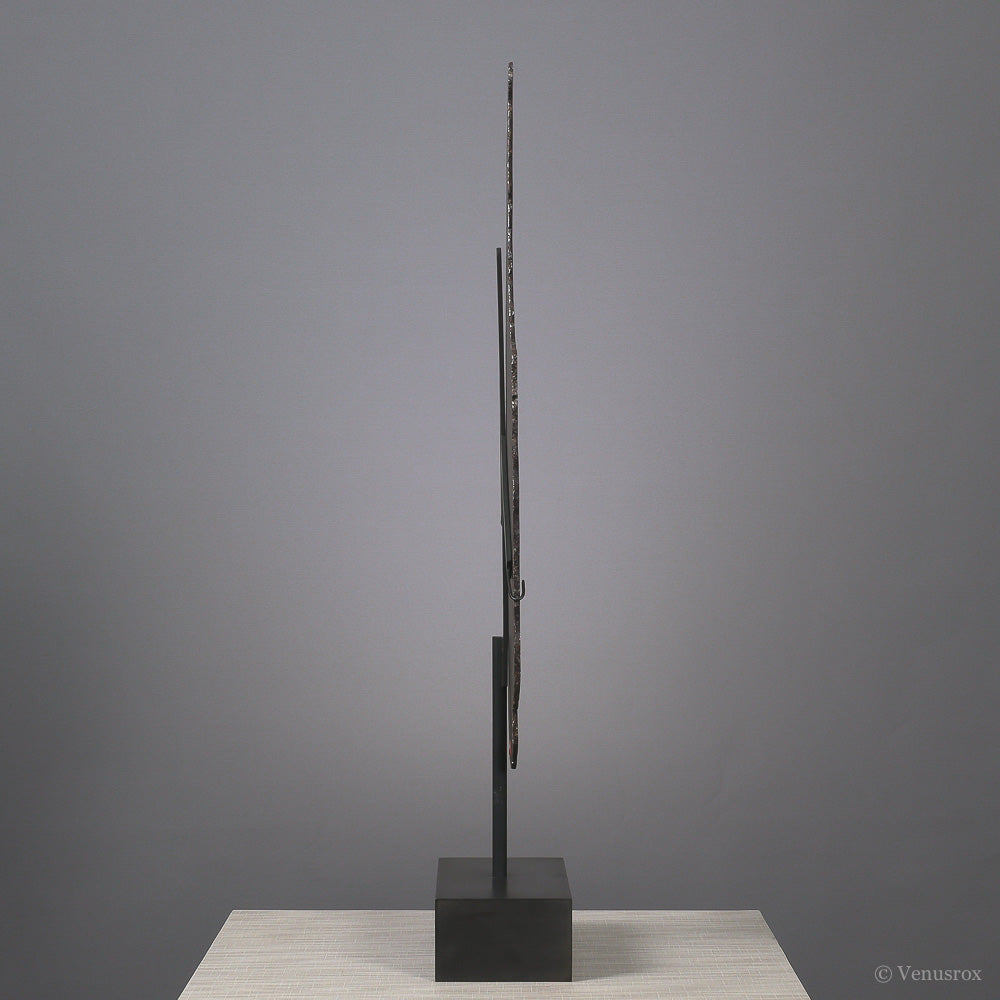
The razor-thin profile visible from the side demonstrates the precision cutting required to prepare meteorite specimens of this scale. The irregular silhouette preserves the slice's natural boundaries where it was sectioned from the larger mass.
Mounted on a bespoke stand.
Pallasite Meteorites are made up of Nickel Iron Meteorite Material. The metallic material is an excellent grounding stone, and it can powerfully assist one in stabilising one’s energies.
Pallasites can help one bring a project into being and ground one into taking action to bring the idea into reality. They are excellent at helping one overcome thought of scarcity; stimulating abundance and grounding one to the fact that abundance is all around us.
Description
This extraordinary slice of the Seymchan meteorite commands attention at museum scale. A substantial slice of extraterrestrial iron, cut and polished to reveal the intricate crystalline latticework that formed over millions of years in the vacuum of space.
The Widmanstätten pattern displayed across this specimen represents one of nature's most exclusive phenomena, a crystalline structure found nowhere on Earth. These interlocking bands of Kamacite and Taenite (iron-nickel alloys) developed as the meteorite's parent body cooled at an almost inconceivably slow rate: approximately one degree Celsius per million years. This glacial cooling allowed iron and nickel atoms to migrate and segregate into the distinctive cross-hatched plates visible here, their orientation recording the original crystallographic axes of the parent asteroid's core.
Seymchan was discovered in 1967 in Russia's Magadan Oblast, in the remote Kolyma region of northeastern Siberia. Initially classified as a IIE iron meteorite, subsequent finds from the same strewn field revealed specimens containing olivine crystals, reclassifying portions of Seymchan as a Pallasite, one of the rarest meteorite types. This particular slice represents the iron phase, its surface etched to reveal the Widmanstätten structure in full graphic clarity. 4.5 billion years of cosmic history
The razor-thin profile visible from the side demonstrates the precision cutting required to prepare meteorite specimens of this scale. The irregular silhouette preserves the slice's natural boundaries where it was sectioned from the larger mass.
Mounted on a bespoke stand.
Metaphysical
Pallasite Meteorites are made up of Nickel Iron Meteorite Material. The metallic material is an excellent grounding stone, and it can powerfully assist one in stabilising one’s energies.
Pallasites can help one bring a project into being and ground one into taking action to bring the idea into reality. They are excellent at helping one overcome thought of scarcity; stimulating abundance and grounding one to the fact that abundance is all around us.