

_____
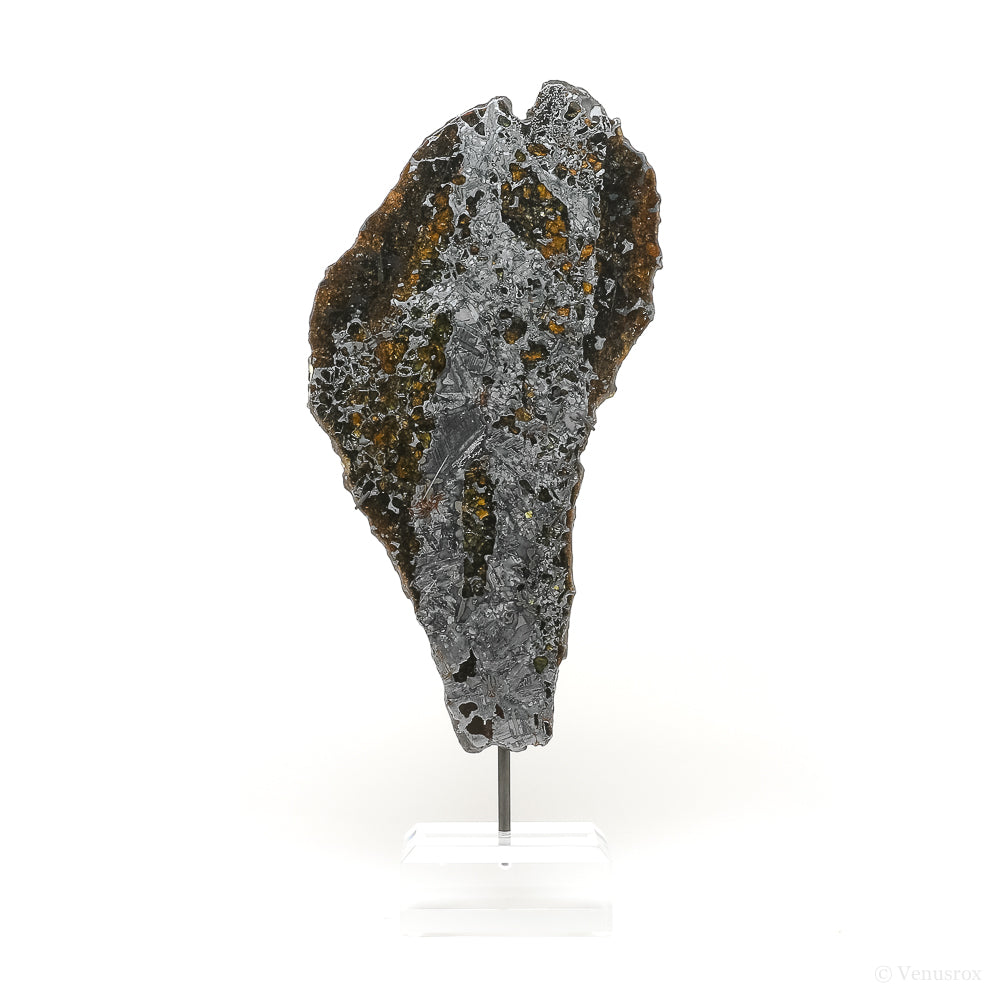
METEORITE (SEYMCHAN PALLASITE) POLISHED SLICE
Hekandue River, Jasačnaja, Magadan District, Russia
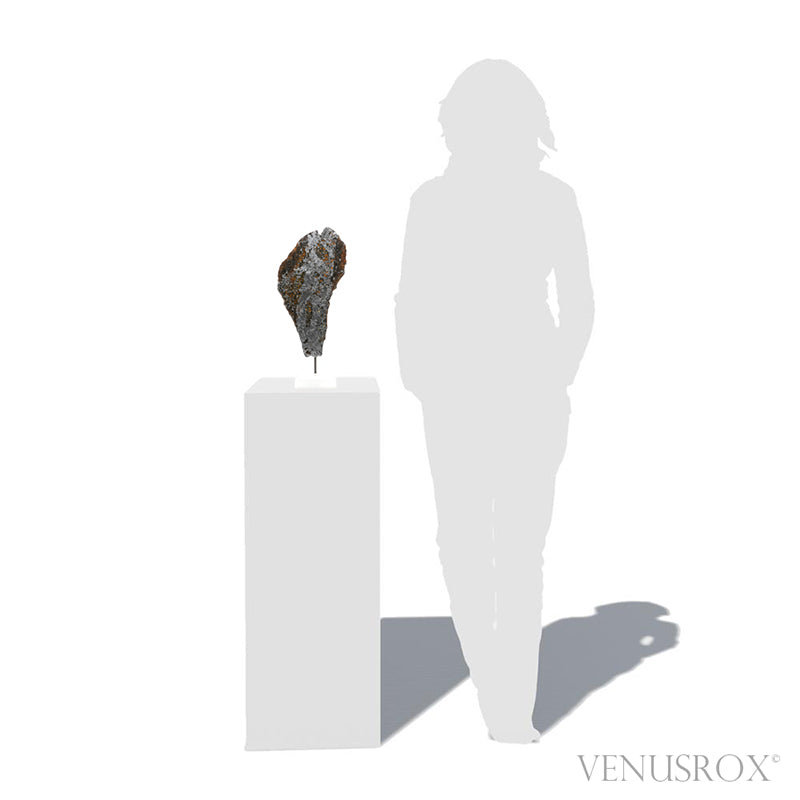
39.5cm x 17.2cm x 7cm (15.6in x 6.8in x 2.8in) including stand
Available for Private Aquisition.
Enquiries handled privately via WhatsApp or email
_____
Choose options
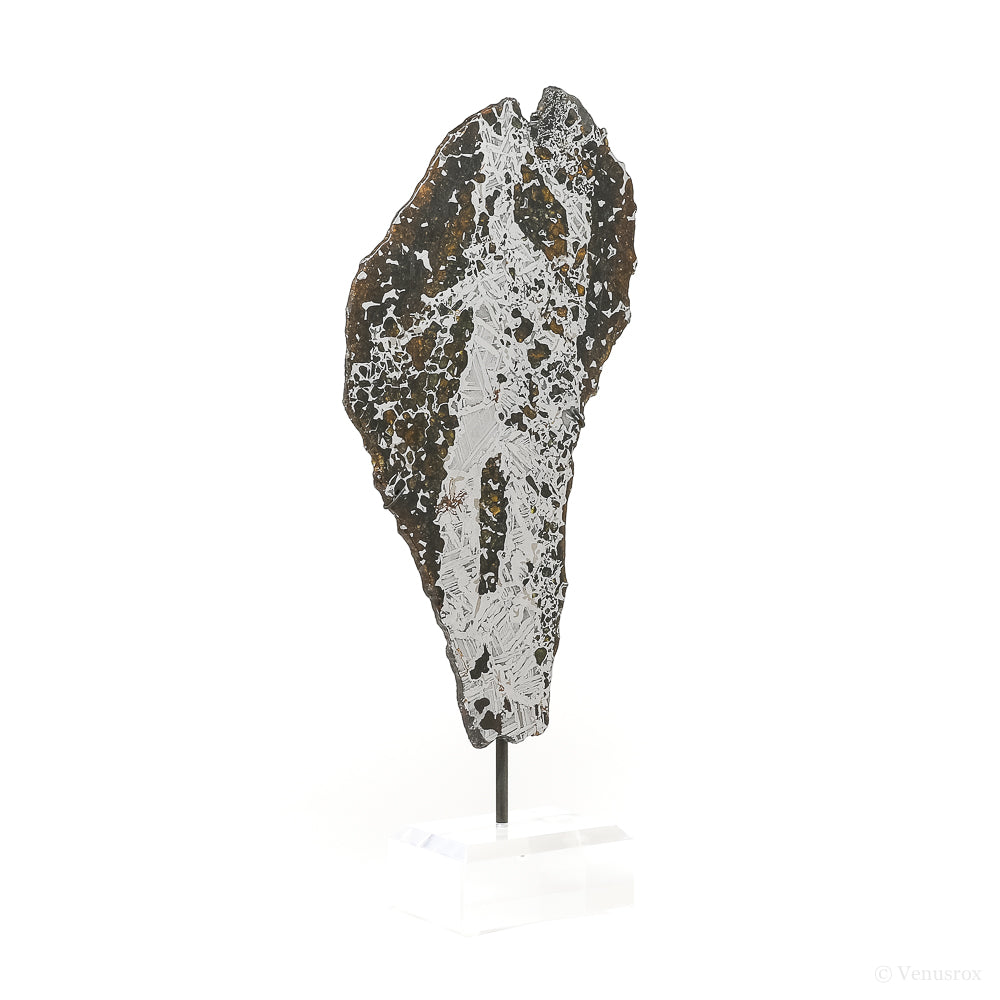
This exceptional slice of the Seymchan meteorite reveals its true Pallasite nature, gem-quality Olivine crystals suspended within an etched Iron-Nickel matrix. Amber and olive-green crystals glow against the silver Widmanstätten patterning, creating one of nature's most extraordinary visual compositions, a geological stained-glass window 4.5 billion years in the making.
Pallasites represent the rarest class of meteorites, comprising less than one percent of all known falls. They are believed to originate from the transitional zone between an asteroid's molten iron core and its Olivine-rich mantle — a boundary layer where silicate crystals became suspended in cooling metal before catastrophic impact dispersed the parent body into space. Each Pallasite slice thus preserves a cross-section through an alien world's deep interior.
The Seymchan meteorite was discovered in 1967 in Russia's remote Magadan Oblast. Initial finds consisted of solid Iron, leading to its classification as an IIE Iron meteorite. Only later did subsequent recoveries reveal Olivine-bearing specimens, reclassifying portions of the strewn field as pallasite and dramatically increasing the meteorite's scientific and collector significance. Slices displaying both Widmanstätten structure and abundant Olivine crystals, as seen here, command particular premium.
The amber-to-olive coloration of the Olivine varies with iron content with the gem-quality crystals approaching the composition of terrestrial Peridot. Rusty oxidation along the specimen's irregular edges records its centuries of terrestrial weathering before recovery from the Siberian permafrost.
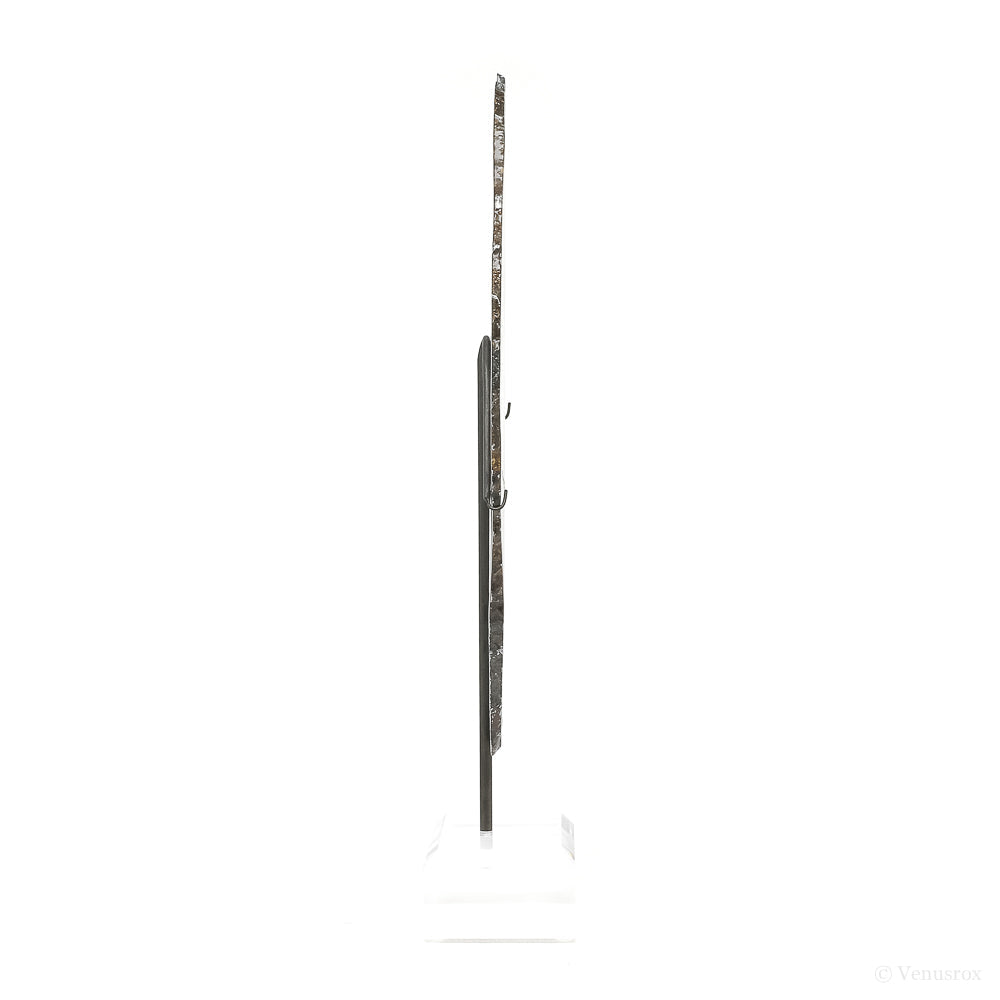
Presented upon a bespoke stand.
Pallasite Meteorites are made up of Nickel Iron Meteorite Material. The metallic material is an excellent grounding stone, and it can powerfully assist one in stabilising one’s energies.
Pallasites can help one bring a project into being and ground one into taking action to bring the idea into reality. They are excellent at helping one overcome thought of scarcity; stimulating abundance and grounding one to the fact that abundance is all around us.
Description
This exceptional slice of the Seymchan meteorite reveals its true Pallasite nature, gem-quality Olivine crystals suspended within an etched Iron-Nickel matrix. Amber and olive-green crystals glow against the silver Widmanstätten patterning, creating one of nature's most extraordinary visual compositions, a geological stained-glass window 4.5 billion years in the making.
Pallasites represent the rarest class of meteorites, comprising less than one percent of all known falls. They are believed to originate from the transitional zone between an asteroid's molten iron core and its Olivine-rich mantle — a boundary layer where silicate crystals became suspended in cooling metal before catastrophic impact dispersed the parent body into space. Each Pallasite slice thus preserves a cross-section through an alien world's deep interior.
The Seymchan meteorite was discovered in 1967 in Russia's remote Magadan Oblast. Initial finds consisted of solid Iron, leading to its classification as an IIE Iron meteorite. Only later did subsequent recoveries reveal Olivine-bearing specimens, reclassifying portions of the strewn field as pallasite and dramatically increasing the meteorite's scientific and collector significance. Slices displaying both Widmanstätten structure and abundant Olivine crystals, as seen here, command particular premium.
The amber-to-olive coloration of the Olivine varies with iron content with the gem-quality crystals approaching the composition of terrestrial Peridot. Rusty oxidation along the specimen's irregular edges records its centuries of terrestrial weathering before recovery from the Siberian permafrost.
Presented upon a bespoke stand.
Metaphysical
Pallasite Meteorites are made up of Nickel Iron Meteorite Material. The metallic material is an excellent grounding stone, and it can powerfully assist one in stabilising one’s energies.
Pallasites can help one bring a project into being and ground one into taking action to bring the idea into reality. They are excellent at helping one overcome thought of scarcity; stimulating abundance and grounding one to the fact that abundance is all around us.