


_____
OBSIDIAN (PEANUT) SPHERE
Alamos, Sonora, Mexico
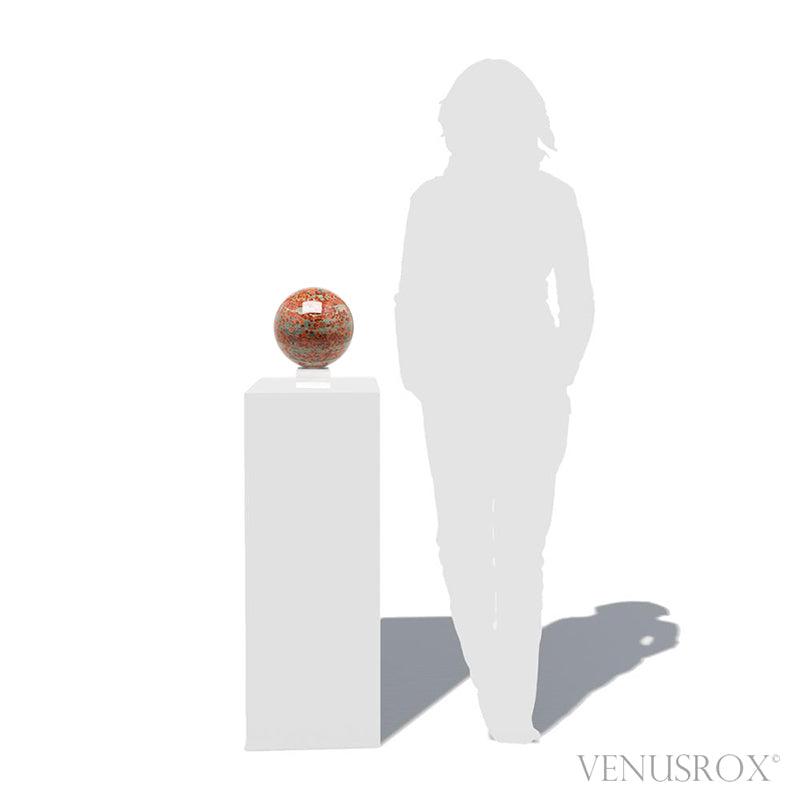
Diameter: 24.2cm (9.5in)
Available for Private Acquisition.
Enquiries handled privately via WhatsApp or email
_____
Choose options


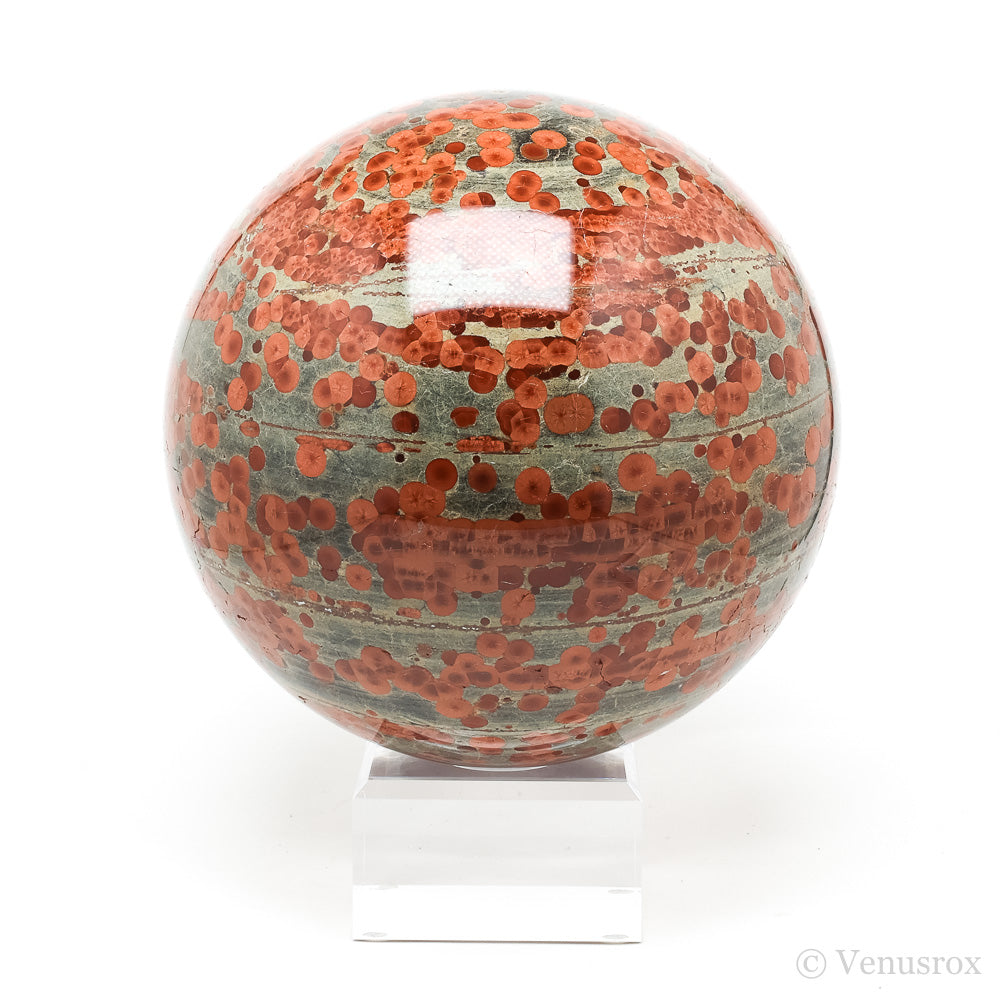
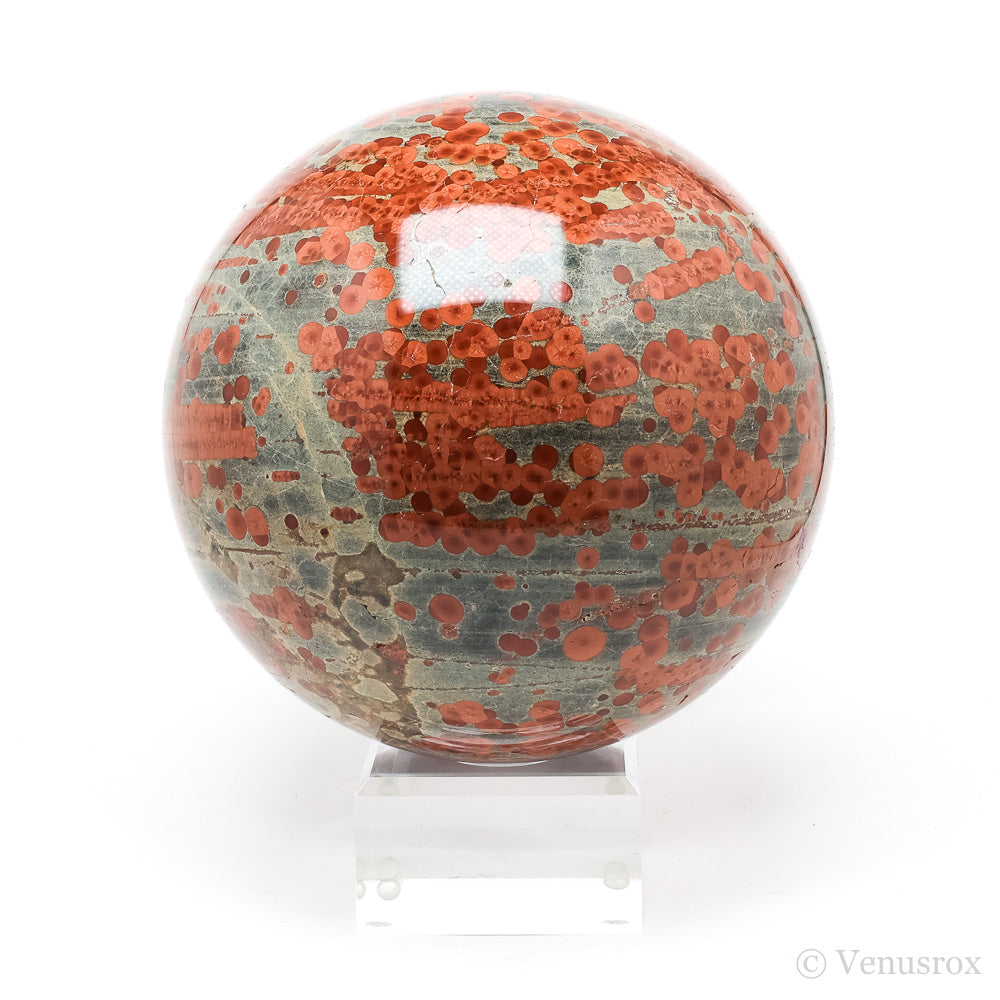
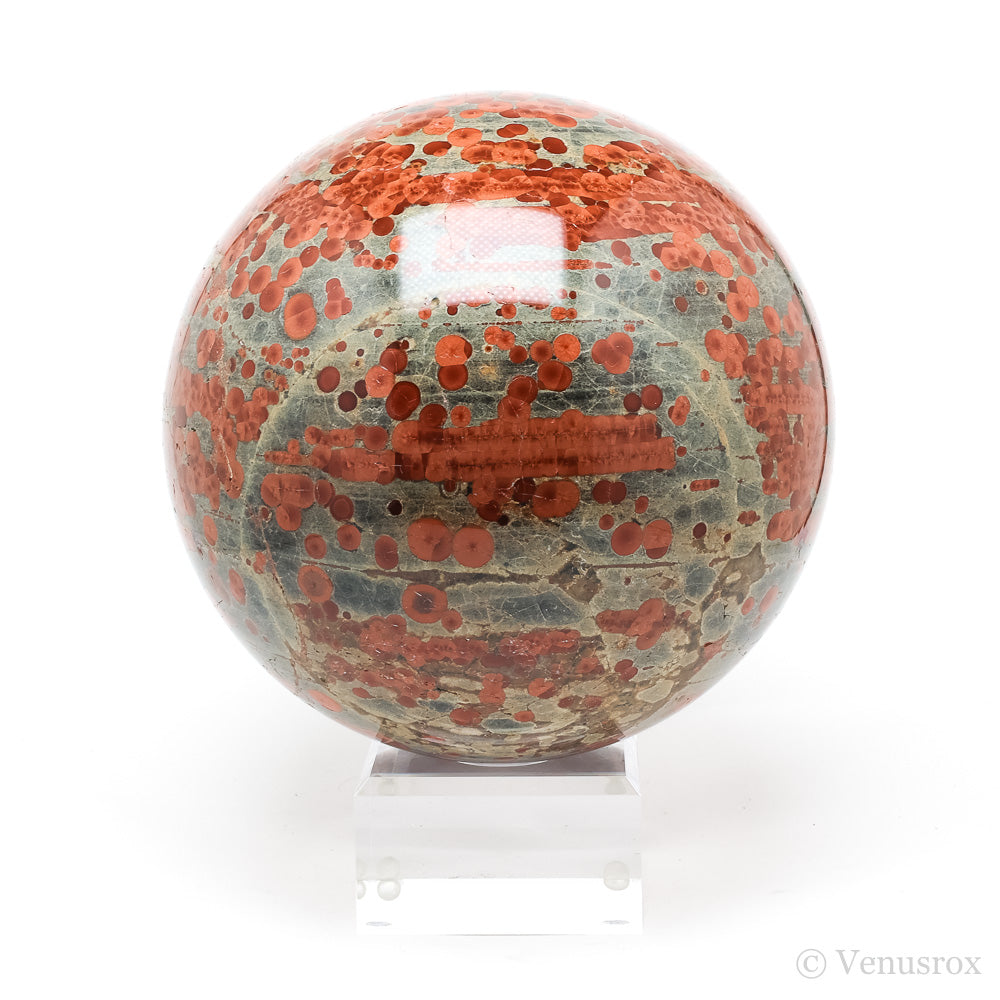
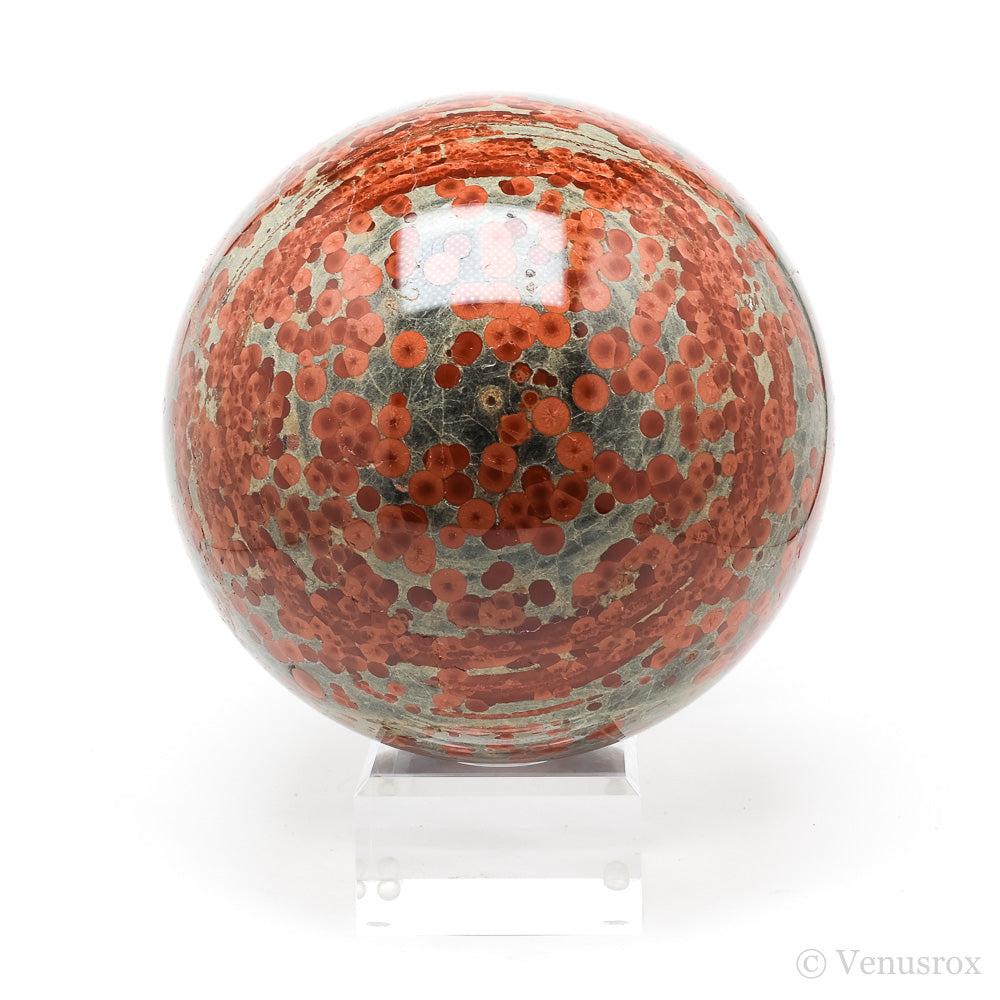
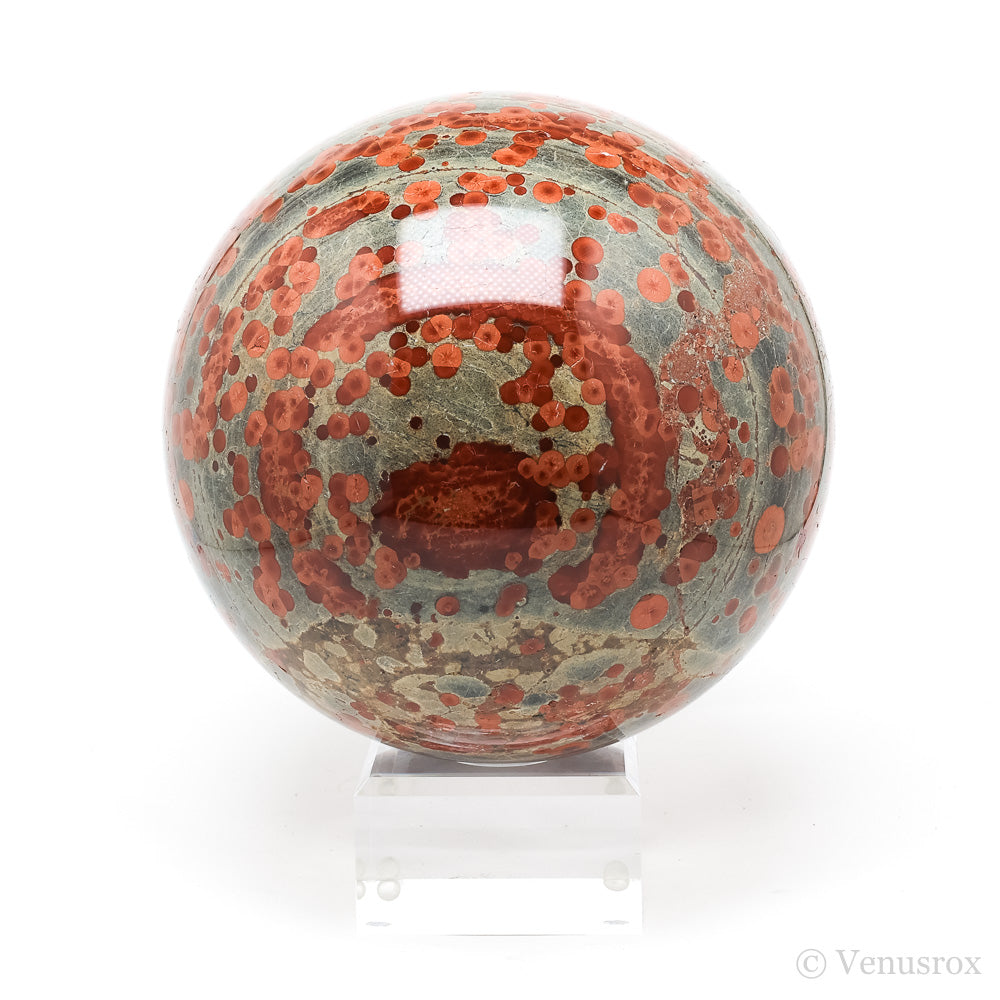
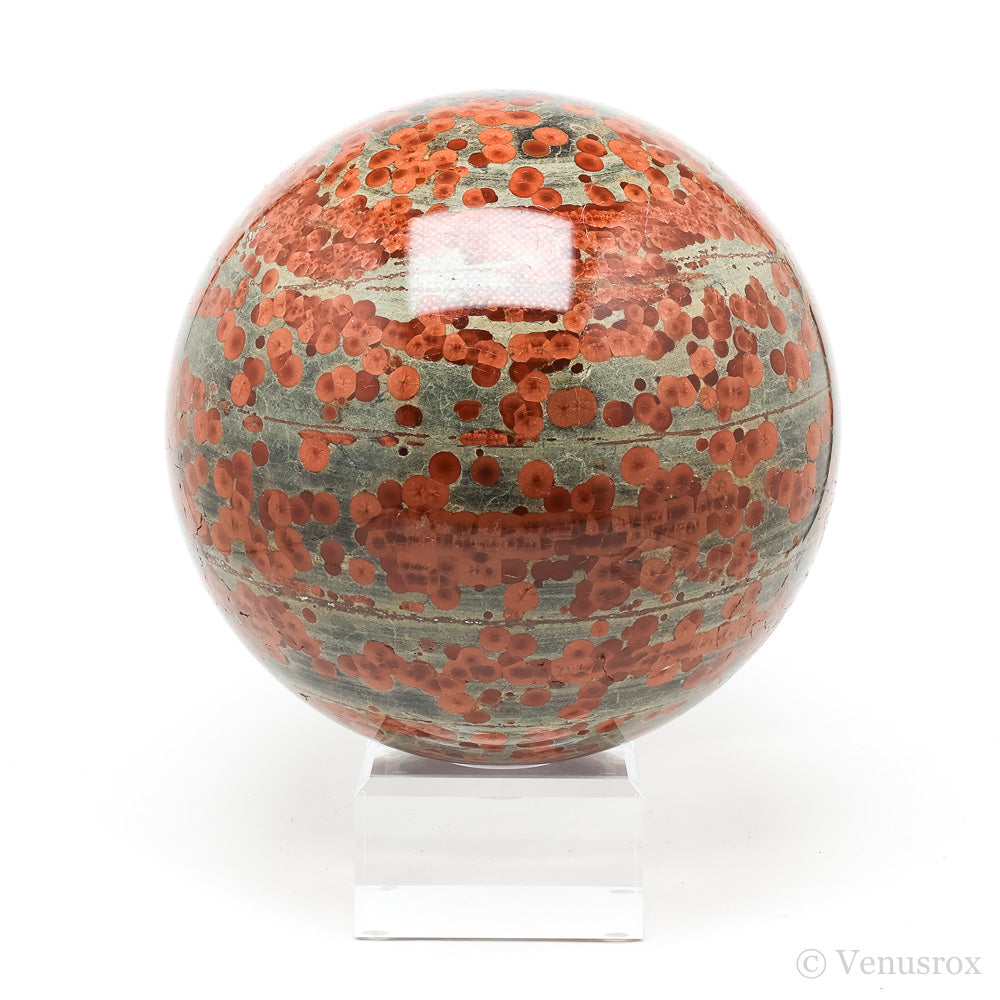
This captivating sphere showcases Peanut Obsidian's distinctive patterning, vivid terracotta-red orbs scattered across a grey-green matrix, like a geological pointillist painting. The high polish reveals the full chromatic drama of this unusual volcanic glass, each rotation presenting new arrangements of colour and form across its curved surface.
Peanut Obsidian, sometimes called Orbicular or Flowered Obsidian — forms when rhyolitic lava undergoes partial devitrification during cooling. As the molten glass begins to solidify, spherulitic crystallisation occurs at multiple nucleation points, creating radial clusters of feldspar and cristobalite micro-crystals that interrupt the otherwise amorphous obsidian matrix. The distinctive red-orange coloration of these spherules results from oxidised iron concentrated within these crystalline zones, while the surrounding grey-green glass retains its original volcanic chemistry.
Mexico's central highlands, particularly the states of Jalisco and Chihuahua, produce the world's most visually striking examples of this variety. The region's complex volcanic history created ideal conditions for the formation of obsidian with varied inclusion types and devitrification patterns.
Unlike most Obsidians, which present as uniform black or mahogany glass, Peanut Obsidian offers genuine visual complexity, each sphere a unique record of crystallisation dynamics frozen in volcanic time. The orbicular inclusions range from pinpoint specks to larger clustered formations, creating depth and movement across the polished surface.
Presented upon a clear acrylic stand, this sphere invites contemplation from every angle, a miniature world of fire and transformation, captured in glass.
Description
This captivating sphere showcases Peanut Obsidian's distinctive patterning, vivid terracotta-red orbs scattered across a grey-green matrix, like a geological pointillist painting. The high polish reveals the full chromatic drama of this unusual volcanic glass, each rotation presenting new arrangements of colour and form across its curved surface.
Peanut Obsidian, sometimes called Orbicular or Flowered Obsidian — forms when rhyolitic lava undergoes partial devitrification during cooling. As the molten glass begins to solidify, spherulitic crystallisation occurs at multiple nucleation points, creating radial clusters of feldspar and cristobalite micro-crystals that interrupt the otherwise amorphous obsidian matrix. The distinctive red-orange coloration of these spherules results from oxidised iron concentrated within these crystalline zones, while the surrounding grey-green glass retains its original volcanic chemistry.
Mexico's central highlands, particularly the states of Jalisco and Chihuahua, produce the world's most visually striking examples of this variety. The region's complex volcanic history created ideal conditions for the formation of obsidian with varied inclusion types and devitrification patterns.
Unlike most Obsidians, which present as uniform black or mahogany glass, Peanut Obsidian offers genuine visual complexity, each sphere a unique record of crystallisation dynamics frozen in volcanic time. The orbicular inclusions range from pinpoint specks to larger clustered formations, creating depth and movement across the polished surface.
Presented upon a clear acrylic stand, this sphere invites contemplation from every angle, a miniature world of fire and transformation, captured in glass.