
_____
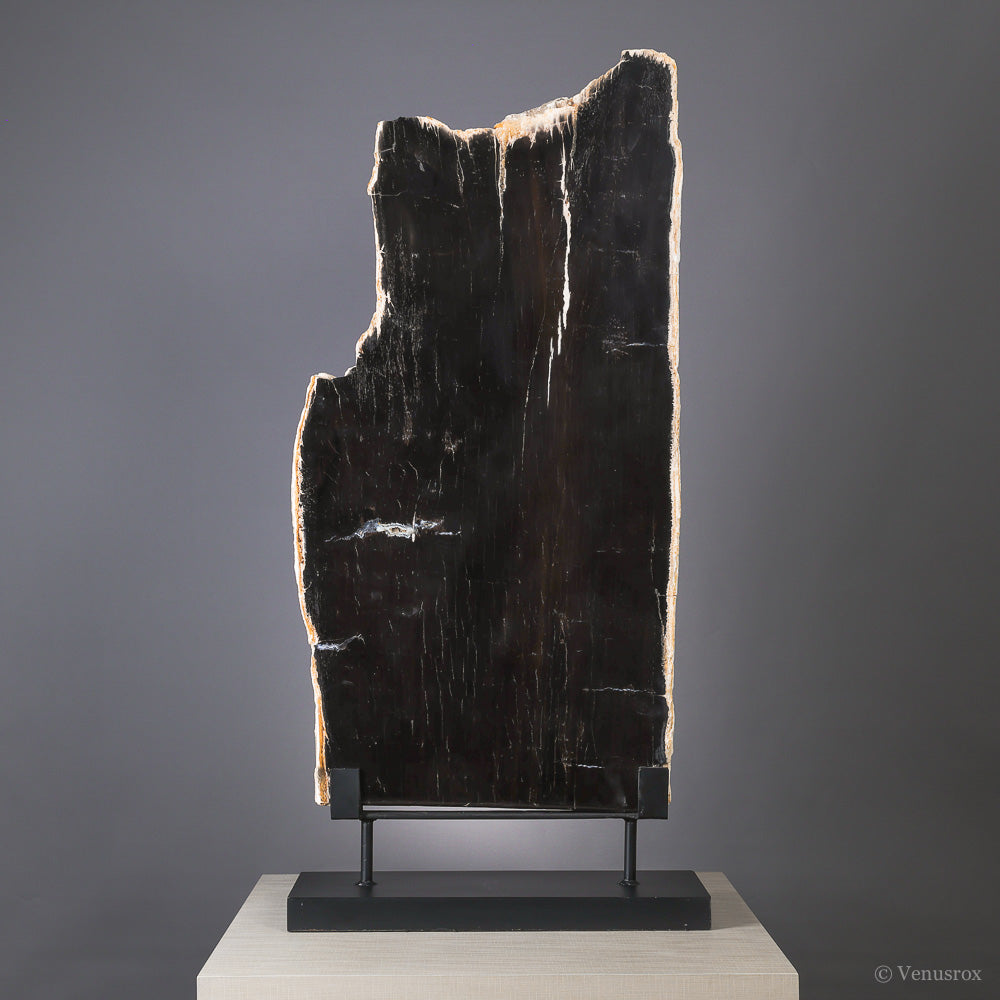
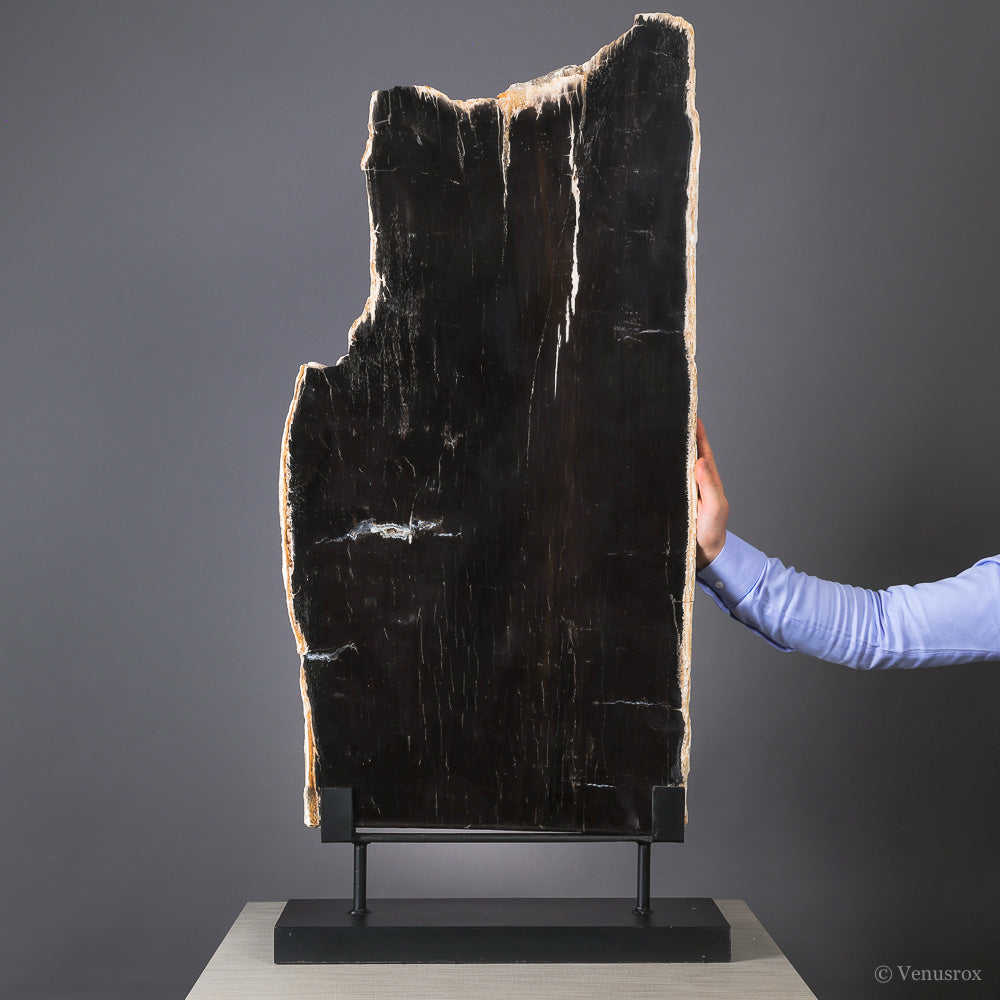
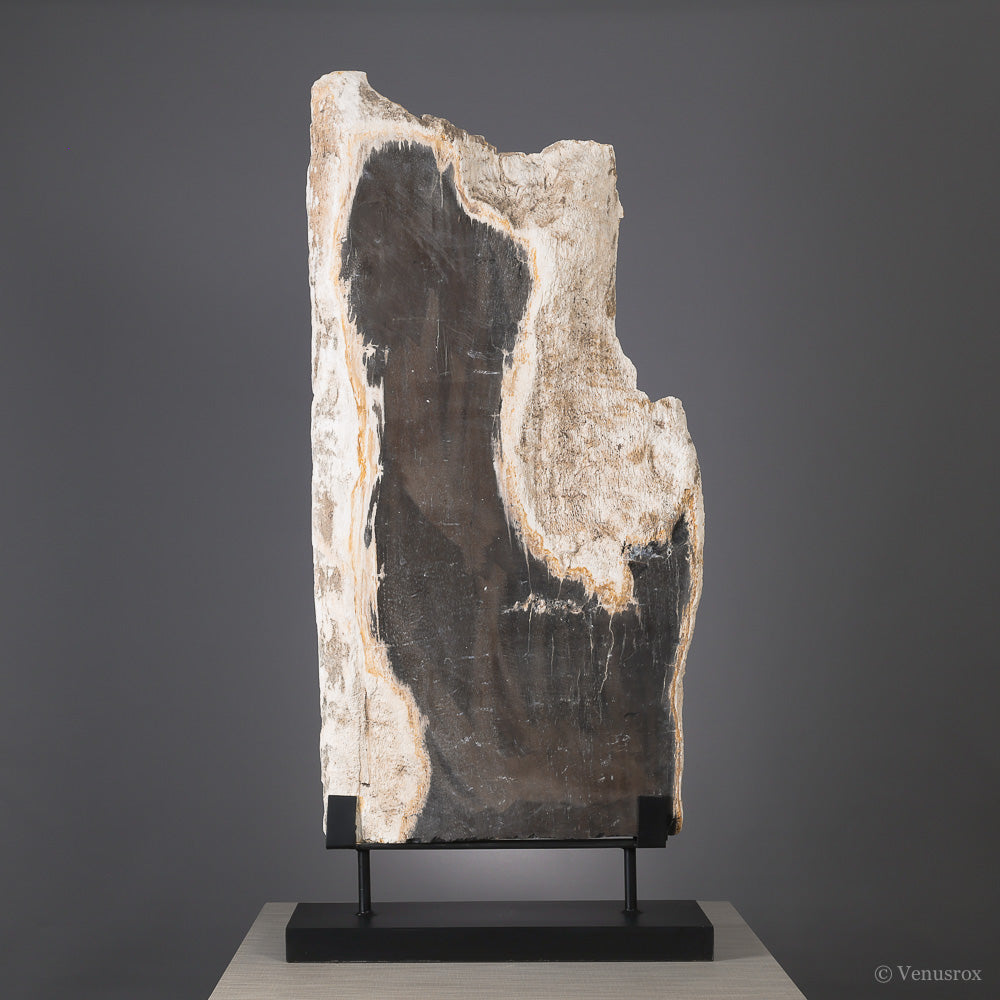
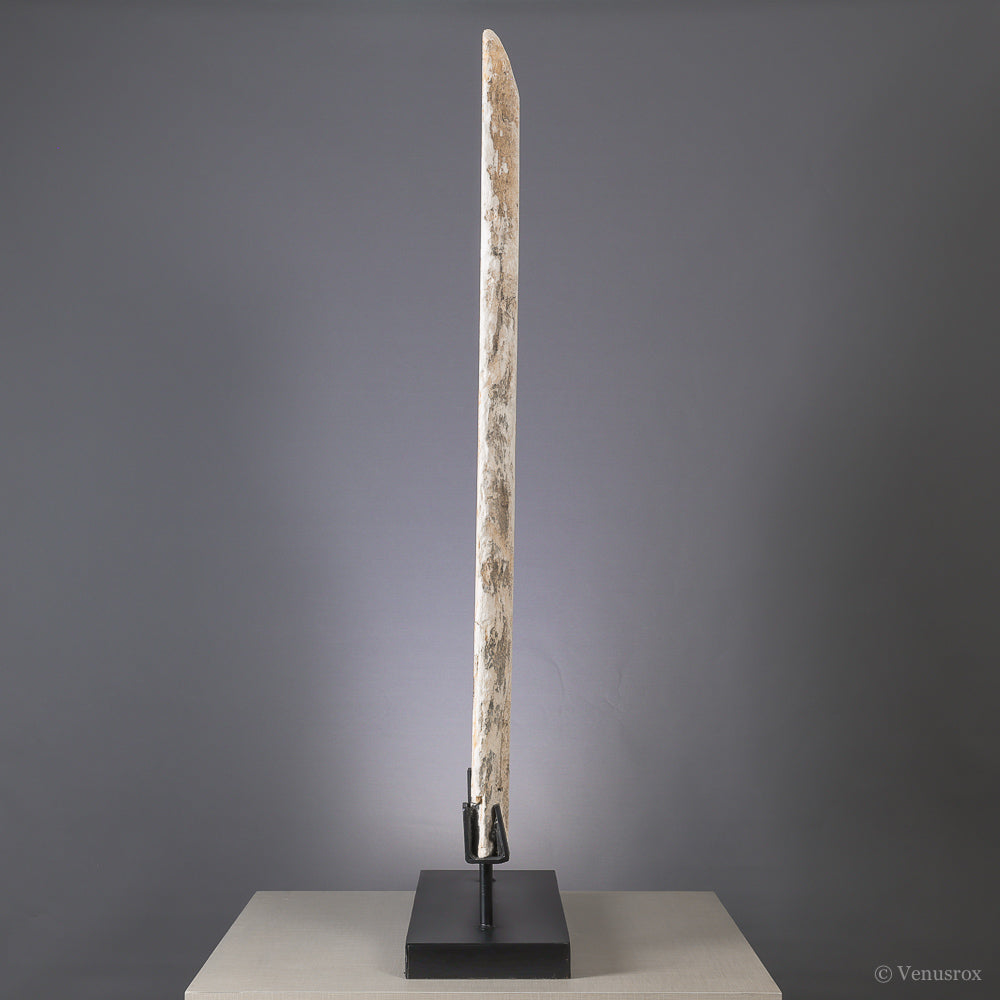
PETRIFIED WOOD PART POLISHED FORMATION
Indonesia
117.0 x 55.0 x 20.0 cm (46.1 x 21.7 x 7.9 in)
Available for Private Acquisition
Enquiries handled privately via WhatsApp or email
_____
Choose options
The specimen originates from Java or Sumatra, where volcanic eruptions during the Miocene epoch (20–25 million years ago) buried vast forests beneath pyroclastic debris and silica-laden ash. This rapid interment created the oxygen-deprived conditions essential for preservation, while mineral-rich groundwater began its slow molecular replacement of organic tissue with microcrystalline Quartz and Chalcedony.
The jet-black colouration results from exceptional concentrations of Manganese Oxide and residual Carbon locked within the silicate matrix during permineralisation. The fine white veining represents secondary silica deposition along natural fractures and growth stress lines, creating the striking graphic patterning across the polished face. Under magnification, original tracheid cells remain visible.
Indonesia's Petrified Wood deposits rank among the most significant globally, the archipelago's position along the Pacific Ring of Fire providing ideal geological conditions: abundant volcanic silica, consistent groundwater flow, and rapid burial. Specimens of this scale and chromatic intensity have become increasingly scarce as source localities deplete and export regulations tighten.
This ancient, fossilized wood brings inner peace during times of change, instilling strength of character and helping one to live according to one’s ideals and values.
Petrified Wood is a stone of patience, reminding us to trust life's natural flow and accept that the universe's timing often differs from our immediate desires. It teaches the wisdom of slow, steady growth and the value of persistence through challenging periods.
It supports one to master the art of balanced action with acceptance, encouraging faith in natural processes while maintaining personal integrity through its grounding and stabilizing energy.
Description
The specimen originates from Java or Sumatra, where volcanic eruptions during the Miocene epoch (20–25 million years ago) buried vast forests beneath pyroclastic debris and silica-laden ash. This rapid interment created the oxygen-deprived conditions essential for preservation, while mineral-rich groundwater began its slow molecular replacement of organic tissue with microcrystalline Quartz and Chalcedony.
The jet-black colouration results from exceptional concentrations of Manganese Oxide and residual Carbon locked within the silicate matrix during permineralisation. The fine white veining represents secondary silica deposition along natural fractures and growth stress lines, creating the striking graphic patterning across the polished face. Under magnification, original tracheid cells remain visible.
Indonesia's Petrified Wood deposits rank among the most significant globally, the archipelago's position along the Pacific Ring of Fire providing ideal geological conditions: abundant volcanic silica, consistent groundwater flow, and rapid burial. Specimens of this scale and chromatic intensity have become increasingly scarce as source localities deplete and export regulations tighten.
Metaphysical
This ancient, fossilized wood brings inner peace during times of change, instilling strength of character and helping one to live according to one’s ideals and values.
Petrified Wood is a stone of patience, reminding us to trust life's natural flow and accept that the universe's timing often differs from our immediate desires. It teaches the wisdom of slow, steady growth and the value of persistence through challenging periods.
It supports one to master the art of balanced action with acceptance, encouraging faith in natural processes while maintaining personal integrity through its grounding and stabilizing energy.