
_____
QUARTZ (CLEAR) NATURAL CLUSTER
Arkansas, USA
Available for Private Acquisition
Enquiries handled privately via WhatsApp or email
_____
Choose options
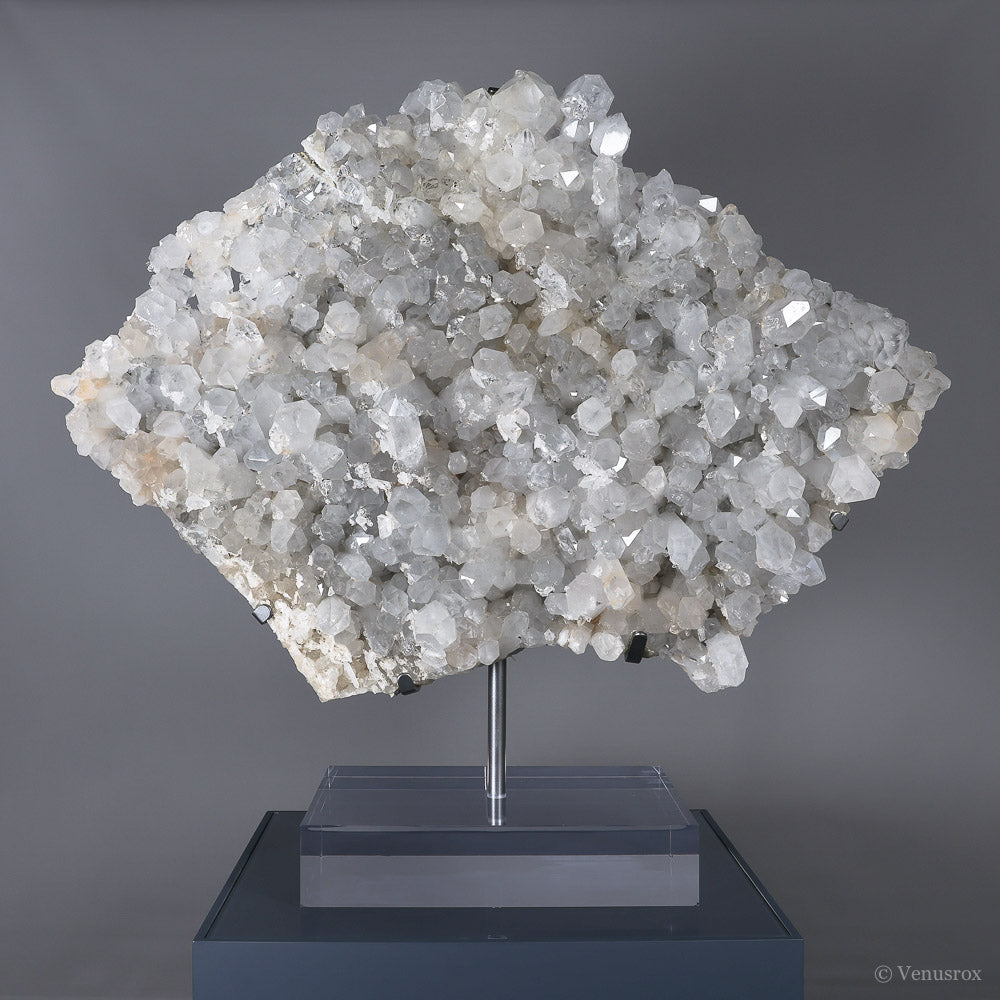
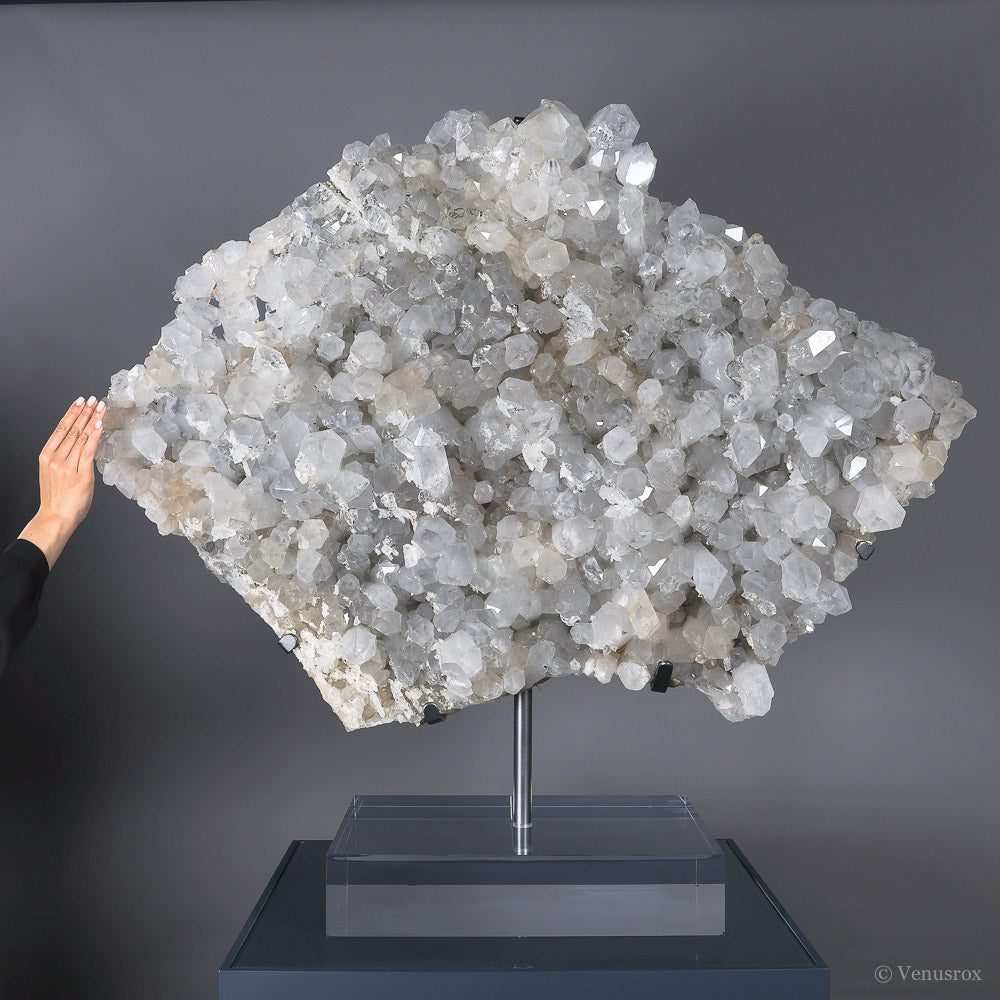
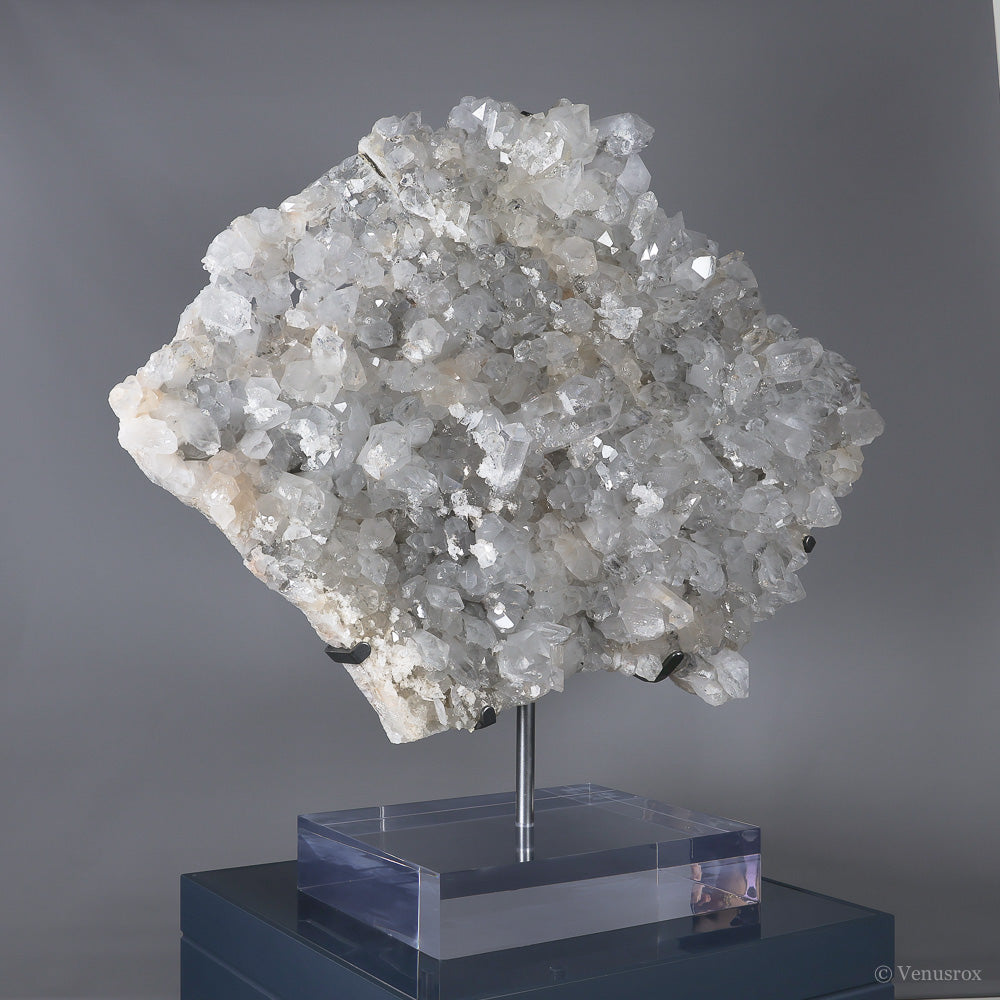
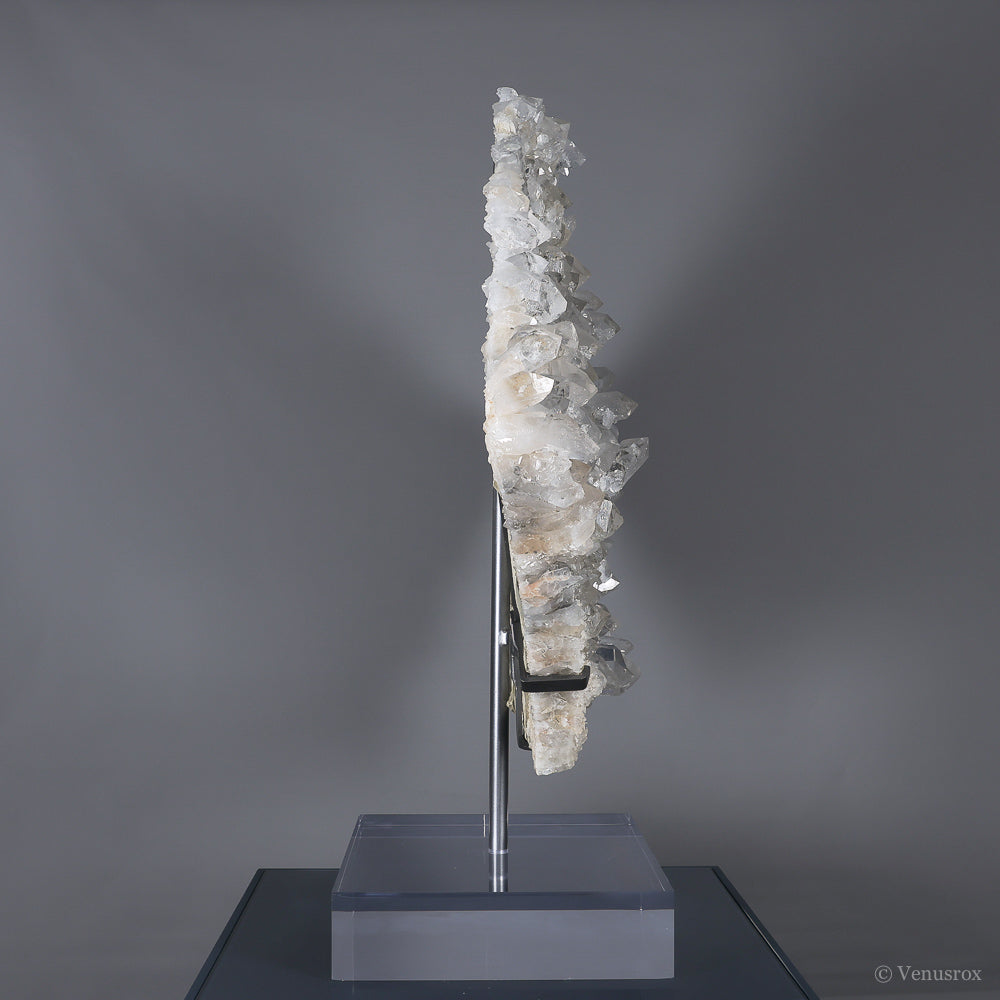
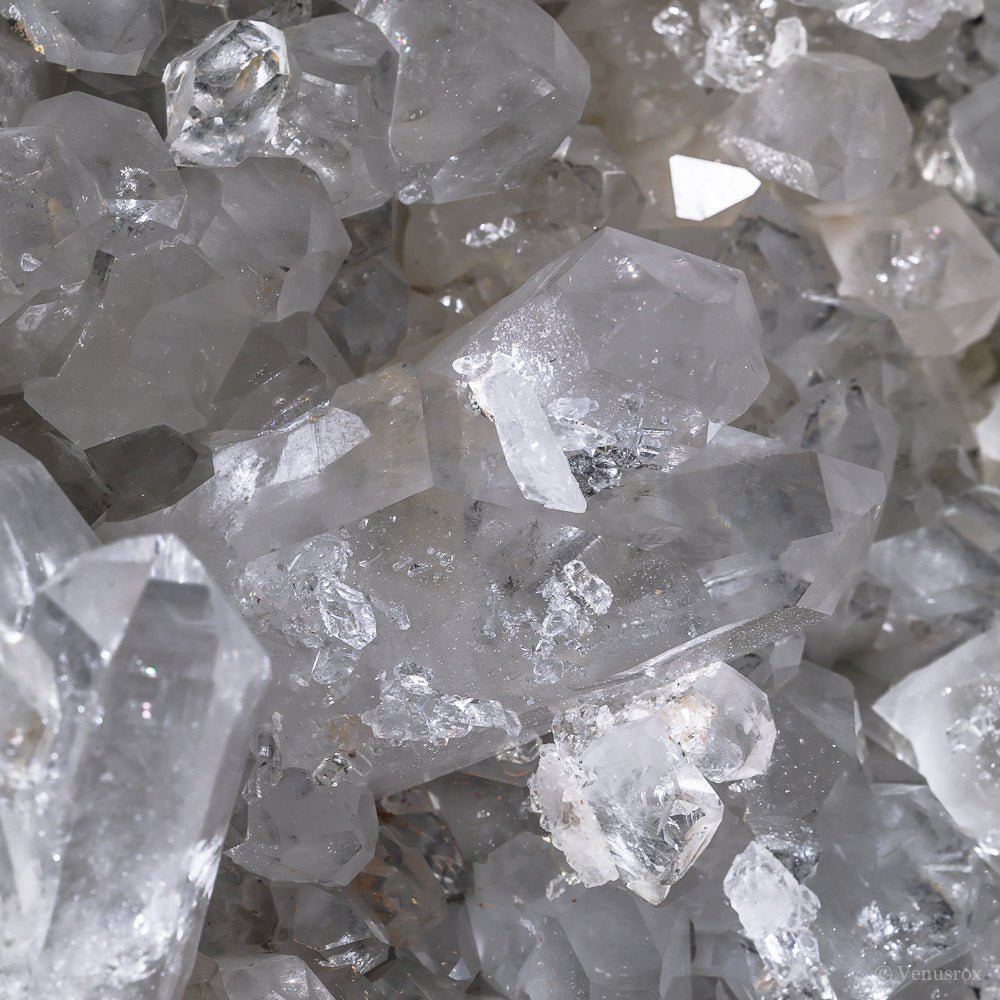
A spectacular museum-scale cluster composed of hundreds of naturally terminated Quartz crystals, displaying the exceptional clarity, lustre, and crystal development for which Arkansas Quartz is internationally renowned. The specimen forms a densely crystallised hydrothermal plate, with inter-grown crystals covering nearly the entire surface to create a landscape of reflective prism faces and sharply defined pyramidal terminations.
The crystals exhibit the classic morphology of Quartz: six-sided prisms capped by rhombohedral terminations. Individual crystals range from translucent milky white to nearly transparent, with subtle variations in clarity reflecting fluctuations in fluid chemistry and crystal growth conditions during formation. The tightly packed arrangement records multiple stages of crystallisation, producing a richly textured surface that sparkles from every angle under illumination.
This specimen formed within hydrothermal fracture systems that developed throughout the Paleozoic sedimentary rocks of the Ouachita Mountains of Arkansas. Silica-rich fluids circulated through deep crustal faults and open cavities during the late stages of mountain building, gradually depositing Quartz as temperatures and pressures decreased. Repeated pulses of mineralising fluids over extended geological time created the extensive crystal coverage preserved here, capturing a remarkable snapshot of hydrothermal activity that occurred approximately 300 million years ago beneath the ancient Ouachita mountain belt.
Clear Quartz acts as an energetic amplifier, magnifying and enhancing the vibrational properties of any crystals placed near it. In this same way, it can help to amplify and enhance the power of one’s intentions. By programming those intentions into the crystals, Clear Quartz can broadcast that energy out into the universe helping to manifest one’s dreams and goals.
Its transparent structure is believed to mirror its ability to bring mental clarity, cutting through mental fog and indecision to reveal truth and understanding.
This stone serves as a bridge between physical and spiritual realms, facilitating clearer reception of intuitive messages and guidance from higher consciousness. It’s pure frequency helps to attune the mind to subtle energetic communications and signals, making it easier to distinguish genuine spiritual guidance from mere mental chatter.
Clear Quartz essentially acts as a cosmic antenna, strengthening one's connection to divine wisdom.
Description
A spectacular museum-scale cluster composed of hundreds of naturally terminated Quartz crystals, displaying the exceptional clarity, lustre, and crystal development for which Arkansas Quartz is internationally renowned. The specimen forms a densely crystallised hydrothermal plate, with inter-grown crystals covering nearly the entire surface to create a landscape of reflective prism faces and sharply defined pyramidal terminations.
The crystals exhibit the classic morphology of Quartz: six-sided prisms capped by rhombohedral terminations. Individual crystals range from translucent milky white to nearly transparent, with subtle variations in clarity reflecting fluctuations in fluid chemistry and crystal growth conditions during formation. The tightly packed arrangement records multiple stages of crystallisation, producing a richly textured surface that sparkles from every angle under illumination.
This specimen formed within hydrothermal fracture systems that developed throughout the Paleozoic sedimentary rocks of the Ouachita Mountains of Arkansas. Silica-rich fluids circulated through deep crustal faults and open cavities during the late stages of mountain building, gradually depositing Quartz as temperatures and pressures decreased. Repeated pulses of mineralising fluids over extended geological time created the extensive crystal coverage preserved here, capturing a remarkable snapshot of hydrothermal activity that occurred approximately 300 million years ago beneath the ancient Ouachita mountain belt.
Metaphysical
Clear Quartz acts as an energetic amplifier, magnifying and enhancing the vibrational properties of any crystals placed near it. In this same way, it can help to amplify and enhance the power of one’s intentions. By programming those intentions into the crystals, Clear Quartz can broadcast that energy out into the universe helping to manifest one’s dreams and goals.
Its transparent structure is believed to mirror its ability to bring mental clarity, cutting through mental fog and indecision to reveal truth and understanding.
This stone serves as a bridge between physical and spiritual realms, facilitating clearer reception of intuitive messages and guidance from higher consciousness. It’s pure frequency helps to attune the mind to subtle energetic communications and signals, making it easier to distinguish genuine spiritual guidance from mere mental chatter.
Clear Quartz essentially acts as a cosmic antenna, strengthening one's connection to divine wisdom.