
_____
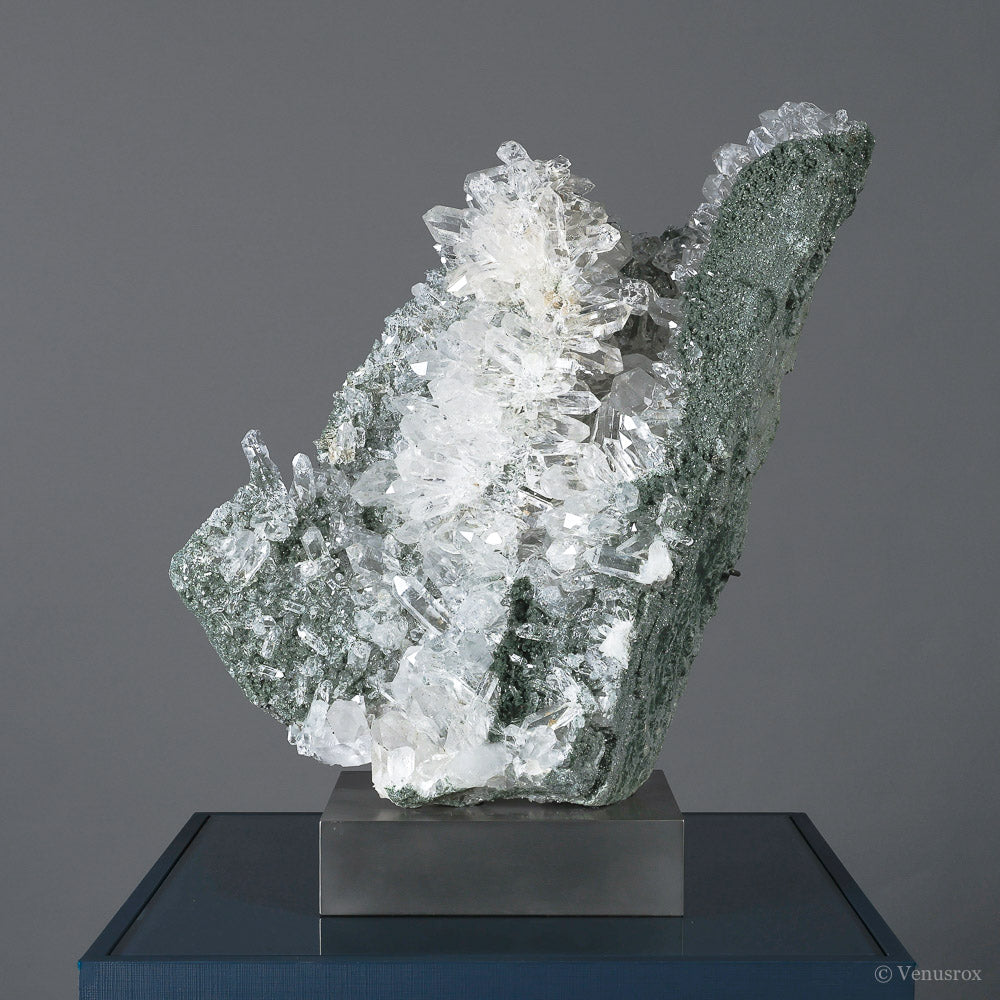
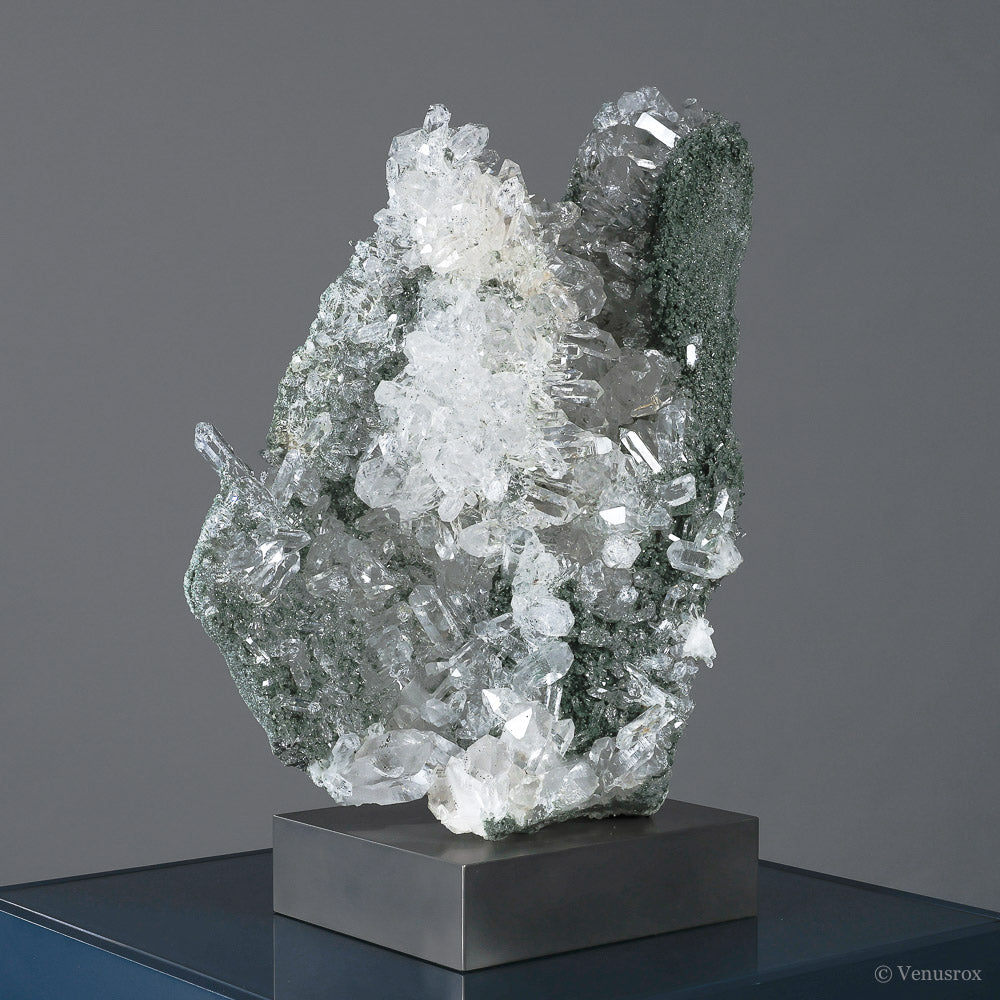
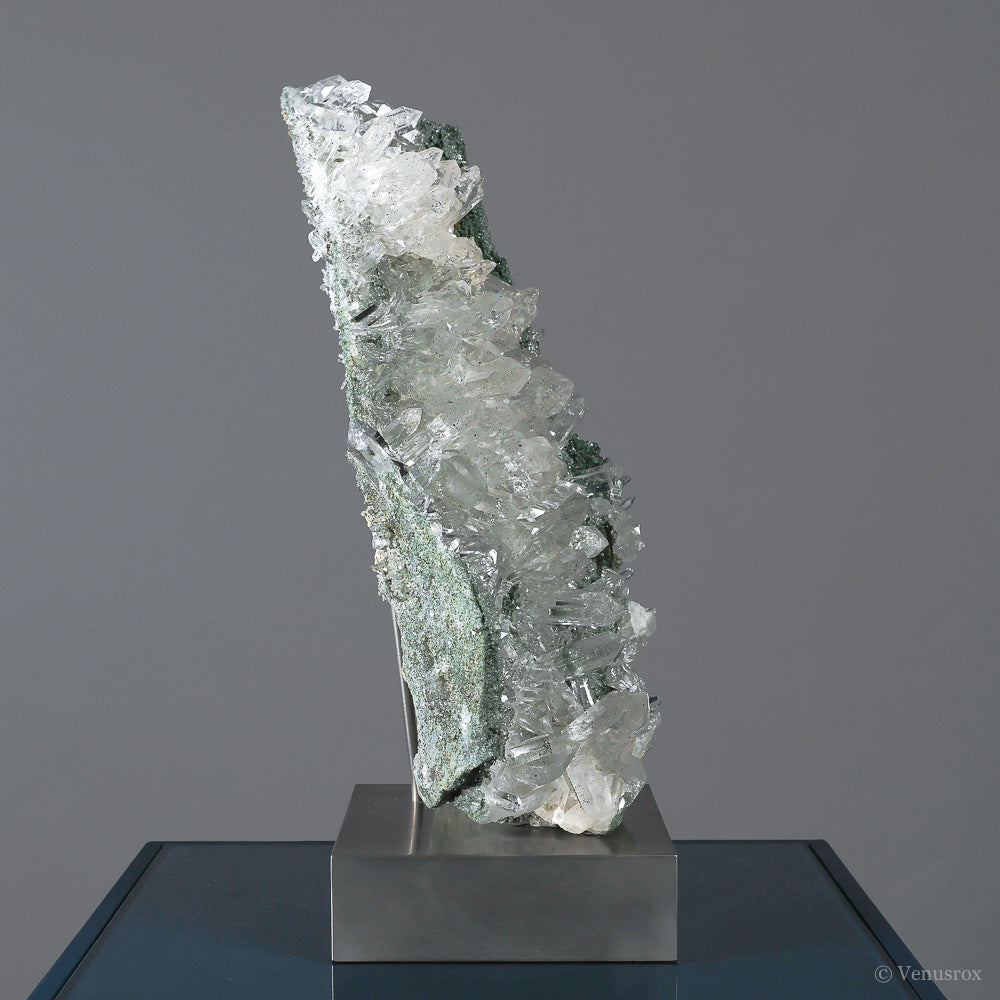
QUARTZ (HIMALAYAN CHLORITE) NATURAL CLUSTER
Meru Peak Foot Hills, Garhwal, Uttarakhand, Indian Himalayas
44cm x 34cm x 16cm (17.3in x 13.3in x 6.2in) including the stand
Private Collection - NFS
Enquiries handled privately via WhatsApp or email
_____
Choose options
A simply remarkable natural Quartz cluster featuring clear crystal growth associated with Chlorite-rich matrix, sourced from the Meru Foothils in the Himalayan mountain region. The specimen preserves a record of hydrothermal mineralisation within alpine fissures, where mineral-rich fluids circulated through fractures created during the uplift of one of the world's youngest mountain ranges.
The cluster is composed of numerous extremely transparent Quartz crystals displaying sharp terminations and excellent natural lustre. These crystals are intergrown with a chlorite-rich matrix, which forms a contrasting green-grey backdrop and coats portions of the specimen. The association highlights multiple stages of mineral growth, with Quartz crystallising within open cavities while Chlorite accumulated along fracture surfaces and crystal boundaries.
Geologically, Himalayan Quartz specimens formed within alpine-type fissures created by intense tectonic activity during the collision of the Indian and Eurasian plates. Silica-rich hydrothermal fluids circulating through these fractures deposited Quartz, while Iron and Magnesium-bearing fluids contributed Chlorite and related minerals. The resulting assemblage preserves evidence of fluid movement, crystal growth, and mountain-building processes operating deep within the Earth's crust.
The result is a specimen that is both visually elegant and geologically significant, illustrating the dynamic interplay between tectonics, hydrothermal activity, and mineral crystallisation within the Himalayan orogenic belt.
HIMALAYAN QUARTZ
Himalayan Clear Quartz crystals have old souls and are therefore extremely wise and powerful.
Clear Quartz acts as an energetic amplifier, magnifying and enhancing the vibrational properties of any crystals placed near it. In this same way, it can help to amplify and enhance the power of one’s intentions. By programming those intentions into the crystals, Clear Quartz can broadcast that energy out into the universe helping to manifest one’s dreams and goals.
Its transparent structure is believed to mirror its ability to bring mental clarity, cutting through mental fog and indecision to reveal truth and understanding.
This stone serves as a bridge between physical and spiritual realms, facilitating clearer reception of intuitive messages and guidance from higher consciousness. It’s pure frequency helps to attune the mind to subtle energetic communications and signals, making it easier to distinguish genuine spiritual guidance from mere mental chatter.
Clear Quartz essentially acts as a cosmic antenna, strengthening one's connection to divine wisdom.
CHLORITE QUARTZ
Chlorite Quartz Crystals are powerful healers of the physical body. They help the body absorb high frequency earth energy, helping one achieve greater balance, health and wellbeing.
Chlorite Phantom crystals are also protection stones, protecting the physical body from the harmful radiation that one may find in one’s environment.
Description
A simply remarkable natural Quartz cluster featuring clear crystal growth associated with Chlorite-rich matrix, sourced from the Meru Foothils in the Himalayan mountain region. The specimen preserves a record of hydrothermal mineralisation within alpine fissures, where mineral-rich fluids circulated through fractures created during the uplift of one of the world's youngest mountain ranges.
The cluster is composed of numerous extremely transparent Quartz crystals displaying sharp terminations and excellent natural lustre. These crystals are intergrown with a chlorite-rich matrix, which forms a contrasting green-grey backdrop and coats portions of the specimen. The association highlights multiple stages of mineral growth, with Quartz crystallising within open cavities while Chlorite accumulated along fracture surfaces and crystal boundaries.
Geologically, Himalayan Quartz specimens formed within alpine-type fissures created by intense tectonic activity during the collision of the Indian and Eurasian plates. Silica-rich hydrothermal fluids circulating through these fractures deposited Quartz, while Iron and Magnesium-bearing fluids contributed Chlorite and related minerals. The resulting assemblage preserves evidence of fluid movement, crystal growth, and mountain-building processes operating deep within the Earth's crust.
The result is a specimen that is both visually elegant and geologically significant, illustrating the dynamic interplay between tectonics, hydrothermal activity, and mineral crystallisation within the Himalayan orogenic belt.
Metaphysical
HIMALAYAN QUARTZ
Himalayan Clear Quartz crystals have old souls and are therefore extremely wise and powerful.
Clear Quartz acts as an energetic amplifier, magnifying and enhancing the vibrational properties of any crystals placed near it. In this same way, it can help to amplify and enhance the power of one’s intentions. By programming those intentions into the crystals, Clear Quartz can broadcast that energy out into the universe helping to manifest one’s dreams and goals.
Its transparent structure is believed to mirror its ability to bring mental clarity, cutting through mental fog and indecision to reveal truth and understanding.
This stone serves as a bridge between physical and spiritual realms, facilitating clearer reception of intuitive messages and guidance from higher consciousness. It’s pure frequency helps to attune the mind to subtle energetic communications and signals, making it easier to distinguish genuine spiritual guidance from mere mental chatter.
Clear Quartz essentially acts as a cosmic antenna, strengthening one's connection to divine wisdom.
CHLORITE QUARTZ
Chlorite Quartz Crystals are powerful healers of the physical body. They help the body absorb high frequency earth energy, helping one achieve greater balance, health and wellbeing.
Chlorite Phantom crystals are also protection stones, protecting the physical body from the harmful radiation that one may find in one’s environment.