

_____
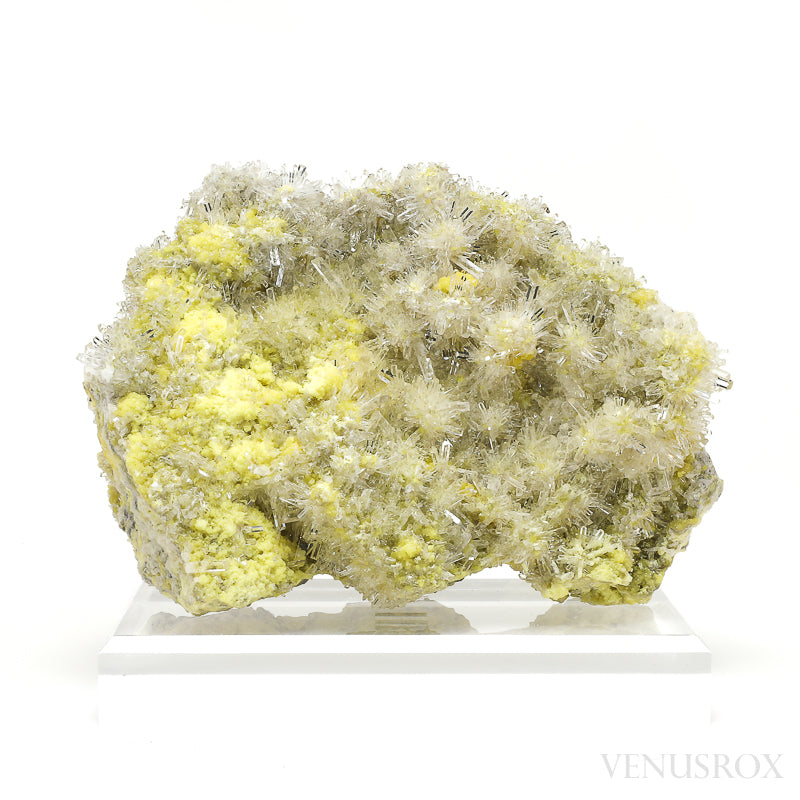
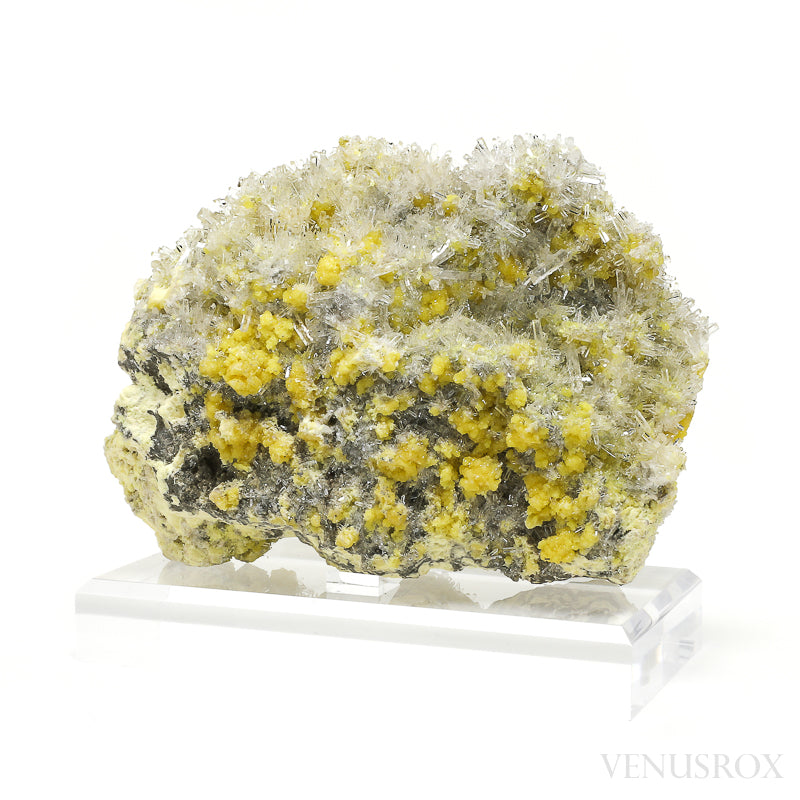
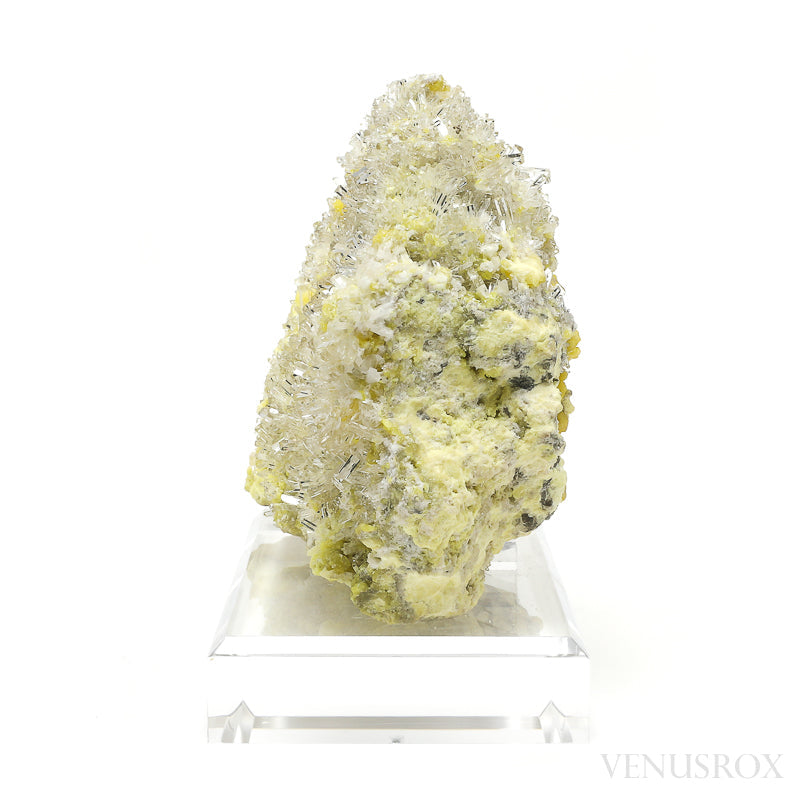
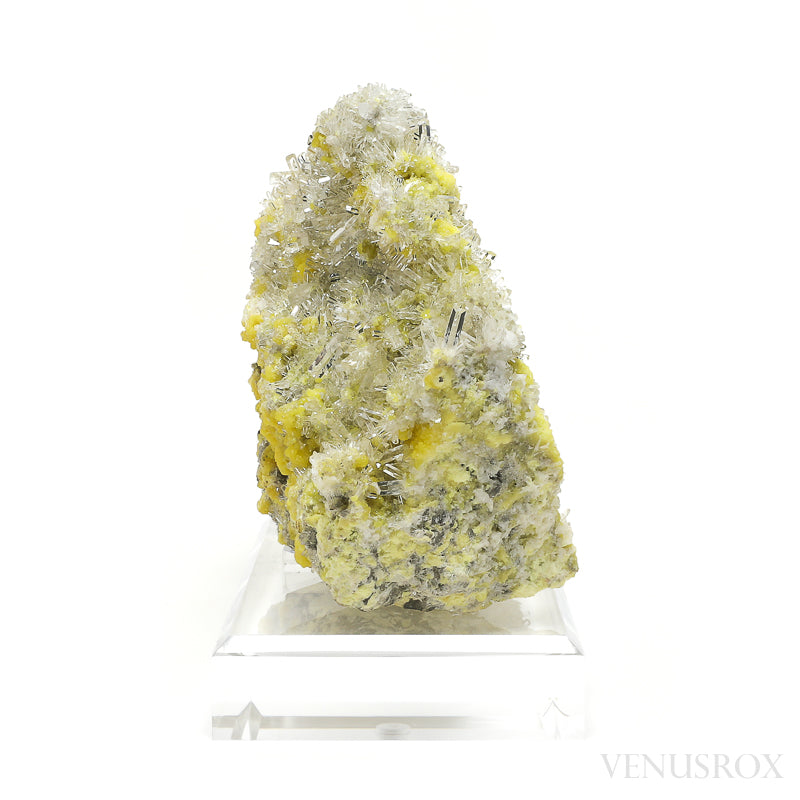
SULPHUR WITH CELESTITE NATURAL SPECIMEN
Machów Mine, Tarnobrzeg, Subcarpathian Voivodeship, Poland
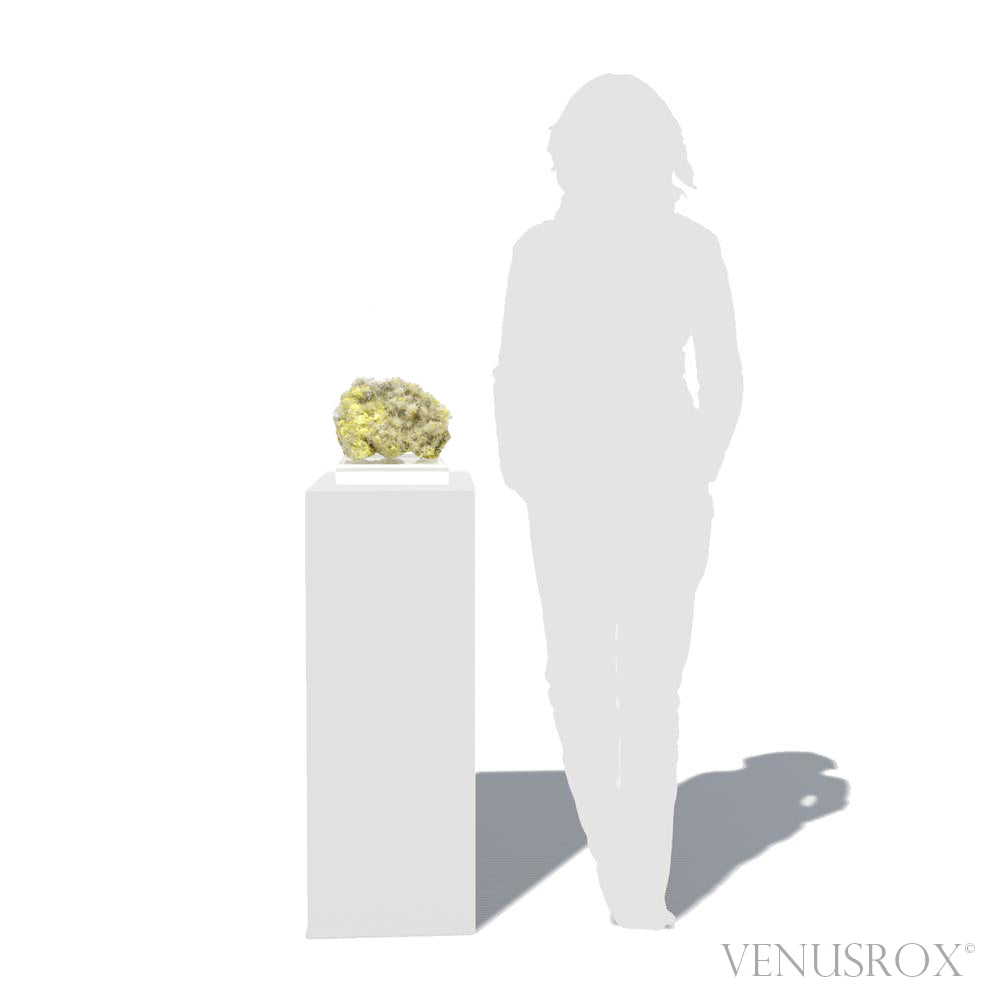
Dimensions including the stand: 20.6cm x 23.7cm x 11.5cm (8.1 inches x 9.3 inches x 4.5 inches)
Available for Private Acquisition.
Enquiries handled privately via WhatsApp or email
_____
Choose options
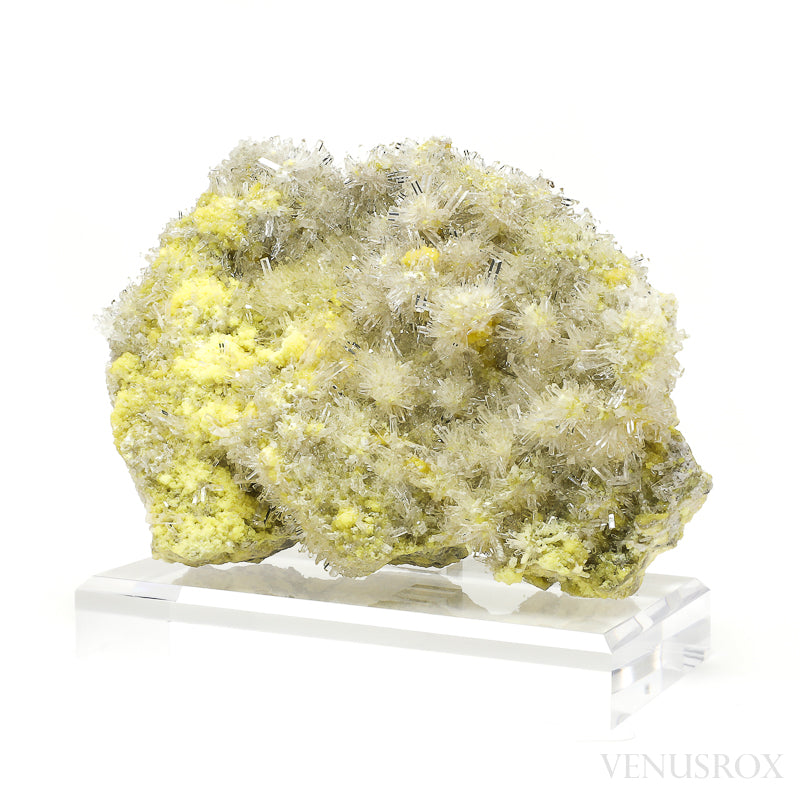
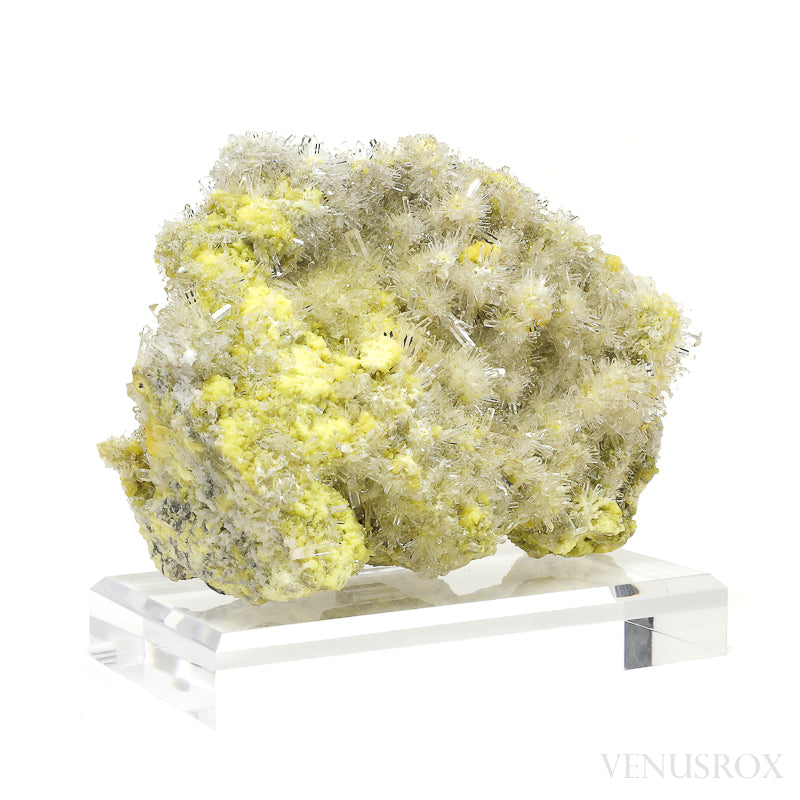
This striking specimen presents a vivid mineralogical dialogue between bright canary-yellow native Sulphur and delicate starburst clusters of water-clear Celestite. It is a classic association from one of Europe's most important Sulphur deposits. The radiating Celestite crystal sprays emerge across the specimen's surface with their glassy orthorhombic needles contrasting dramatically against the earthy matte texture of the crystalline Sulphur masses.
The Machów Mine in Poland's Tarnobrzeg region operated from 1969 until its closure in 1992, extracting Sulphur from Miocene-age evaporite deposits formed approximately 15 million years ago when shallow seas covering this region of the Carpathian foredeep began to evaporate. As saline waters concentrated and receded, native Sulphur crystallised through bacterial reduction of Gypsum, an organic process that produced some of the world's finest crystalline Sulphur specimens.
Celestite (Strontium Sulphate) formed as a secondary mineral within these same evaporitic sequences, its presence indicating strontium-rich brines percolating through the deposit. The delicate acicular habit displayed here as fine needle-like crystals radiating from central growth points represents optimal conditions of slow, undisturbed crystallisation within solution cavities.
Specimens preserving this dual-mineral association in good condition are increasingly scarce, as the Machów Mine has been permanently closed for over three decades and remaining material continues to degrade. Native Sulphur is notoriously fragile, sensitive to heat and prone to sublimation, making intact specimens of this quality particularly valued by systematic collectors.
Presented upon a clear acrylic base that allows full appreciation of its sculptural form, this piece represents a vanishing chapter of European mining heritage; geological time captured in elemental yellow and crystalline white.
SULPHUR
Sulphur is a detoxifying stone. It absorbs and clears negativity. It helps one find one’s true inner self, clearing old habits that may be stopping one from moving forward.
CELESTITE
An effective stone for accessing the angelic realm, helping one to connect and communicate with one’s guardian angels and guides. It has a gentle and positive energy and teaches patience and trust in the Divine process.
Description
This striking specimen presents a vivid mineralogical dialogue between bright canary-yellow native Sulphur and delicate starburst clusters of water-clear Celestite. It is a classic association from one of Europe's most important Sulphur deposits. The radiating Celestite crystal sprays emerge across the specimen's surface with their glassy orthorhombic needles contrasting dramatically against the earthy matte texture of the crystalline Sulphur masses.
The Machów Mine in Poland's Tarnobrzeg region operated from 1969 until its closure in 1992, extracting Sulphur from Miocene-age evaporite deposits formed approximately 15 million years ago when shallow seas covering this region of the Carpathian foredeep began to evaporate. As saline waters concentrated and receded, native Sulphur crystallised through bacterial reduction of Gypsum, an organic process that produced some of the world's finest crystalline Sulphur specimens.
Celestite (Strontium Sulphate) formed as a secondary mineral within these same evaporitic sequences, its presence indicating strontium-rich brines percolating through the deposit. The delicate acicular habit displayed here as fine needle-like crystals radiating from central growth points represents optimal conditions of slow, undisturbed crystallisation within solution cavities.
Specimens preserving this dual-mineral association in good condition are increasingly scarce, as the Machów Mine has been permanently closed for over three decades and remaining material continues to degrade. Native Sulphur is notoriously fragile, sensitive to heat and prone to sublimation, making intact specimens of this quality particularly valued by systematic collectors.
Presented upon a clear acrylic base that allows full appreciation of its sculptural form, this piece represents a vanishing chapter of European mining heritage; geological time captured in elemental yellow and crystalline white.
Metaphysical
SULPHUR
Sulphur is a detoxifying stone. It absorbs and clears negativity. It helps one find one’s true inner self, clearing old habits that may be stopping one from moving forward.
CELESTITE
An effective stone for accessing the angelic realm, helping one to connect and communicate with one’s guardian angels and guides. It has a gentle and positive energy and teaches patience and trust in the Divine process.